van Campen C Linda M C, Rowe Peter C, Verheugt Freek W A, Visser Frans C
Stichting CardioZorg, Hoofddorp, Netherlands.
Department of Pediatrics, Johns Hopkins University School of Medicine, Baltimore, MD, United States.
Front Neurosci. 2020 Jun 26;14:688. doi: 10.3389/fnins.2020.00688. eCollection 2020.
Orthostatic intolerance (OI) is common among individuals with myalgic encephalomyelitis/chronic fatigue syndrome (ME/CFS). Cognitive dysfunction has been demonstrated during head-up tilt testing (HUT) in those with ME/CFS: worse scores on cognitive tests occur with increasing tilt angles and increasing complexity of the cognitive challenge. The aim of our study was to determine whether cognitive impairment persists after completion of HUT.
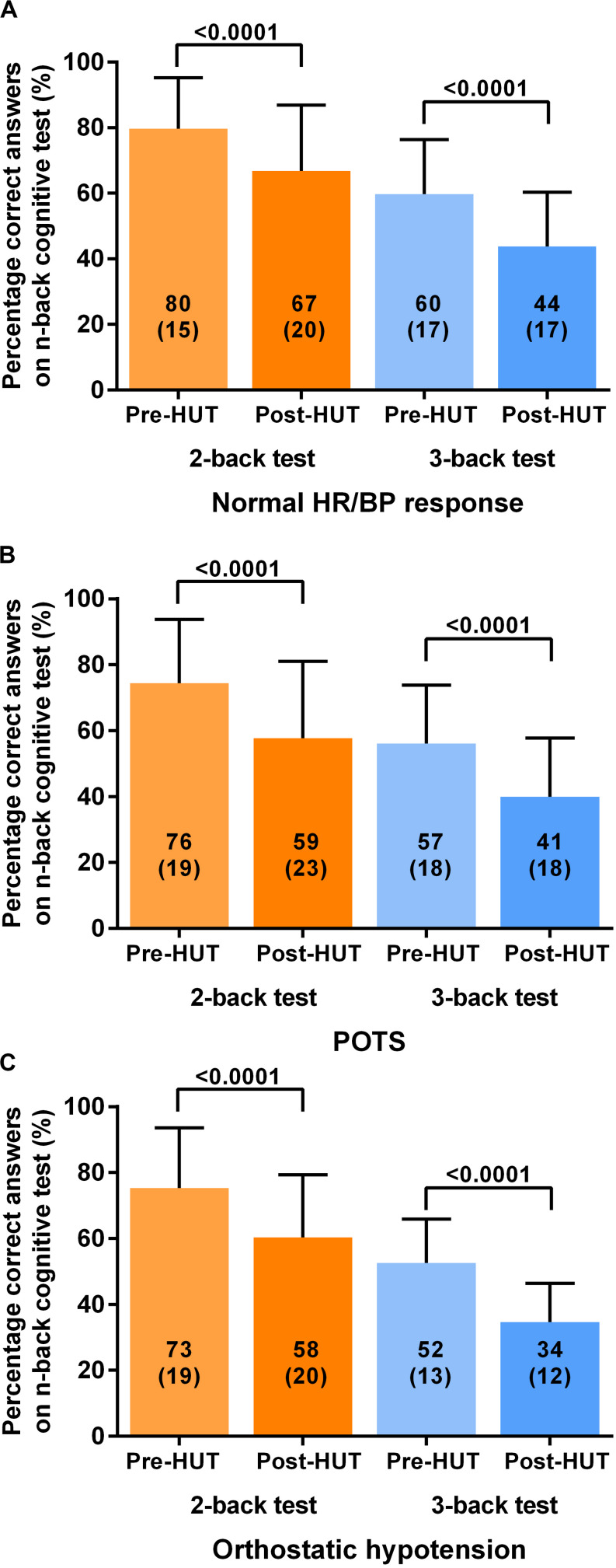
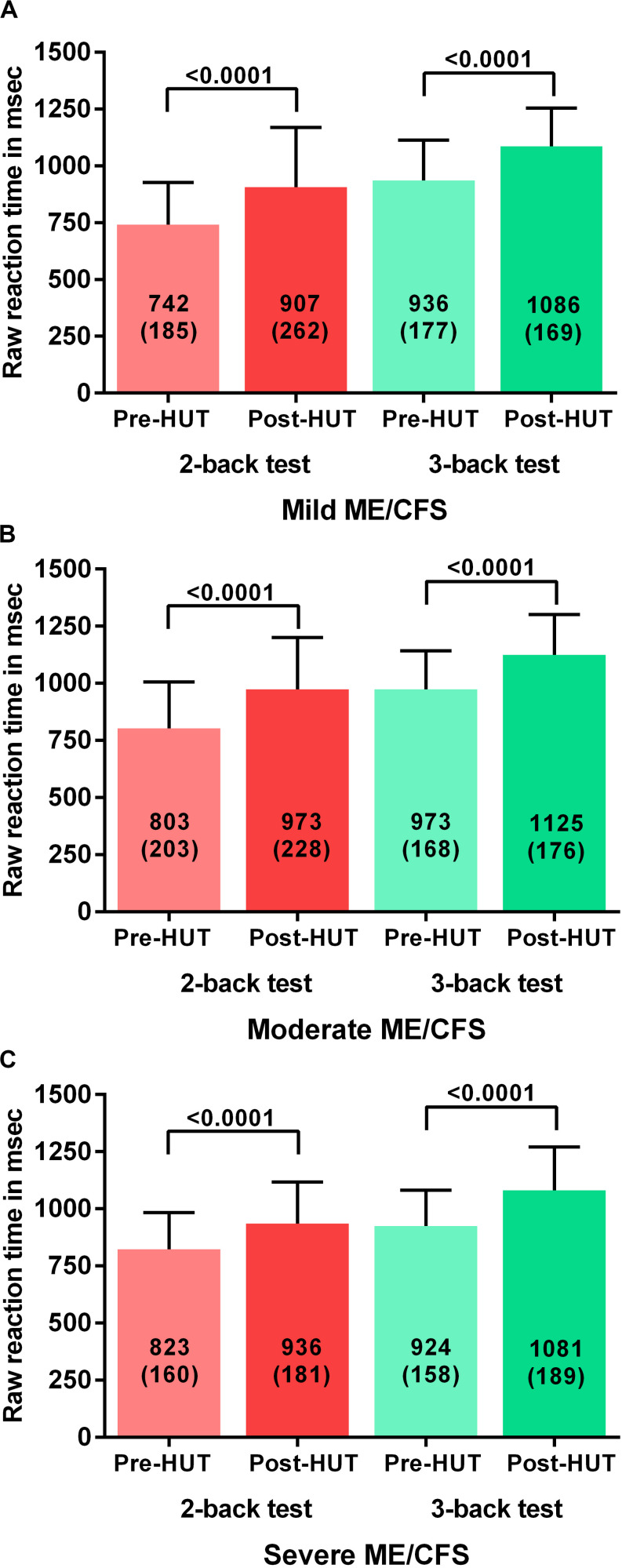
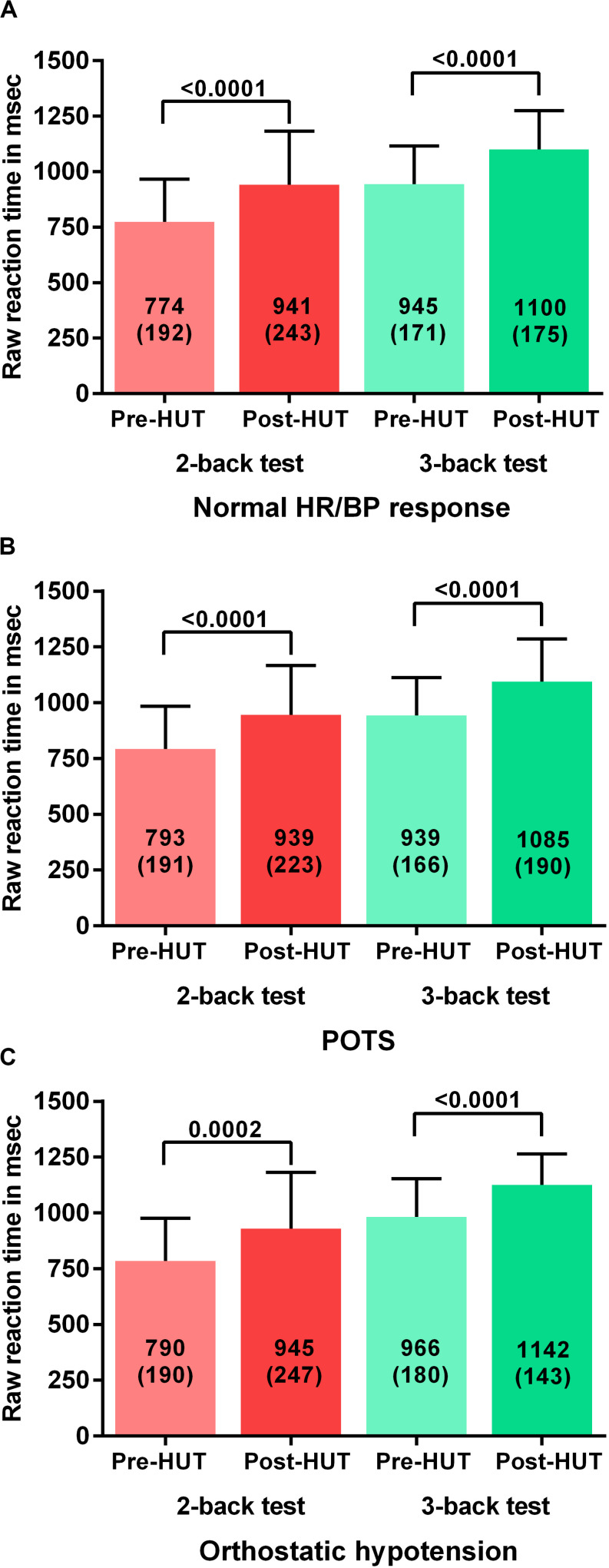
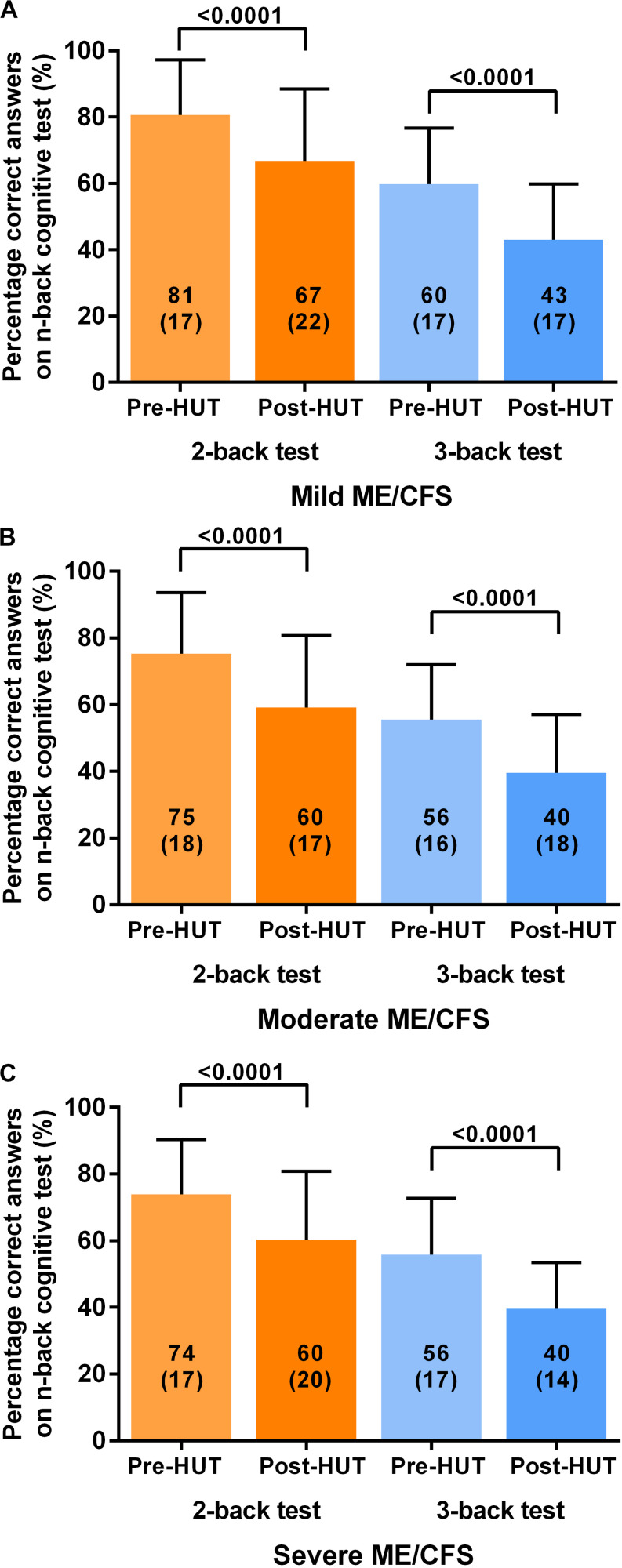
Eligible participants were consecutive individuals satisfying criteria for ME/CFS who underwent HUT because of OI. The 2- and 3-back tests were performed before the start of HUT and within 5 min after completion of HUT. We measured the percentage of correct responses and raw reaction times before and after HUT for both the 2- and 3-back tests. We studied 128 ME/CFS patients who underwent HUT and had a complete set of N-back data before and after HUT. Compared to pre-tilt responses, the percentage of correct responses on the 2-back test decreased post-HUT from 77(18) to 62(21) and of the 3-back test from 57(17) to 41(17) (both < 0.0001). The raw reaction time of the 2-back test increased post-HUT from 783(190) to 941(234) m/s and of the 3-back test from 950(170) to 1102(176) (both < 0.0001). There was no difference in the N-back test data for subgroups dichotomized based on disease severity, the presence of co-morbid fibromyalgia, or the presence of postural orthostatic tachycardia syndrome.
As measured by the N-back test, working memory remains impaired in adults with ME/CFS following a 30-min head-up tilt test.
直立不耐受(OI)在肌痛性脑脊髓炎/慢性疲劳综合征(ME/CFS)患者中很常见。在ME/CFS患者的头高位倾斜试验(HUT)中已证实存在认知功能障碍:随着倾斜角度增加以及认知挑战复杂性增加,认知测试得分会变差。我们研究的目的是确定在HUT完成后认知障碍是否持续存在。
符合条件的参与者是因OI而接受HUT的连续的符合ME/CFS标准的个体。在HUT开始前和HUT完成后5分钟内进行2-back和3-back测试。我们测量了2-back和3-back测试在HUT前后正确反应的百分比和原始反应时间。我们研究了128名接受HUT且在HUT前后有完整N-back数据的ME/CFS患者。与倾斜前反应相比,2-back测试的正确反应百分比在HUT后从77(18)降至62(21),3-back测试从57(17)降至41(17)(两者均<0.0001)。2-back测试的原始反应时间在HUT后从783(190)增加到941(234)毫秒/秒,3-back测试从950(170)增加到1102(176)(两者均<0.0001)。基于疾病严重程度、合并纤维肌痛的存在或体位性直立性心动过速综合征的存在进行二分的亚组在N-back测试数据上没有差异。
通过N-back测试测量,在30分钟的头高位倾斜试验后,ME/CFS成年患者的工作记忆仍然受损。