Hallworth Ben W, Austin James A, Williams Heather E, Rehani Mayank, Shehata Ahmed W, Hebert Jacqueline S
Department of Mechanical EngineeringUniversity of AlbertaDonadeo Innovation Centre for EngineeringEdmontonABT6G 1H9Canada.
Division of Physical Medicine and Rehabilitation, Faculty of Medicine and DentistryUniversity of AlbertaEdmontonABT6G 2R3Canada.
IEEE J Transl Eng Health Med. 2020 Jul 1;8:0700210. doi: 10.1109/JTEHM.2020.3006416. eCollection 2020.
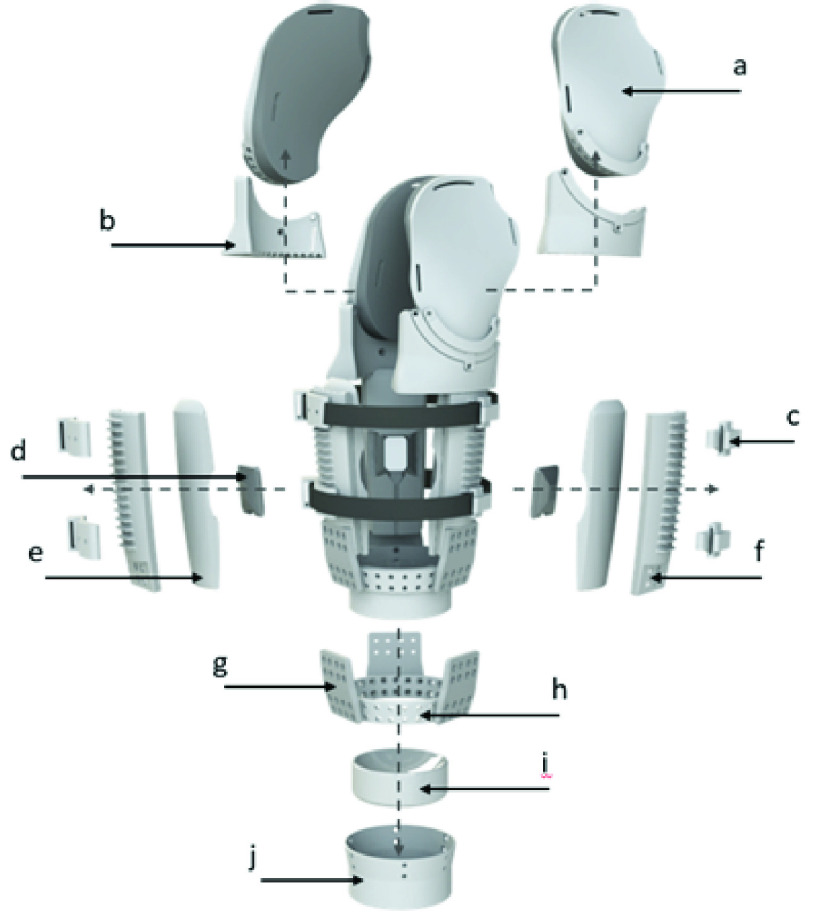
Novel myoelectric control strategies may yield more robust, capable prostheses which improve quality of life for those affected by upper-limb loss; however, the development and translation of such strategies from an experimental setting towards daily use by persons with limb loss is a slow and costly process. Since prosthesis functionality is highly dependent on the physical interface between the user's prosthetic socket and residual limb, assessment of such controllers under realistic (noisy) environmental conditions, integrated into prosthetic sockets, and with participants with amputation is essential for obtaining representative results. Unfortunately, this step is particularly difficult as participant- and control strategy-specific prosthetic sockets must be custom-designed and manufactured. There is thus a need for a system to reduce these burdens and facilitate this crucial phase of the development pipeline. This study aims to address this gap through the design and assessment of an inexpensive and easy-to-use 3D-printed Modular-Adjustable transhumeral Prosthetic Socket (MAPS). This 3D-printed, open-source socket was developed in consultation with prosthetists and compared with a participant-specific suction socket in a single-participant case-study. We conducted mechanical and functional assessments to ensure that the developed socket enabled similar performance compared to participant-specific sockets. Both socket systems yielded similar results in mechanical and functional assessments, as well as in self-reported user feedback. The MAPS system shows promise as a research tool which catalyzes the development and deployment of novel myoelectric control strategies by better-enabling comprehensive assessment involving participants with amputations.
新型肌电控制策略可能会产生更坚固、功能更强大的假肢,从而改善上肢缺失者的生活质量;然而,将此类策略从实验环境转化为肢体缺失者的日常使用是一个缓慢且成本高昂的过程。由于假肢功能高度依赖于使用者的假肢接受腔与残肢之间的物理接口,因此在现实(有噪声)环境条件下,将此类控制器集成到假肢接受腔中,并让截肢参与者进行评估,对于获得具有代表性的结果至关重要。不幸的是,这一步骤特别困难,因为必须针对参与者和控制策略定制设计和制造假肢接受腔。因此,需要一种系统来减轻这些负担,并促进开发流程中的这一关键阶段。本研究旨在通过设计和评估一种廉价且易于使用的3D打印模块化可调节经肱骨假肢接受腔(MAPS)来填补这一空白。这种3D打印的开源接受腔是在与假肢师协商后开发的,并在一项单参与者案例研究中与特定参与者的抽吸式接受腔进行了比较。我们进行了机械和功能评估,以确保所开发的接受腔与特定参与者的接受腔具有相似的性能。两种接受腔系统在机械和功能评估以及自我报告的用户反馈方面都产生了相似的结果。MAPS系统有望成为一种研究工具,通过更好地实现涉及截肢参与者的全面评估,促进新型肌电控制策略的开发和应用。