Department of Psychological and Brain Sciences.
Department of Psychology.
J Pers Soc Psychol. 2021 Jan;120(1):1-15. doi: 10.1037/pspa0000246. Epub 2020 Jul 16.
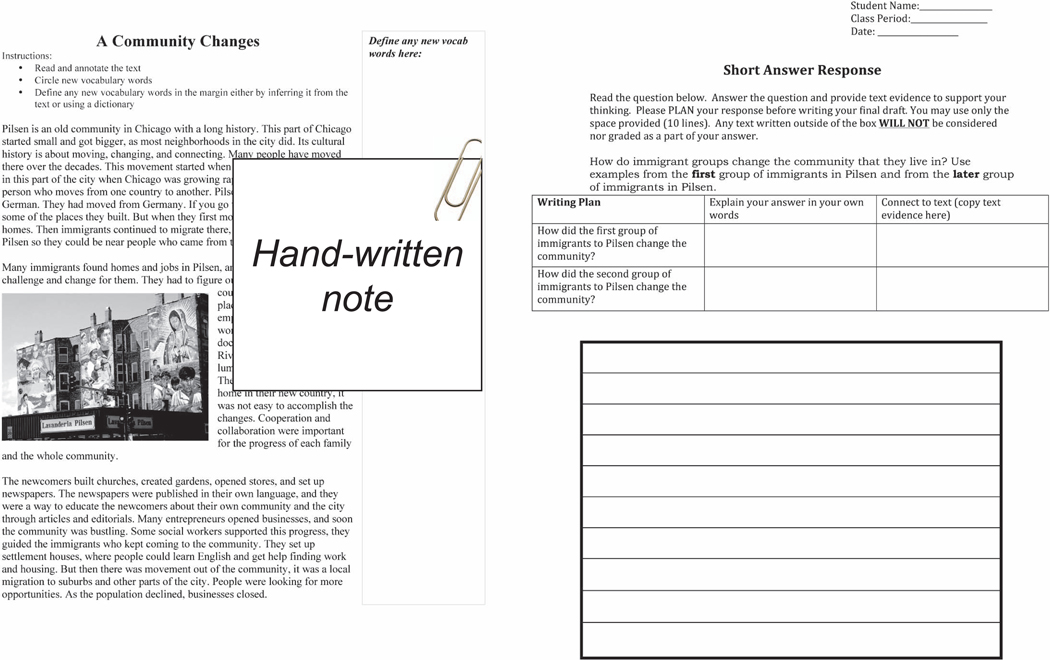
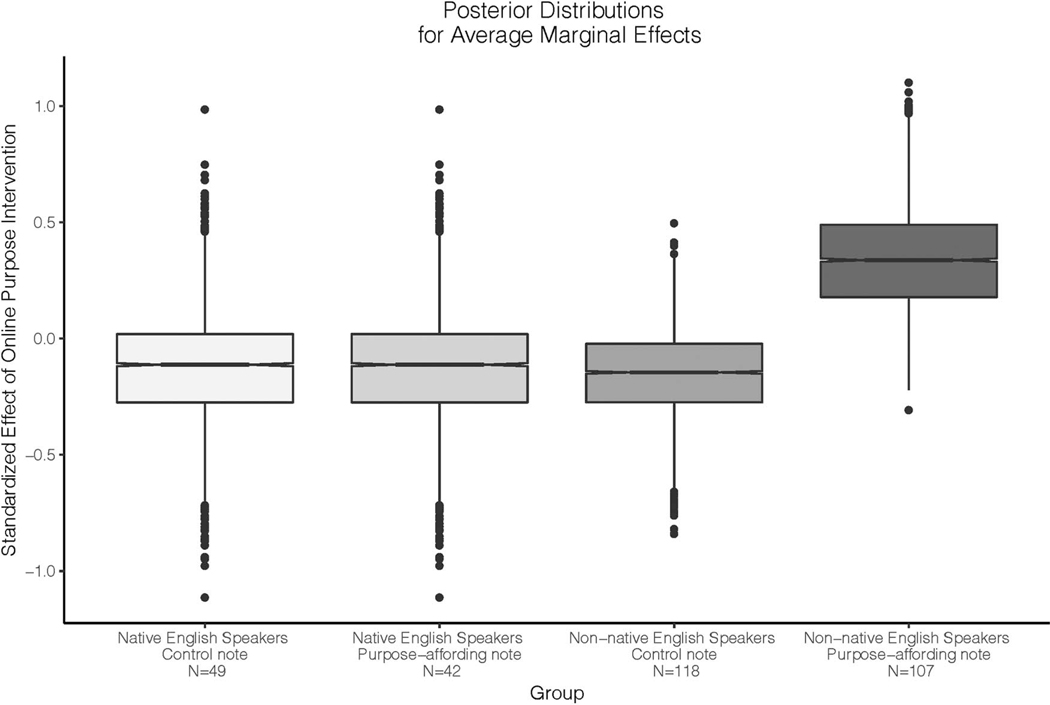
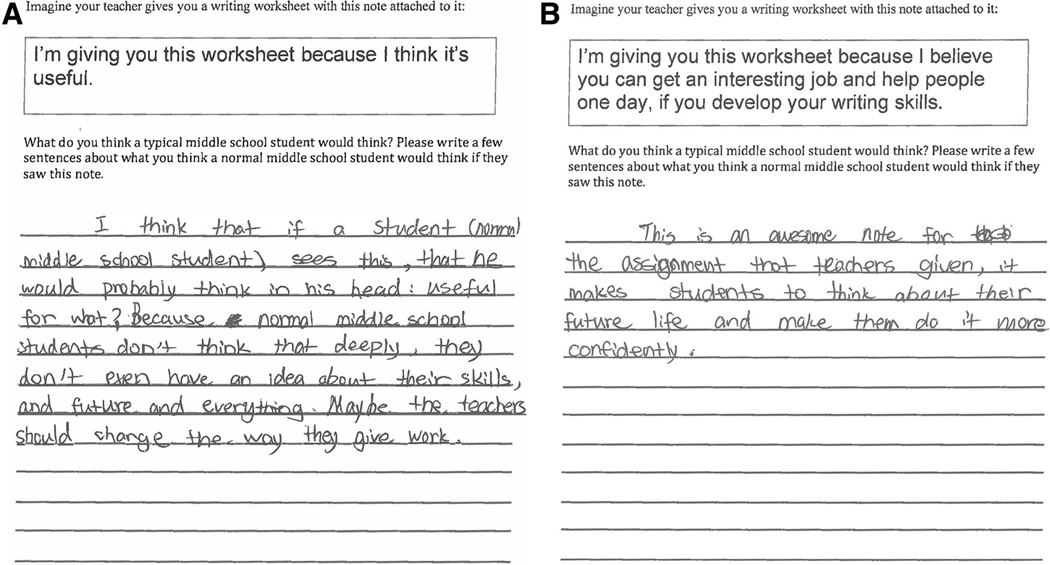
Lay theory interventions instill situation-general ways of thinking, often using short reading and writing exercises, and they have led to lasting changes in behavior and performance in a wide variety of policy domains. Do they work in all contexts? We suggest that lay theory intervention effects depend on , which are defined as cues that allow individuals to view a lay theory as legitimate and adaptive in that context. The present research directly and experimentally tested this hypothesis using the example of a "purpose for learning" lay theory intervention, which taught the lay theory that school is a place to develop skills that allow one to make progress toward self-transcendent aims. A double-blind 2 (student purpose intervention) × 2 (purpose-affording note) field experiment was conducted in a relatively low-performing public middle school in the United States. Students first received a web-based purpose for learning lay theory intervention (or a control activity), and 2 weeks later attended a class in which an assignment was accompanied by a purpose-affording note that was hand-written by a teacher (or a control note). Results showed that the purpose lay theory intervention increased performance on an English class writing assignment, but only when it was accompanied by a purpose-affording note. Exploratory analyses revealed that the effects of the manipulations were apparent among students who were at greater risk for poor performance in the class: nonnative English-speaking students. Thus short, online lay theory interventions may reduce performance gaps, provided that the contexts afford the opportunity for the proffered lay theory to seem legitimate and adaptive. (PsycInfo Database Record (c) 2021 APA, all rights reserved).
外显理论干预措施灌输情境一般性思维方式,通常采用简短的阅读和写作练习,并且已经导致在广泛的政策领域中的行为和表现发生持久变化。它们在所有情况下都有效吗?我们认为,外显理论干预效果取决于情境线索,这些线索使个体认为外显理论在该情境下是合理和适应的。本研究使用“学习目的”外显理论干预的例子直接和实验性地检验了这一假设,该干预措施教授了这样一种外显理论,即学校是一个培养技能的地方,这些技能可以使人朝着自我超越的目标前进。在美国一所表现相对较差的公立中学进行了一项双盲 2(学生目的干预)×2(目的赋予说明)现场实验。学生首先接受了基于网络的学习目的外显理论干预(或控制活动),两周后参加了一门课程,在该课程中,一项作业附有教师手写的(或控制说明)目的赋予说明。结果表明,目的外显理论干预提高了英语写作作业的成绩,但只有在附有目的赋予说明的情况下才会提高成绩。探索性分析表明,在课堂表现风险较高的学生(非英语母语学生)中,这些操作的效果明显。因此,简短的在线外显理论干预措施可能会缩小成绩差距,但前提是所提供的外显理论在情境中显得合理且适应。(PsycInfo 数据库记录(c)2021 APA,保留所有权利)。