Área de Fisiología Vegetal, Departamento de Ingeniería y Ciencias Agrarias, Universidad de León, 24071 León, Spain.
Laboratorio de Cultivo de Tejidos Vegetales, Jardín Botánico, Instituto de Biología, Universidad Nacional Autónoma de México, Ciudad Universitaria, Mexico City 04510, Mexico.
Molecules. 2020 Jul 15;25(14):3231. doi: 10.3390/molecules25143231.
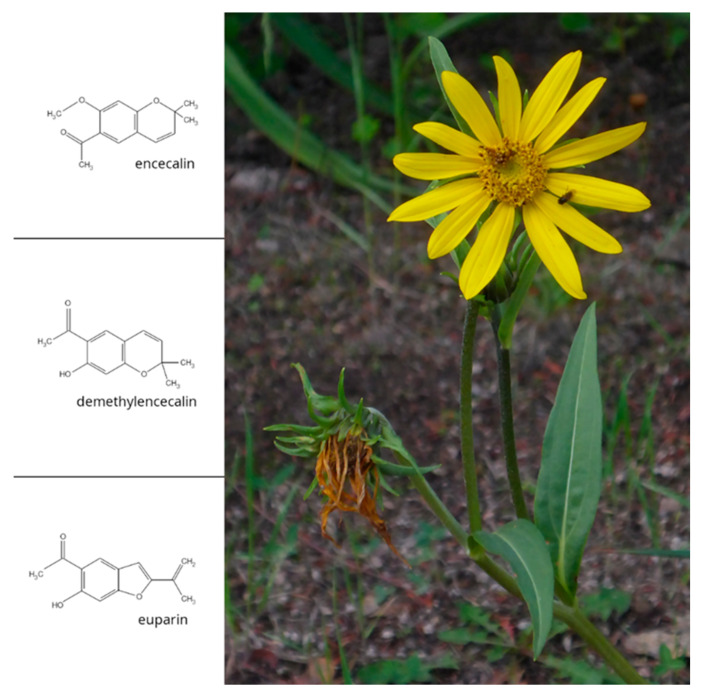
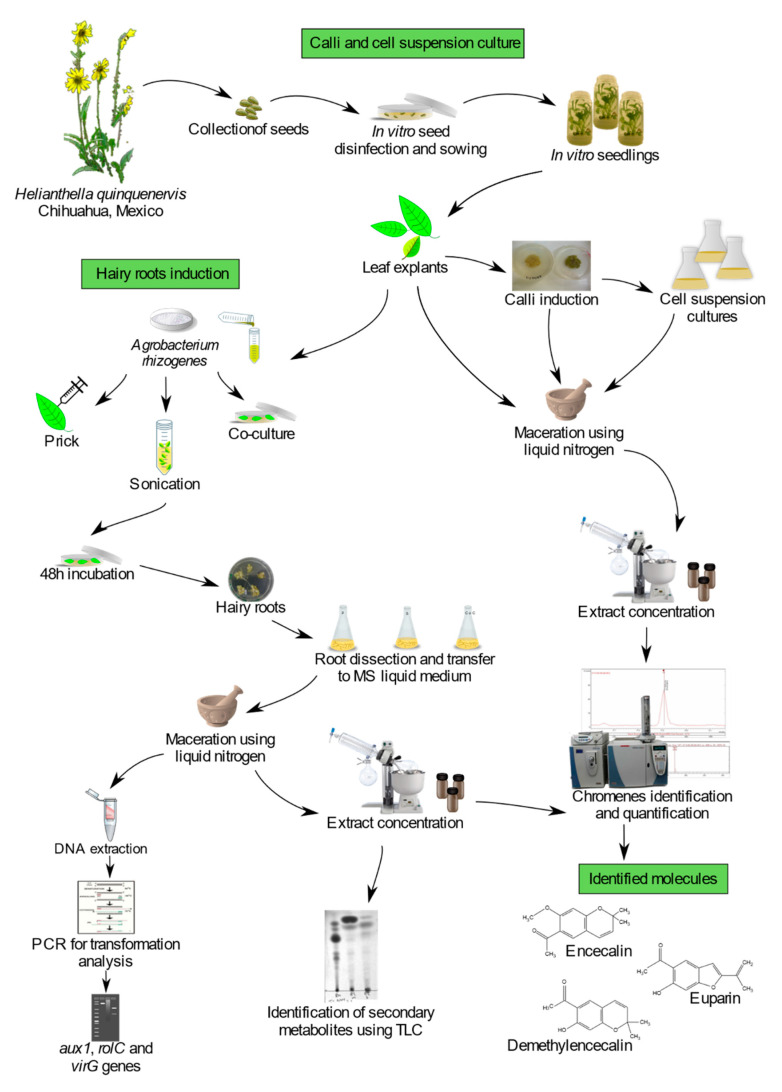
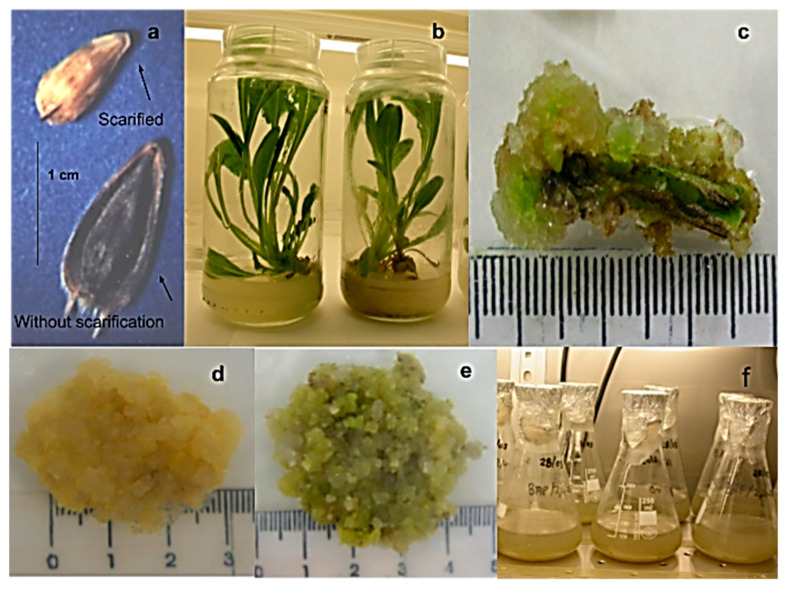
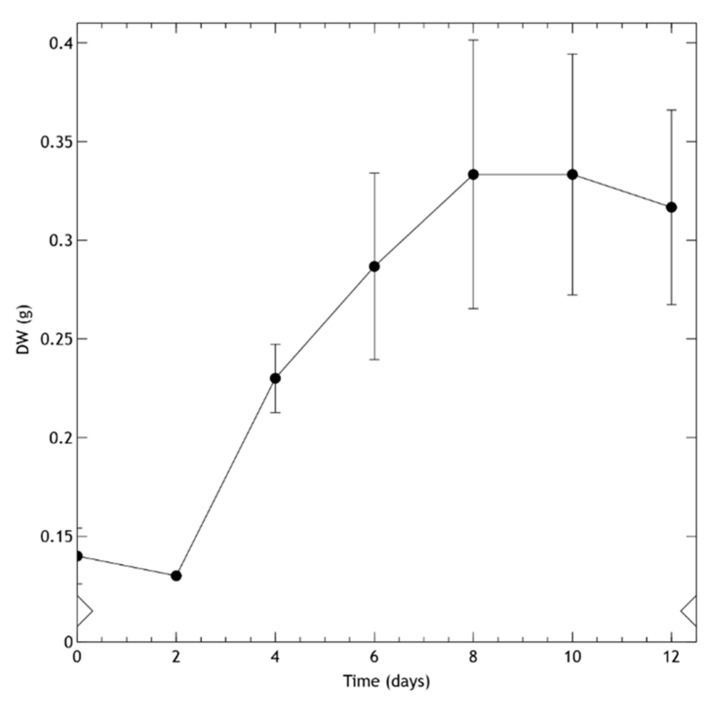
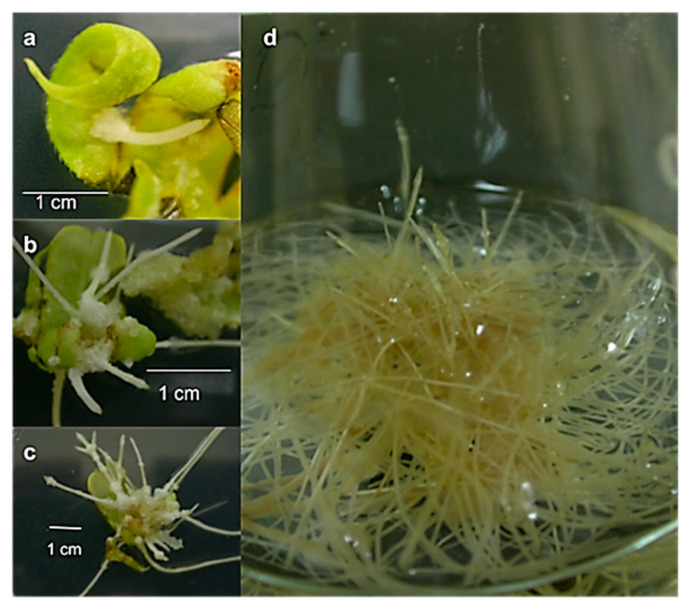
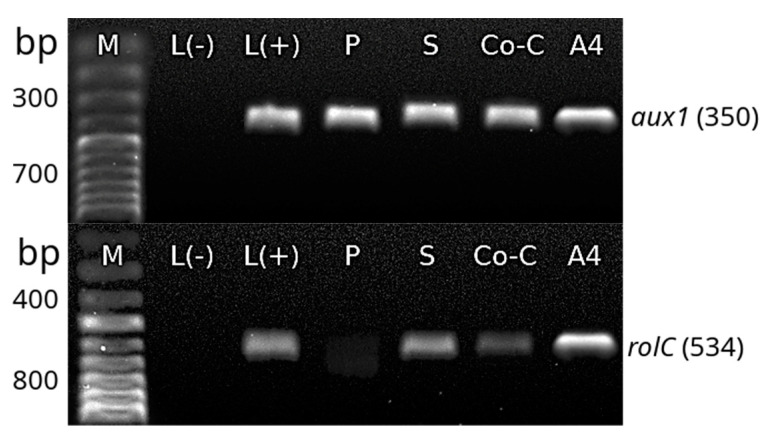
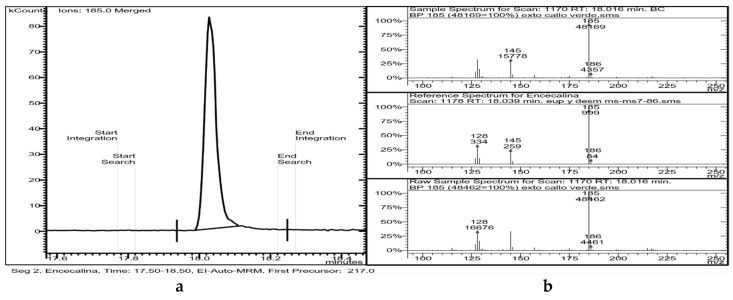
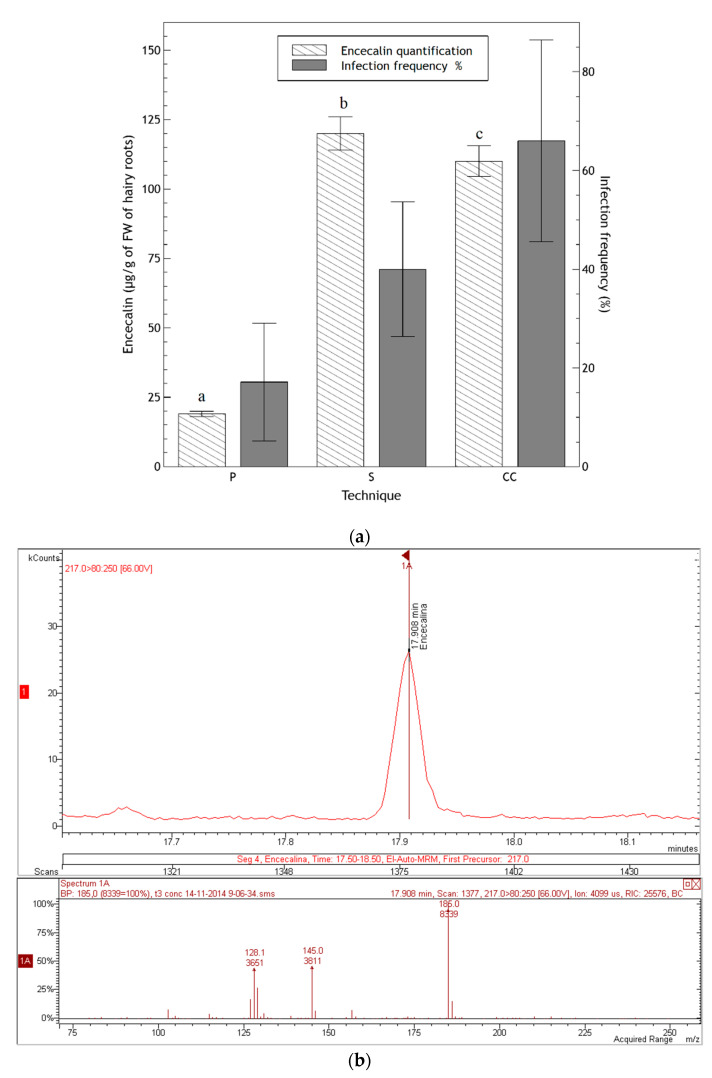
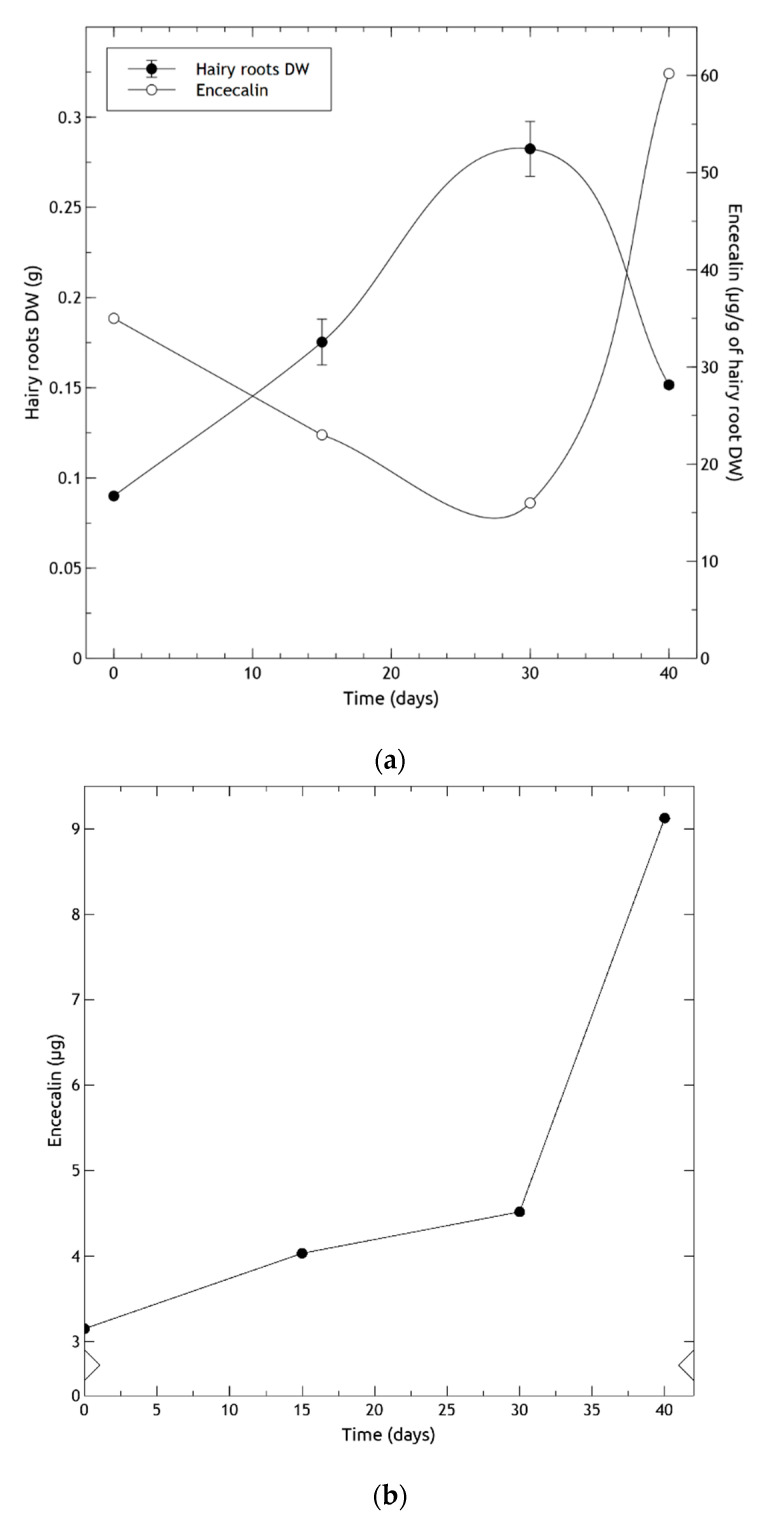
Plant cell and organ cultures of , a medicinal plant whose roots are used by the Tarahumara Indians of Chihuahua, Mexico, to relieve several ailments, were established to identify and quantify some chromenes with biological activity, such as encecalin, and to evaluate their potential for biotechnological production. Gas chromatography-mass spectrometry (GC-MS) analysis corroborated the presence of quantifiable amounts of encecalin in cell cultures (callus and cell suspensions). In addition, hairy roots were obtained through three transformation protocols (prick, 45-s sonication and co-culture), using wild type A4. After three months, cocultivation achieved the highest percentage of transformation (66%), and a comparable production (FW) of encecalin (110 μg/g) than the sonication assay (120 μg/g), both giving far higher yields than the prick assay (19 μg/g). Stable integration of and genes in the transformed roots was confirmed by polymerase chain reaction (PCR). Hairy roots from cocultivation (six months-old) accumulated as much as 1086 μg/g (FW) of encecalin, over three times higher than the cell suspension cultures. The production of encecalin varied with growth kinetics, being higher at the stationary phase. This is the first report of encecalin production in hairy roots of , demonstrating the potential for a future biotechnological production of chromenes.
建立了墨西哥奇瓦瓦州塔拉乌马拉印第安人用来治疗多种疾病的药用植物 的植物细胞和器官培养物,以鉴定和量化具有生物活性的一些色烯,如恩西卡林,并评估其用于生物技术生产的潜力。气相色谱-质谱联用(GC-MS)分析证实,细胞培养物(愈伤组织和细胞悬浮液)中存在可量化的恩西卡林。此外,通过三种转化方案(刺、45 秒超声和共培养)获得了毛状根,使用野生型 A4。三个月后,共培养达到了最高的转化百分比(66%),并且与超声分析(120 μg/g)相比,恩西卡林的产量(FW)相当(110 μg/g),两者的产量都远远高于刺探分析(19 μg/g)。通过聚合酶链反应(PCR)证实了转化根中 的 和 基因的稳定整合。来自共培养的毛状根(六个月大)积累了高达 1086 μg/g(FW)的恩西卡林,是细胞悬浮培养物的三倍多。恩西卡林的产量随生长动力学而变化,在静止期更高。这是 毛状根中恩西卡林生产的首次报道,证明了未来生产色烯的生物技术潜力。