Dental Clinic, p.le Spedali Civili n.1 25133 Brescia
Med Oral Patol Oral Cir Bucal. 2020 Sep 1;25(5):e675-e682. doi: 10.4317/medoral.23693.
Management of erosive Oral Lichen Planus (eOLP) is challenging. Currently, topical corticosteroids are widely used as first-line therapy, but they might be associated with side-effects and incomplete clinical response. Among non-pharmacological strategies, ozone at low medical concentration has proven to induce a mild activation of protective anti-oxidant pathways, thus exerting therapeutic effects in many inflammatory diseases. The aim of this randomized controlled study was to investigate the effectiveness of ozonized water in association with conventional topical corticosteroids for the treatment of eOLP.
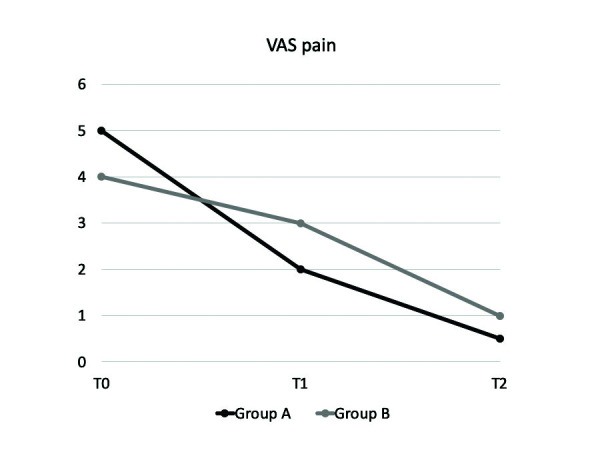
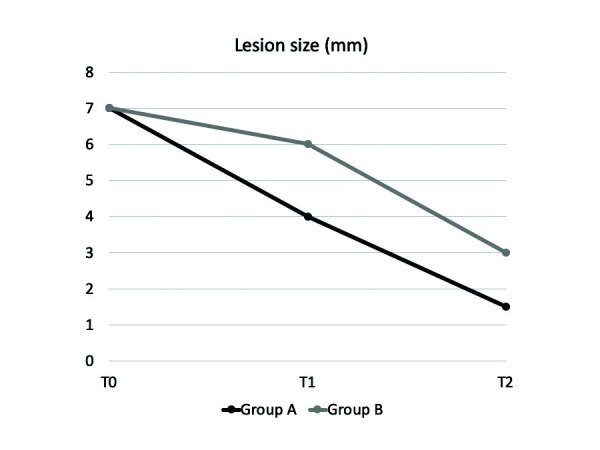
Fifty-one patients were included in the study and randomized into 2 groups: study group (n=26) included patients receiving ozonized water treatment; control group (n=25) included patients receiving placebo treatment (i.e. double-distilled water). Treatment protocol consisted of 1-minute oral rinses, repeated for 4 times, twice a week for 4 weeks. All patients received conventional corticosteroid topical therapy (betamethasone soluble tablets, 2 rinses/day for 4 weeks). Assessment of size of lesions, sign and pain scores was performed before treatment, after 2 weeks of treatment (T1) and at the end of 4-week treatment (T2). Efficacy Index (EI) of treatment, candidiasis and relapse rates were also recorded.
All patients experienced significant improvement of sign and pain scores with a higher rate of improvement in ozone-treated group (T1 improvement rates: Thongprasom 92.2% vs 28%; VAS pain 76.9% vs 32%; p<0.05). Pain and size reduction were significantly higher in ozone-treated group both at T1 and T2 (p<0.05). Ozone-treated group showed a higher EI at every time point (T0-T2: 72.77% vs 37.66%, p<0.01). Candidiasis (32% vs 11.5%) and relapse (40% vs 34.6%) rates were higher in control group, however the differences were not statistically significant.
Within the limitations of this study, ozonized water seems to be effective as an adjunct therapy, in combination with topical corticosteroids, for the treatment of eOLP.
治疗糜烂性口腔扁平苔藓(eOLP)具有挑战性。目前,局部皮质类固醇被广泛用作一线治疗药物,但它们可能与副作用和不完全的临床反应有关。在非药物治疗策略中,低浓度医用臭氧已被证明能轻度激活保护性抗氧化途径,从而在许多炎症性疾病中发挥治疗作用。本随机对照研究的目的是探讨臭氧水联合常规局部皮质类固醇治疗 eOLP 的疗效。
将 51 例患者纳入研究并随机分为两组:研究组(n=26)接受臭氧水治疗;对照组(n=25)接受安慰剂治疗(即双蒸水)。治疗方案包括 1 分钟的口腔冲洗,每周两次,共 4 周,重复 4 次。所有患者均接受常规皮质类固醇局部治疗(倍他米松可溶性片,每日 2 次,共 4 周)。在治疗前、治疗 2 周(T1)和 4 周治疗结束时(T2)评估病变大小、体征和疼痛评分。还记录了治疗的疗效指数(EI)、念珠菌病和复发率。
所有患者的体征和疼痛评分均显著改善,臭氧治疗组的改善率更高(T1 改善率:Thongprasom 92.2%比 28%;VAS 疼痛 76.9%比 32%;p<0.05)。臭氧治疗组在 T1 和 T2 时疼痛和尺寸减小均显著更高(p<0.05)。臭氧治疗组在每个时间点(T0-T2)的 EI 均更高(72.77%比 37.66%,p<0.01)。对照组的念珠菌病(32%比 11.5%)和复发率(40%比 34.6%)较高,但差异无统计学意义。
在本研究的限制范围内,臭氧水似乎是一种有效的辅助治疗方法,与局部皮质类固醇联合使用,可治疗 eOLP。