Department of Biliary Surgery, West China Hospital, Sichuan University, Chengdu 610041, Sichuan Province, China.
Int J Med Sci. 2020 Jul 2;17(12):1704-1712. doi: 10.7150/ijms.47073. eCollection 2020.
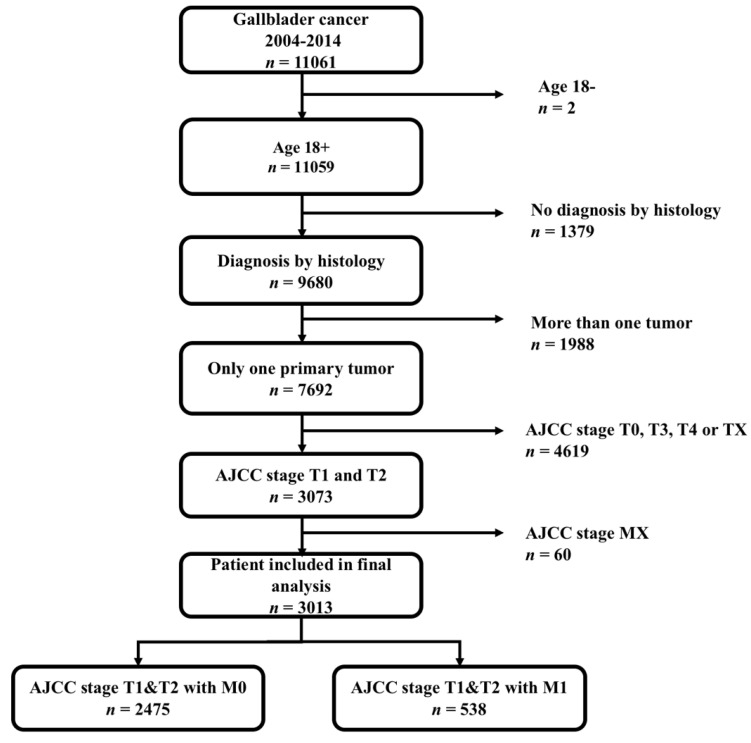
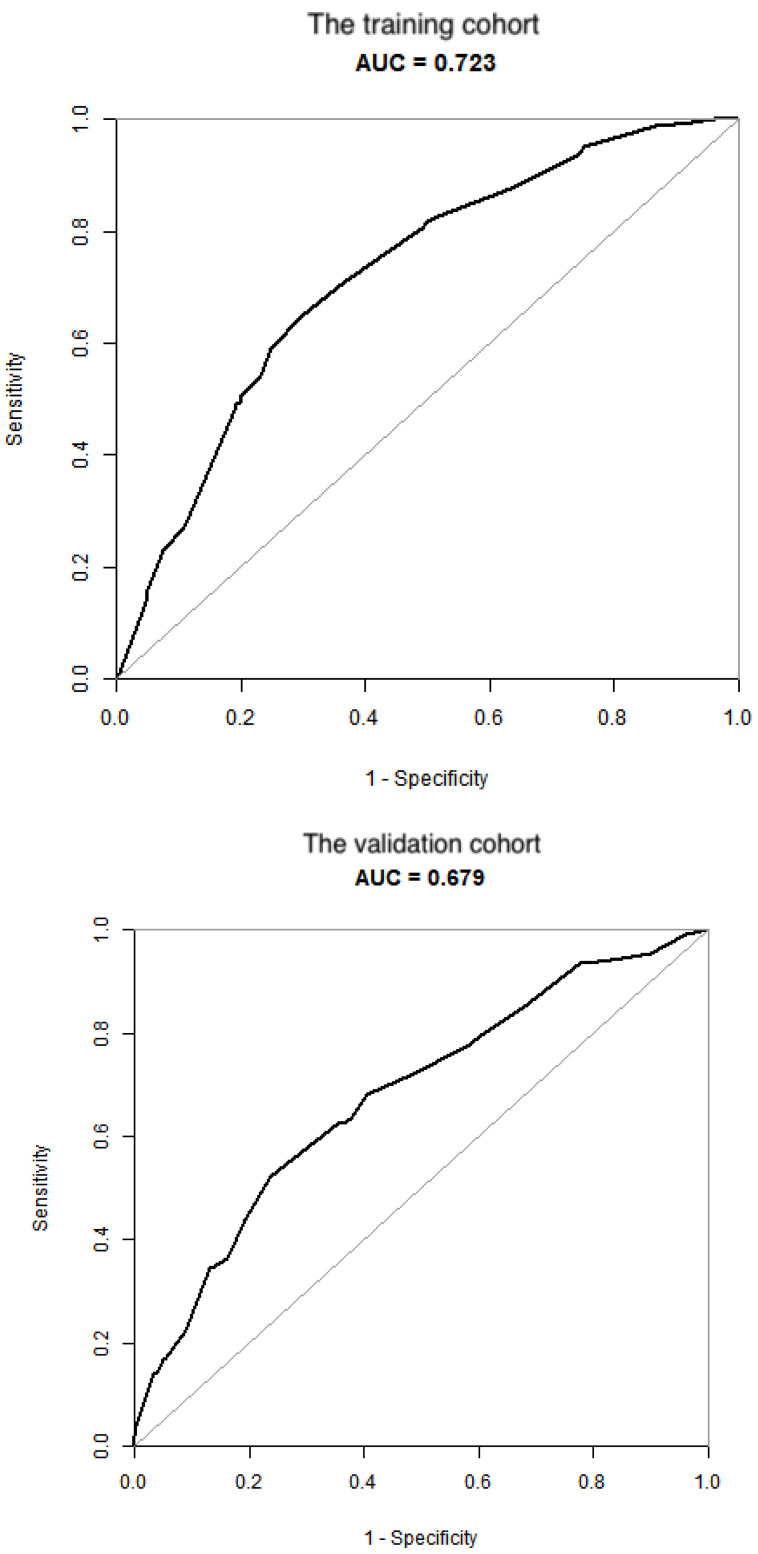
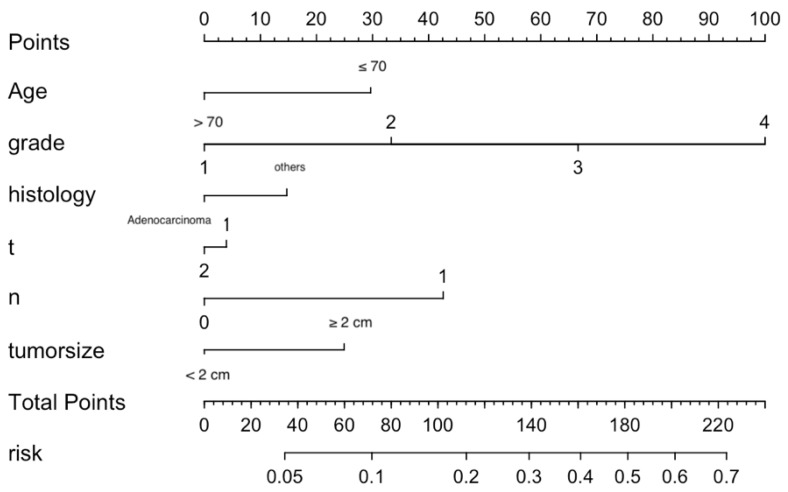
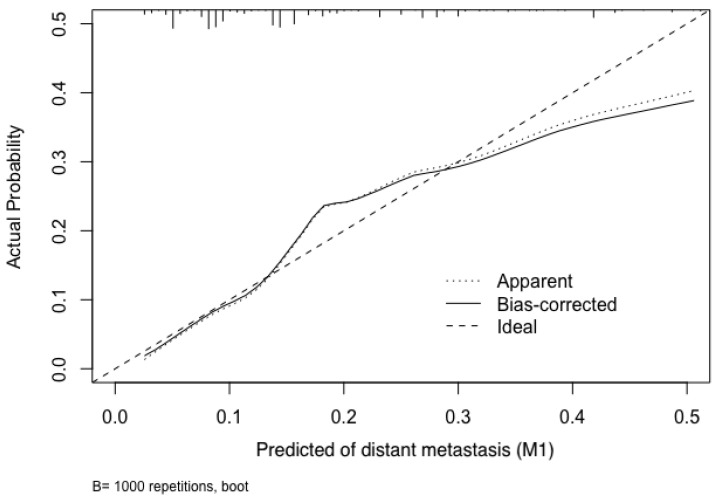
Gallbladder cancer (GBC) is the most common malignancy of the biliary system. Early T stage GBC patients with distant metastasis are proven to have a worse prognosis. In this study, our aim was to construct and validate a novel nomogram for predicting distant metastasis in T1 and T2 GBC. Between 2004 and 2014, patients with T1 and T2 GBC were identified in the Surveillance, Epidemiology, and End Results (SEER) database. All of the eligible patients were randomly divided into training and validation cohorts. Univariate and multivariate analyses were used to assess significant predictive factors associated with distant metastasis. A nomogram was developed and validated by a calibration curve and receptor operating characteristic curve (ROC) analysis. According to the inclusion and exclusion criteria, 3013 patients with historically confirmed AJCC stage T1 and T2 GBC were enrolled. Younger age, high pathological grade, nonadenocarcinoma, T1, N1 and larger tumor size correlated positively with the risk of distant metastasis. A novel nomogram was established to predict distant metastasis in early T stage GBC patients. Internal validation with a calibration plot in the training cohort showed that this nomogram was well calibrated. Through ROC curve analysis, the areas under the ROC curves in the training and validation cohorts were 0.723 and 0.679, respectively. Although some limitations exist in this predictive model, the nomogram revealed the relationship between the clinicopathological characteristics of T1 and T2 GBC patients and the risk of distant metastasis. The novel nomogram will assist in patient counseling and guide treatment decision making for T1 and T2 GBC patients.
胆囊癌(GBC)是胆道系统最常见的恶性肿瘤。已有研究证实,伴有远处转移的早期 T 分期 GBC 患者预后较差。本研究旨在构建和验证一种用于预测 T1 和 T2 期 GBC 远处转移的新型列线图。
2004 年至 2014 年,我们从监测、流行病学和最终结果(SEER)数据库中筛选出 T1 和 T2 期 GBC 患者。所有符合条件的患者被随机分为训练集和验证集。采用单因素和多因素分析评估与远处转移相关的显著预测因素。通过校准曲线和受试者工作特征曲线(ROC)分析建立并验证了列线图。
根据纳入和排除标准,我们共纳入了 3013 例经 AJCC 分期证实的 T1 和 T2 期 GBC 患者。年龄较小、高病理分级、非腺癌、T1、N1 和肿瘤较大与远处转移风险呈正相关。我们建立了一个预测早期 T 期 GBC 患者远处转移的新型列线图。在训练集的校准图中进行内部验证显示,该列线图具有良好的校准度。通过 ROC 曲线分析,训练集和验证集的 ROC 曲线下面积分别为 0.723 和 0.679。
虽然该预测模型存在一些局限性,但该列线图揭示了 T1 和 T2 期 GBC 患者的临床病理特征与远处转移风险之间的关系。该新型列线图将有助于患者咨询,并为 T1 和 T2 期 GBC 患者的治疗决策提供指导。