Elbediwi Mohammed, Beibei Wu, Pan Hang, Jiang Zenghai, Biswas Silpak, Li Yan, Yue Min
Institute of Preventive Veterinary Sciences, Department of Veterinary Medicine, College of Animal Sciences, Zhejiang University, Hangzhou, China.
Zhejiang Province Center for Disease Control and Prevention, Hangzhou, China
Front Bioeng Biotechnol. 2020 Jun 30;8:663. doi: 10.3389/fbioe.2020.00663. eCollection 2020.
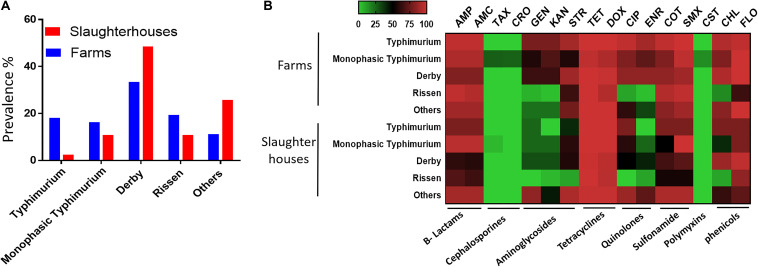
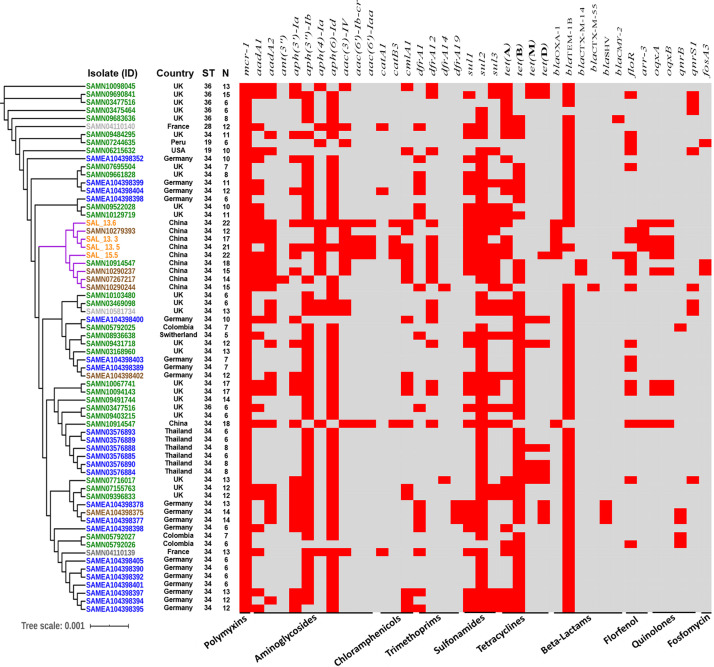
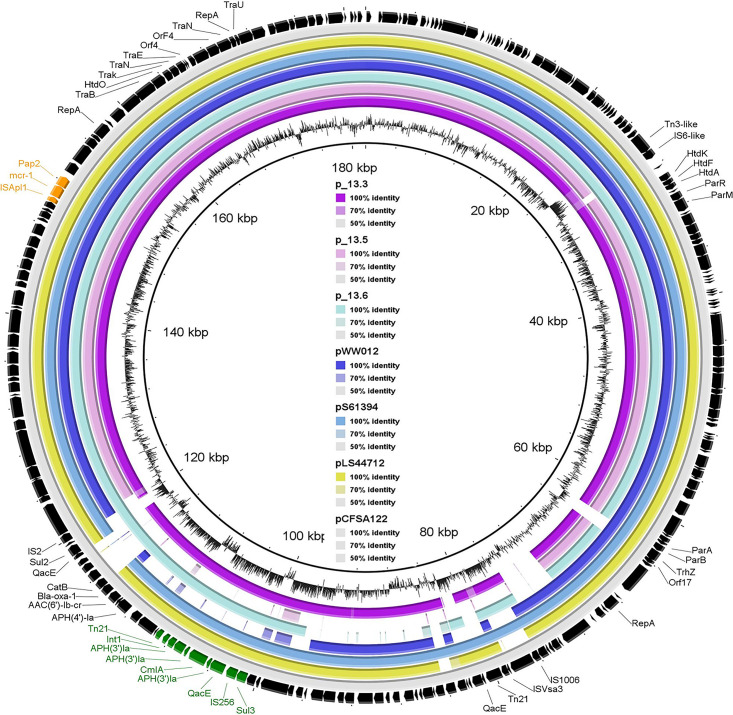
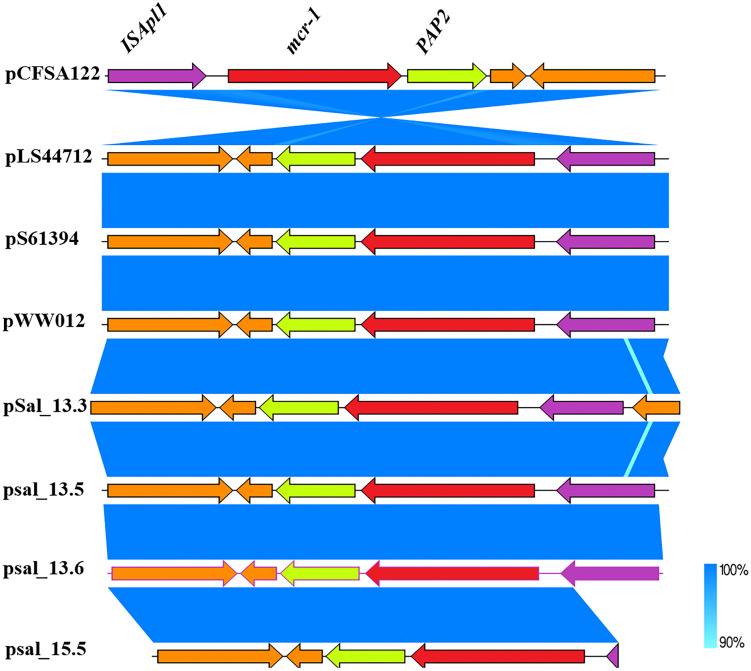
serovar 4,[5],12:i:-, so-called Typhimurium monophasic variant, has become one of the most frequently isolated serovars both in humans and in animals all over the world. The increasing prevalence of -1-carrying poses significant global health concerns. However, the potential role of 4,[5],12:i:- in - gene migration through the food chain to the human remains obscure. Here, we investigated 337 isolates from apparently healthy finishing pigs, which is rarely studied, obtained from pig farms and slaughterhouses in China. The - gene was found in four colistin-resistant 4,[5],12:i:- isolates. Notably, all four isolates belonged to sequence type 34 (ST34) with multidrug resistance phenotype. Further genomic sequencing and antimicrobial resistance characterization confirmed that was responsible for the colistin resistance, and the conjugation assay demonstrated that three of four isolates carried - in IncHI2 plasmid. Importantly, - and class-1 integron were found to co-localize in two strains with IncHI2 plasmid. By collecting all the --carrying Typhimurium and monophasic variant strains across the food chain (farm animals, animal-origin food, and humans), our phylogenomic analysis of available 66 genomes, including four strains in this study, demonstrated an independent phylogenetic cluster of all eight Chinese swine-originated isolates and one human isolate. Together, this study provides direct evidence for clonal and pork-borne transmission of by 4,[5],12:i:- ST34 in China and highlighted a domestication pathway by acquisition of additional antimicrobial resistance determinants in Chinese ST34 isolates.
血清型4,[5],12:i:-,即所谓的单相变异鼠伤寒沙门氏菌,已成为全球人类和动物中最常分离出的血清型之一。携带-1-的情况日益普遍,引发了重大的全球健康担忧。然而,4,[5],12:i:-在通过食物链将-基因转移至人类方面的潜在作用仍不清楚。在此,我们调查了从中国猪场和屠宰场获取的337株来自表面健康的育肥猪的分离株,这方面研究较少。在4株耐黏菌素的4,[5],12:i:-分离株中发现了-基因。值得注意的是,所有4株分离株均属于序列型34(ST34),具有多重耐药表型。进一步的基因组测序和抗菌药物耐药性特征分析证实,是导致黏菌素耐药的原因,接合试验表明4株分离株中有3株在IncHI2质粒中携带-。重要的是,在两株带有IncHI2质粒的菌株中发现-和1类整合子共定位。通过收集食物链(农场动物、动物源食品和人类)中所有携带-的鼠伤寒沙门氏菌和单相变异菌株,我们对包括本研究中的4株菌株在内的66个可用基因组进行了系统发育分析,结果表明所有8株中国猪源分离株和1株人类分离株形成了一个独立的系统发育簇。总之,本研究为中国4,[5],12:i:- ST34通过克隆和猪肉传播提供了直接证据,并突出了中国ST34分离株通过获得额外抗菌药物耐药决定簇的驯化途径。