Coronel Juliana, Gränicher Gwendal, Sandig Volker, Noll Thomas, Genzel Yvonne, Reichl Udo
Max Planck Institute for Dynamics of Complex Technical Systems, Magdeburg, Germany.
ProBioGen AG, Berlin, Germany.
Front Bioeng Biotechnol. 2020 Jul 2;8:672. doi: 10.3389/fbioe.2020.00672. eCollection 2020.
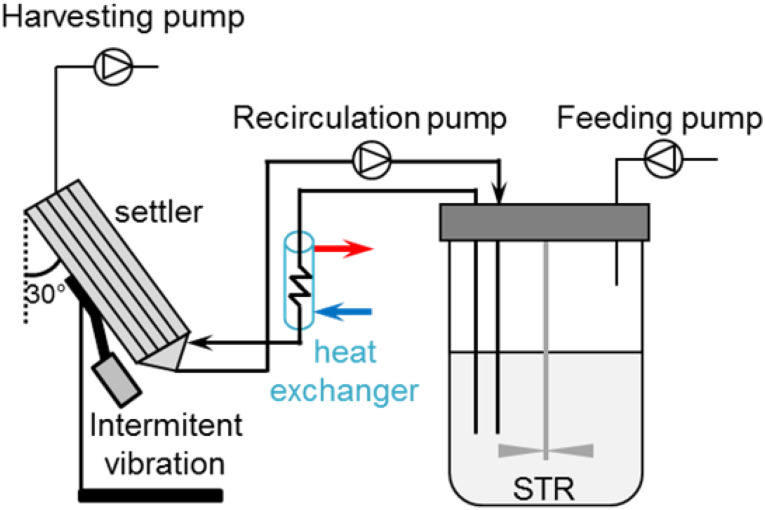
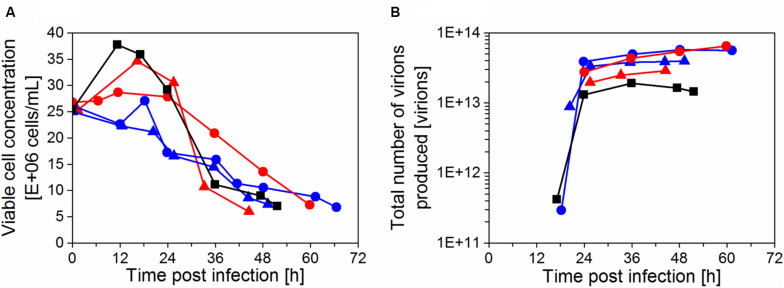
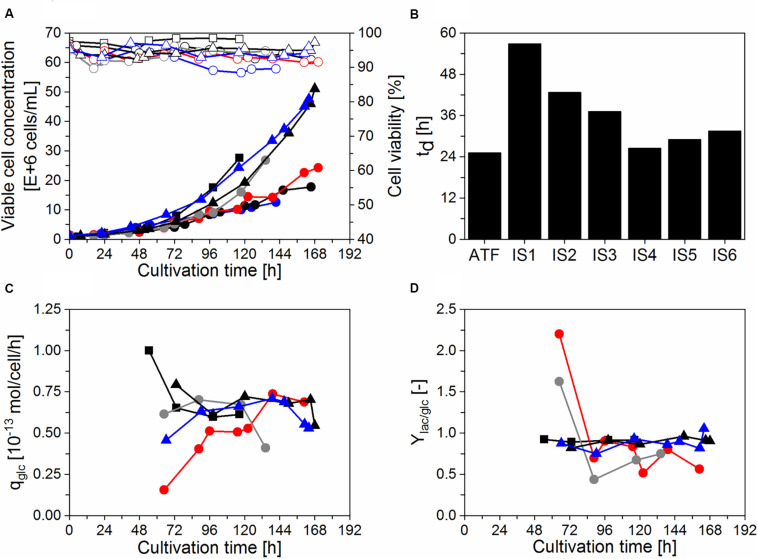
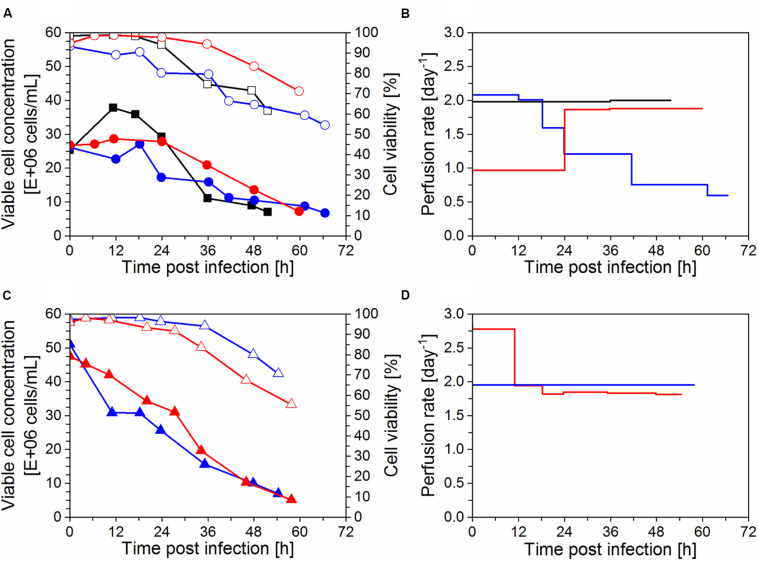
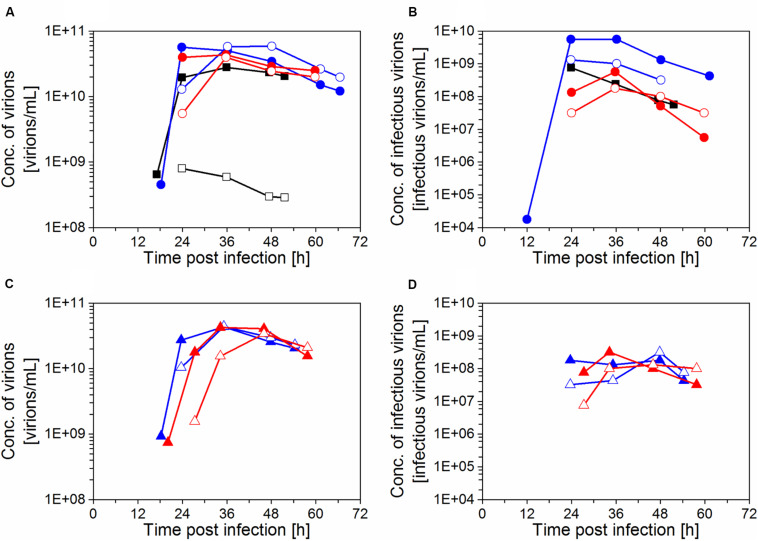
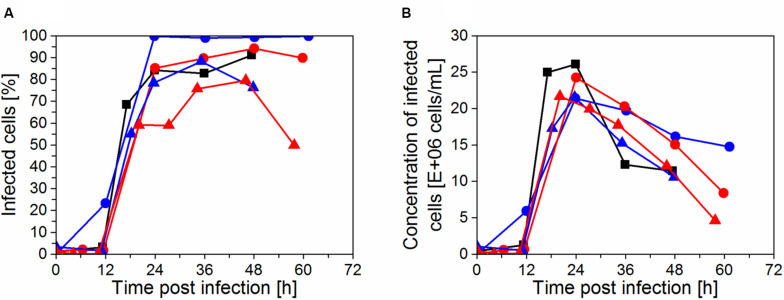
Influenza viruses have been successfully propagated using a variety of animal cell lines in batch, fed-batch, and perfusion culture. For suspension cells, most studies reported on membrane-based cell retention devices typically leading to an accumulation of viruses in the bioreactor in perfusion mode. Aiming at continuous virus harvesting for improved productivities, an inclined settler was evaluated for influenza A virus (IAV) production using the avian suspension cell line AGE1.CR.pIX. Inclined settlers present many advantages as they are scalable, robust, and comply with cGMP regulations, e.g., for recombinant protein manufacturing. Perfusion rates up to 3000 L/day have been reported. In our study, successful growth of AGE1.CR.pIX cells up to 50 × 10 cells/mL and a cell retention efficiency exceeding 96% were obtained with the settler cooled to room temperature. No virus retention was observed. A total of 5.4-6.5 × 10 virions were produced while a control experiment with an ATF system equaled to 1.9 × 10 virions. For infection at 25 × 10 cells/mL, cell-specific virus yields up to 3474 virions/cell were obtained, about 5-fold higher than for an ATF based cultivation performed as a control (723 virions/cell). Trypsin activity was shown to have a large impact on cell growth dynamics after infection following the cell retention device, especially at a cell concentration of 50 × 10 cells/mL. Further control experiments performed with an acoustic settler showed that virus production was improved with a heat exchanger of the inclined settler operated at 27°C. In summary, cell culture-based production of viruses in perfusion mode with an inclined settler and continuous harvesting can drastically increase IAV yields and possibly the yield of other viruses. To our knowledge, this is the first report to show the potential of this device for viral vaccine production.
流感病毒已成功地在多种动物细胞系中通过分批培养、补料分批培养和灌注培养进行繁殖。对于悬浮细胞,大多数关于基于膜的细胞截留装置的研究报告表明,在灌注模式下,这些装置通常会导致病毒在生物反应器中积累。为了实现连续病毒收获以提高生产率,我们评估了一种倾斜沉降器用于使用禽悬浮细胞系AGE1.CR.pIX生产甲型流感病毒(IAV)的效果。倾斜沉降器具有许多优点,因为它们具有可扩展性、坚固性,并且符合cGMP法规,例如用于重组蛋白生产。据报道,其灌注速率可达3000升/天。在我们的研究中,将沉降器冷却至室温时,AGE1.CR.pIX细胞成功生长至50×10⁶个细胞/毫升,细胞截留效率超过96%。未观察到病毒截留现象。共产生了5.4 - 6.5×10⁹个病毒粒子,而使用交替切向流(ATF)系统的对照实验产生了1.9×10⁹个病毒粒子。对于以25×10⁶个细胞/毫升进行感染,细胞特异性病毒产量高达3474个病毒粒子/细胞,比作为对照进行的基于ATF的培养(723个病毒粒子/细胞)高出约5倍。结果表明,胰蛋白酶活性对感染后跟随细胞截留装置的细胞生长动态有很大影响,特别是在细胞浓度为50×10⁶个细胞/毫升时。使用声学沉降器进行的进一步对照实验表明,当倾斜沉降器的热交换器在27°C运行时,病毒产量有所提高。总之,使用倾斜沉降器以灌注模式基于细胞培养生产病毒并进行连续收获可以大幅提高IAV产量,也可能提高其他病毒的产量。据我们所知,这是第一份展示该装置用于病毒疫苗生产潜力的报告。