Laboratory of Pathophysiology and Free Radicals, Department of Pathological Sciences, State University of Londrina, UEL, Londrina, PR, Brazil.
Laboratory of Molecular Pathology, Department of Pathological Sciences, State University of Londrina, UEL, Londrina, PR, Brazil.
Med Hypotheses. 2020 Oct;143:110102. doi: 10.1016/j.mehy.2020.110102. Epub 2020 Jul 13.
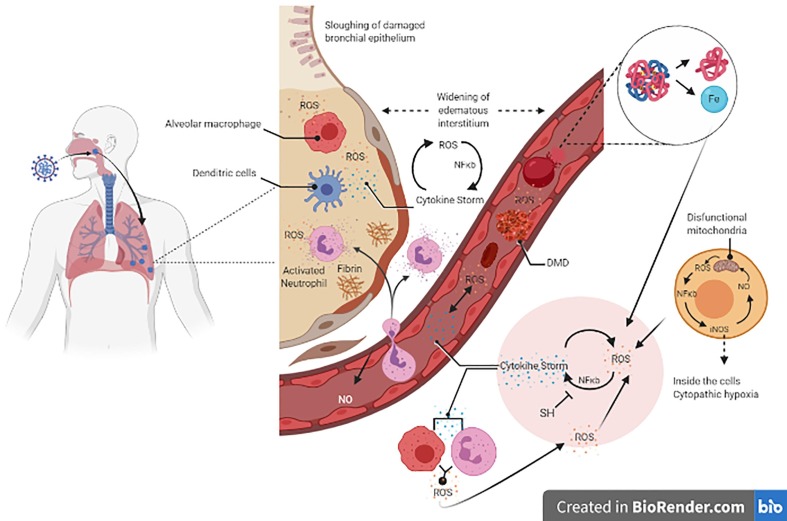
Since the WHO declared COVID-19 a pandemic, a great effort has been made to understand this serious disease. Thousands of studies are being devoted to understanding its epidemiology, its molecular characteristics, its mechanisms, and the clinical evolution of this viral infection. However, little has been published on its pathogenesis and the host response mechanisms in the progress of the disease. Therefore, we propose a hypothesis based on strong scientific documentation, associating oxidative stress with changes found in patients with COVID-19, such as its participation in the amplification and perpetuation of the cytokine storm, coagulopathy, and cell hypoxia. Finally, we suggest a therapeutic strategy to reduce oxidative stress using antioxidants, NF-κB inhibitors, Nrf2 activators, and iron complexing agents. We believe that this hypothesis can guide new studies and therapeutic strategies on this topic.
自世界卫生组织宣布 COVID-19 为大流行以来,人们付出了巨大努力来了解这种严重疾病。目前正在开展数千项研究来了解其流行病学、分子特征、发病机制以及这种病毒感染的临床演变。然而,关于疾病进展过程中的发病机制和宿主反应机制,却鲜有报道。因此,我们基于强有力的科学文献提出了一个假说,将氧化应激与 COVID-19 患者中发现的变化联系起来,例如它参与细胞因子风暴、凝血障碍和细胞缺氧的放大和持续。最后,我们提出了一种使用抗氧化剂、NF-κB 抑制剂、Nrf2 激活剂和铁络合剂来减轻氧化应激的治疗策略。我们相信,这个假说可以为这一课题的新研究和治疗策略提供指导。