Department of Biology, Laurentian University, 935 Ramsey Lake Road, Sudbury, ON P3E 2C6, Canada.
Int J Mol Sci. 2020 Jul 24;21(15):5252. doi: 10.3390/ijms21155252.
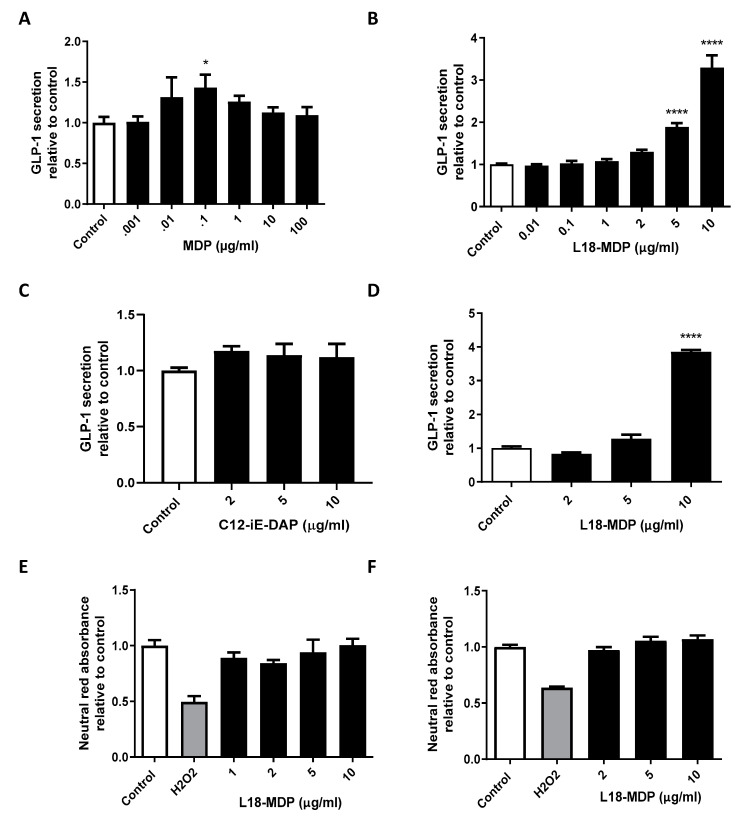
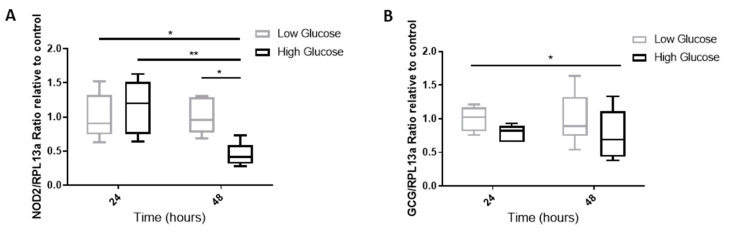
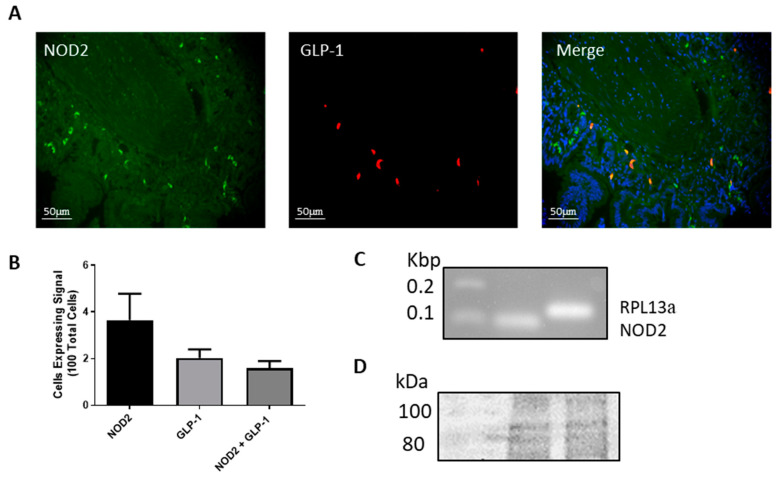
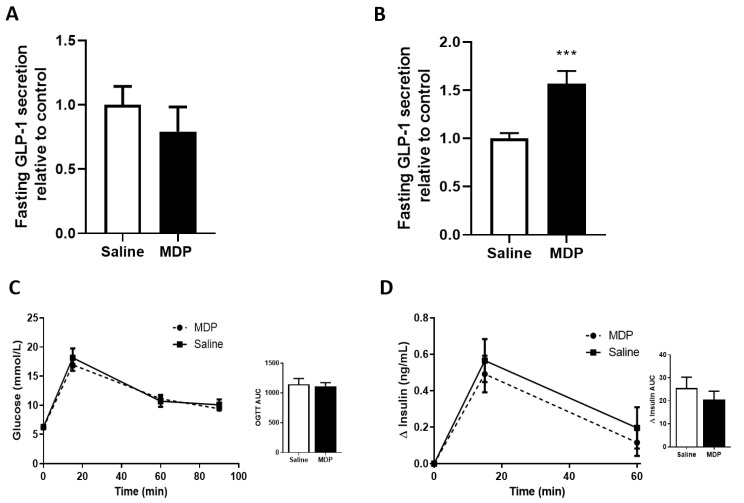
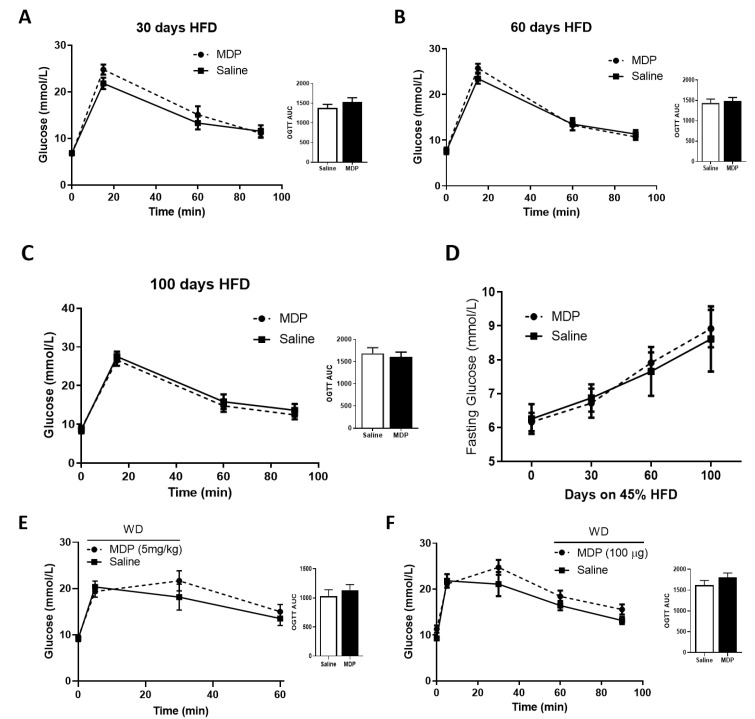
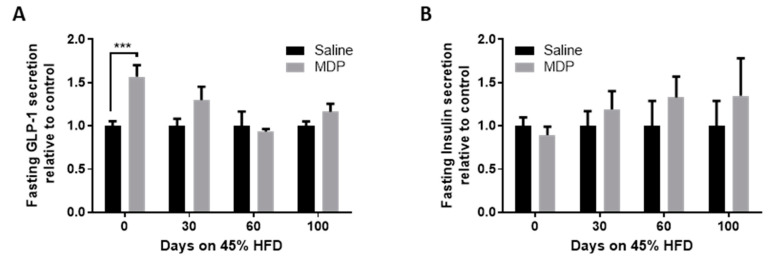
The host's intestinal microbiota contributes to endocrine and metabolic responses, but a dysbiosis in this environment can lead to obesity and insulin resistance. Recent work has demonstrated a role for microbial metabolites in the regulation of gut hormones, including the metabolic hormone, glucagon-like peptide-1 (GLP-1). Muramyl dipeptide (MDP) is a bacterial cell wall component which has been shown to improve insulin sensitivity and glucose tolerance in diet-induced obese mice by acting through the nucleotide oligomerization domain 2 (NOD2) receptor. The purpose of this study was to understand the effects of MDP on GLP-1 secretion and glucose regulation. We hypothesized that MDP enhances glucose tolerance by inducing intestinal GLP-1 secretion through NOD2 activation. First, we observed a significant increase in GLP-1 secretion when murine and human L-cells were treated with a fatty acid MDP derivative (L18-MDP). Importantly, we demonstrated the expression of the NOD2 receptor in mouse intestine and in L-cells. In mice, two intraperitoneal injections of MDP (5 mg/kg body weight) caused a significant increase in fasting total GLP-1 in chow-fed mice, however this did not lead to an improvement in oral glucose tolerance. When mice were exposed to a high-fat diet, they eventually lost this MDP-induced GLP-1 release. Finally, we demonstrated in L-cells that hyperglycemic conditions reduce the mRNA expression of NOD2 and GLP-1. Together these findings suggest MDP may play a role in enhancing GLP-1 during normal glycemic conditions but loses its ability to do so in hyperglycemia.
宿主的肠道微生物群有助于内分泌和代谢反应,但这种环境中的失调会导致肥胖和胰岛素抵抗。最近的研究表明,微生物代谢物在调节肠道激素方面发挥作用,包括代谢激素胰高血糖素样肽-1(GLP-1)。二肽基酰基肽二肽(MDP)是一种细菌细胞壁成分,已被证明通过核苷酸寡聚化结构域 2(NOD2)受体在饮食诱导的肥胖小鼠中改善胰岛素敏感性和葡萄糖耐量。本研究的目的是了解 MDP 对 GLP-1 分泌和葡萄糖调节的影响。我们假设 MDP 通过激活 NOD2 诱导肠道 GLP-1 分泌来增强葡萄糖耐量。首先,当用脂肪酸 MDP 衍生物(L18-MDP)处理鼠和人 L 细胞时,我们观察到 GLP-1 分泌显著增加。重要的是,我们证明了 NOD2 受体在小鼠肠道和 L 细胞中的表达。在小鼠中,两次腹腔注射 MDP(5mg/kg 体重)导致正常饮食喂养的小鼠空腹总 GLP-1 显著增加,但这并没有改善口服葡萄糖耐量。当小鼠暴露于高脂肪饮食时,它们最终失去了这种 MDP 诱导的 GLP-1 释放。最后,我们在 L 细胞中证明高血糖条件下降低了 NOD2 和 GLP-1 的 mRNA 表达。这些发现表明,MDP 可能在正常血糖条件下增强 GLP-1 发挥作用,但在高血糖条件下丧失了这种作用。