Li Feng, Wei Fang, Huang Wei-Lun, Lin Chien-Chung, Li Liang, Shen Macy M, Yan Qingxiang, Liao Wei, Chia David, Tu Michael, Tang Jason H, Feng Ziding, Kim Yong, Su Wu-Chou, Wong David T W
School of Dentistry, University of California Los Angeles, Los Angeles, CA 90095, USA.
Department of Internal Medicine, National Cheng Kung University Hospital, College of Medicine, National Cheng Kung University, Tainan 70101, Taiwan.
Cancers (Basel). 2020 Jul 24;12(8):2041. doi: 10.3390/cancers12082041.
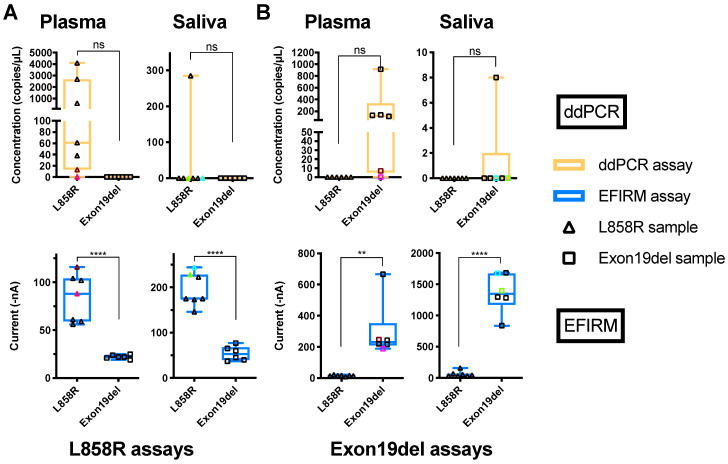
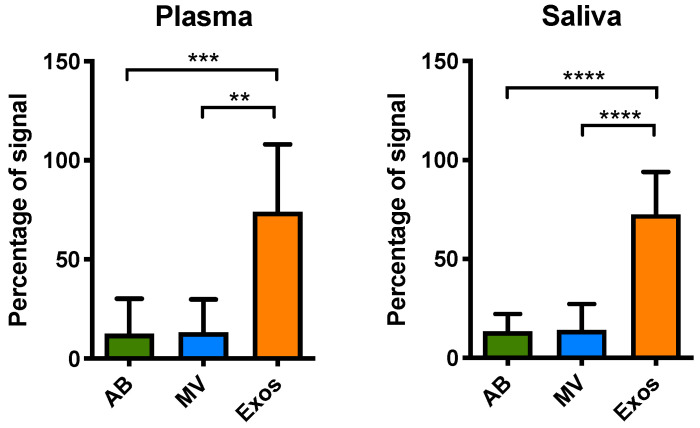
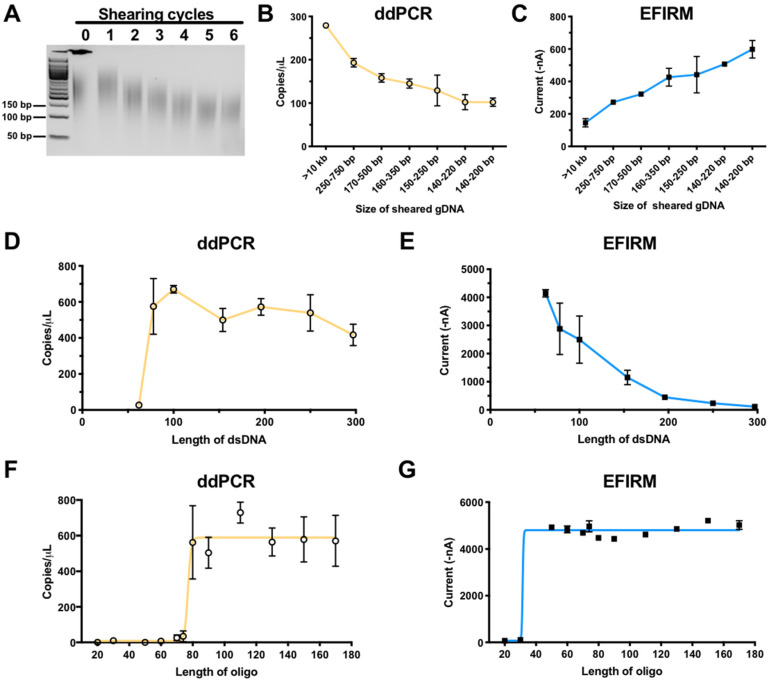
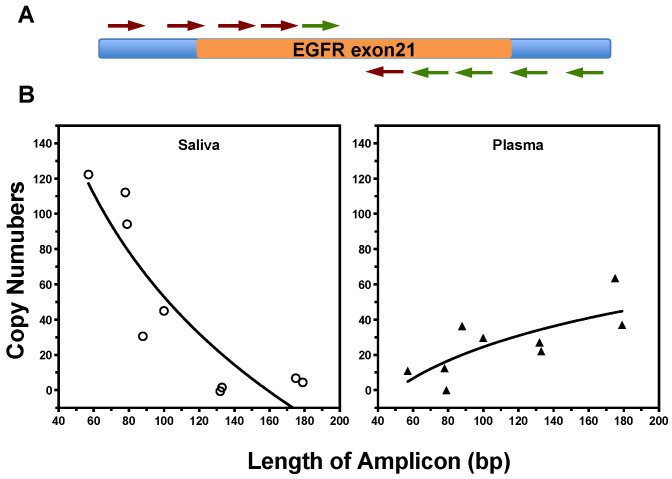
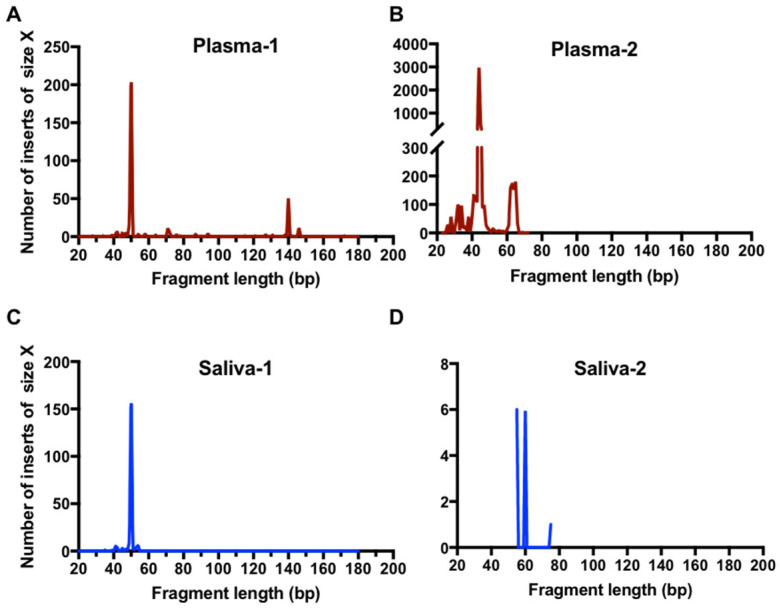
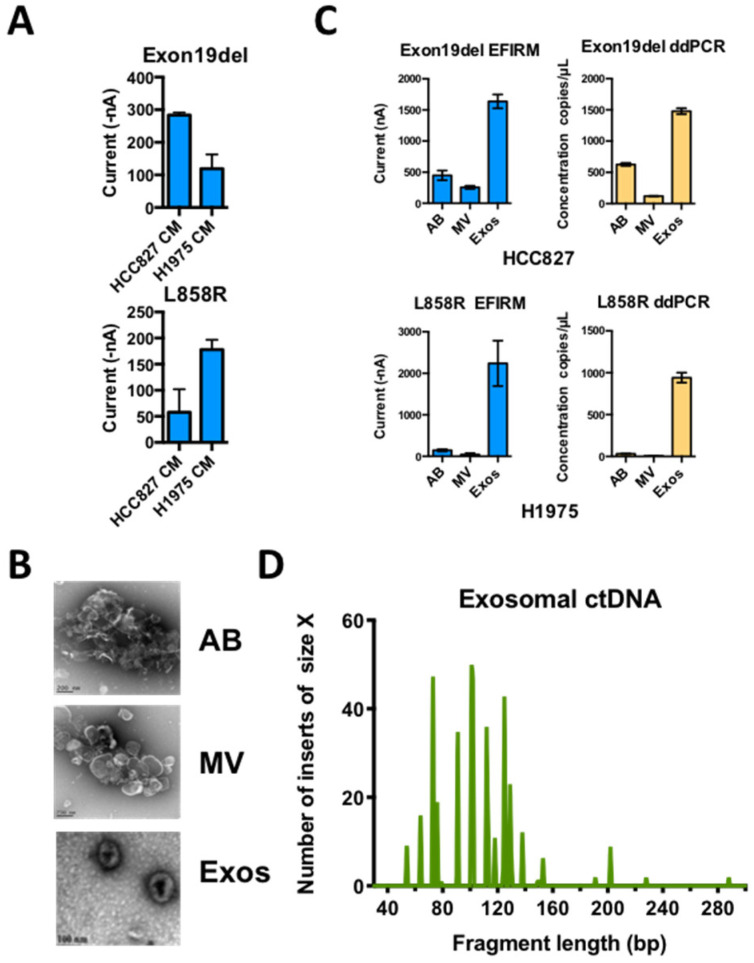
Mutations identified in the epidermal growth factor receptor (EGFR) predict sensitivity to EGFR-targeted therapy for non-small cell lung carcinoma (NSCLC). We previously reported that Electric Field-Induced Release and Measurement (EFIRM)-based liquid biopsy could detect EGFR ctDNA with >94% concordance with tissue-based genotyping. A side-by-side comparison of concordance of EFIRM and droplet digital PCR (ddPCR) for the detection of the two front-line actionable EFGR mutations was performed with paired plasma and saliva samples from 13 NSCLC patients. Deep sequencing analysis based on single-strand DNA library preparation was employed to determine the size distributions of EGFR L858R ctDNA in plasma and saliva samples. EFIRM detected both EGFR mutations with 100% sensitivity in both plasma and saliva samples, whereas ddPCR detected EGFR mutations with sensitivities of 84.6% and 15.4%, respectively. In saliva samples, the majority of EGFR L858R ctDNA fragments detected were <80 bp. Deep sequencing analysis of ctDNA enriched for the EGFR L858R mutation revealed the significant presence of EGFR L858R ctDNA as ultra-short circulating tumor DNA (usctDNA) with the size of 40-60 bp in patient plasma and saliva. Most of usctDNAs are not amplifiable with the current ddPCR assay. Further examination using cell lines and patient biofluids revealed that the majority of usctDNAs were predominately localized in the exosomal fraction. Our study revealed the abundant existence of EGFR ctDNA in the plasma and saliva of NSCLC patients is usctDNA. usctDNA is a novel type of targets for liquid biopsy that can be efficiently detected by EFIRM technology.
在表皮生长因子受体(EGFR)中鉴定出的突变可预测非小细胞肺癌(NSCLC)对EGFR靶向治疗的敏感性。我们之前报道过,基于电场诱导释放和测量(EFIRM)的液体活检能够检测EGFR循环肿瘤DNA(ctDNA),其与基于组织的基因分型一致性超过94%。对13例NSCLC患者的配对血浆和唾液样本进行了EFIRM与数字液滴PCR(ddPCR)检测两种一线可操作EGFR突变一致性的并列比较。采用基于单链DNA文库制备的深度测序分析来确定血浆和唾液样本中EGFR L858R ctDNA的大小分布。EFIRM在血浆和唾液样本中检测两种EGFR突变的敏感性均为100%,而ddPCR检测EGFR突变的敏感性分别为84.6%和15.4%。在唾液样本中,检测到的大多数EGFR L858R ctDNA片段小于80 bp。对富集EGFR L858R突变的ctDNA进行深度测序分析显示,在患者血浆和唾液中存在大量大小为40 - 60 bp的EGFR L858R ctDNA,即超短循环肿瘤DNA(usctDNA)。目前的ddPCR检测方法无法扩增大多数usctDNA。使用细胞系和患者生物流体进行的进一步检测显示,大多数usctDNA主要定位于外泌体部分。我们的研究表明,NSCLC患者血浆和唾液中大量存在的EGFR ctDNA是usctDNA。usctDNA是一种新型的液体活检靶点,可通过EFIRM技术有效检测。