Wang Liangjun, Chen Ning, Cheng Hongxia
Department of Ophthalmology, Yantai Mountain Hospital, Yantai, Shandong 264001, P.R. China.
Department of Ophthalmology, Yuhuangding Hospital, Yantai, Shandong 264000, P.R. China.
Oncol Lett. 2020 Aug;20(2):1239-1244. doi: 10.3892/ol.2020.11679. Epub 2020 May 28.
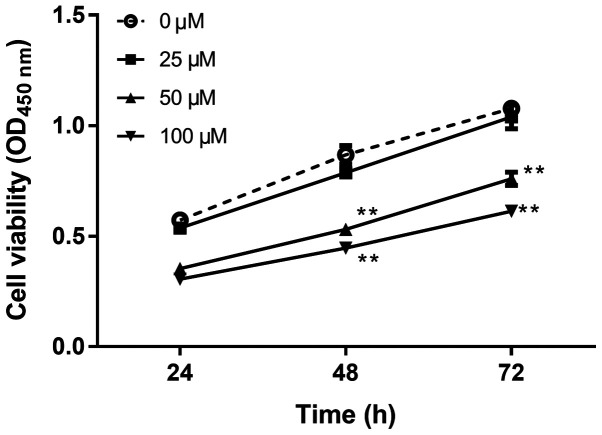
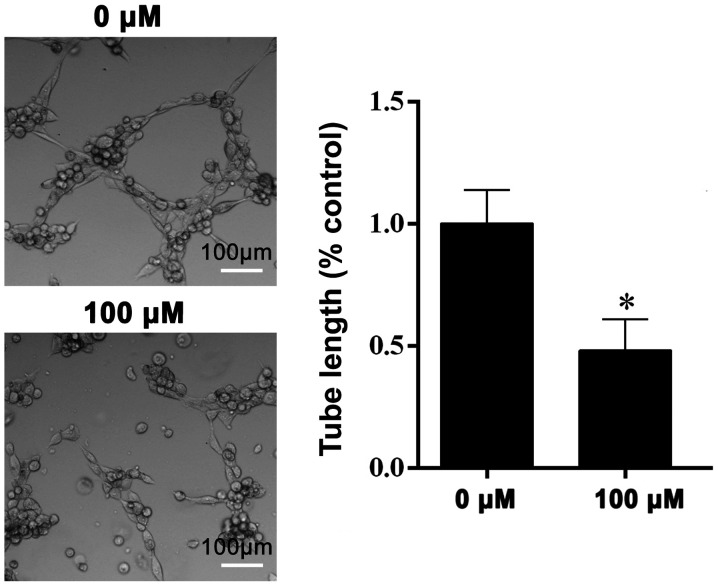
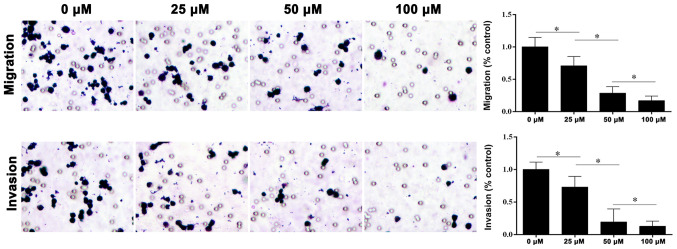
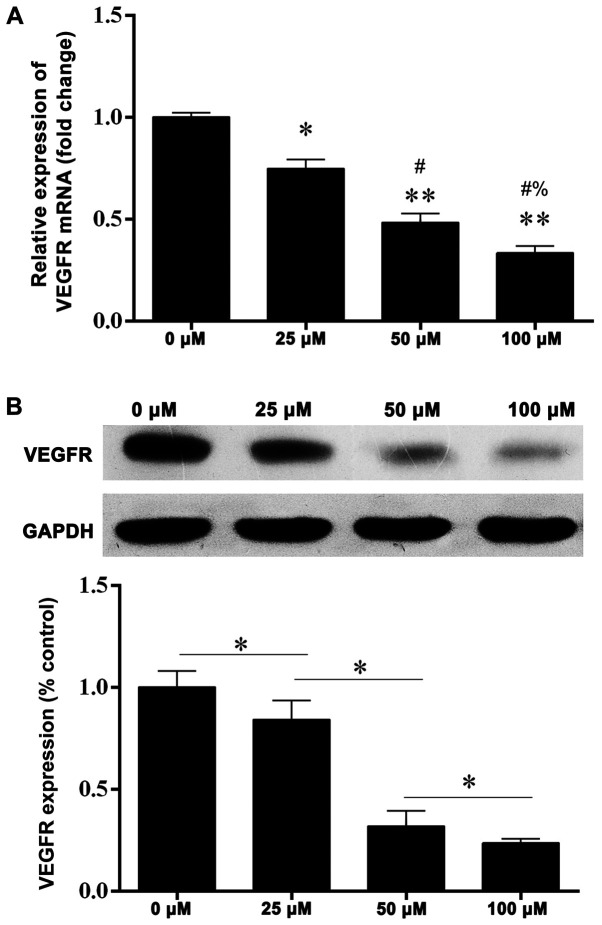
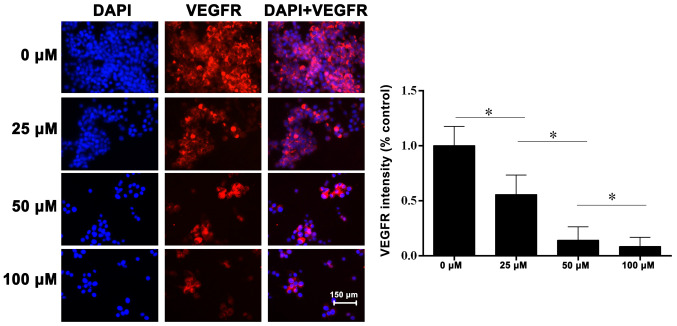
Fisetin is a small phytochemical molecule with antitumor activity. Angiogenesis is a basic process that occurs during tumor growth and metastasis. The vascular endothelial growth factor (VEGF)/VEGF receptor (VEGFR) pathway is a key regulator of angiogenesis. The aim of the present study was to evaluate whether fisetin affects angiogenesis through the VEGFR pathway. In the present study, Y79 cells were treated with 100 ng/ml VEGF in the presence of fisetin at concentrations of 0, 25, 50 and 100 µM. A Cell Counting Kit-8 assay was used to detect proliferation and the Transwell and Matrigel assays were used to assess cell migration and invasion, respectively. Reverse transcription-quantitative polymerase chain reaction analysis was applied to measure the expression level of VEGFR mRNA and western blot analysis was used to measure the protein expression of VEGFR. An immunofluorescence assay was used to detect the expression of VEGFR. Angiogenesis was assessed by a tube formation assay. The results demonstrated that fisetin significantly inhibited the proliferation of Y79 cells in a time- and dose-dependent manner. Fisetin also inhibited the migration and invasion of Y79 cells in a dose-dependent manner. Furthermore, fisetin inhibited the expression of VEGFR in Y79 cells in a dose-dependent manner and tumor angiogenesis . Thus, fisetin was found to inhibit angiogenesis via inhibition of the VEGF/VEGFR signaling pathway, and could be used as a candidate drug to inhibit angiogenesis in retinoblastoma.
漆黄素是一种具有抗肿瘤活性的小分子植物化学物质。血管生成是肿瘤生长和转移过程中发生的一个基本过程。血管内皮生长因子(VEGF)/VEGF受体(VEGFR)通路是血管生成的关键调节因子。本研究的目的是评估漆黄素是否通过VEGFR通路影响血管生成。在本研究中,Y79细胞在存在浓度为0、25、50和100μM漆黄素的情况下用100 ng/ml VEGF处理。使用细胞计数试剂盒-8检测法检测增殖,分别使用Transwell和基质胶检测法评估细胞迁移和侵袭。应用逆转录-定量聚合酶链反应分析来测量VEGFR mRNA的表达水平,使用蛋白质印迹分析来测量VEGFR的蛋白质表达。使用免疫荧光检测法检测VEGFR的表达。通过管形成检测法评估血管生成。结果表明,漆黄素以时间和剂量依赖性方式显著抑制Y79细胞的增殖。漆黄素还以剂量依赖性方式抑制Y79细胞的迁移和侵袭。此外,漆黄素以剂量依赖性方式抑制Y79细胞中VEGFR的表达以及肿瘤血管生成。因此,发现漆黄素通过抑制VEGF/VEGFR信号通路来抑制血管生成,并且可作为抑制视网膜母细胞瘤血管生成的候选药物。