Wu Yingjie, Zhou An, Tang Li, Lei Yuanyuan, Tang Bo, Zhang Linjing
Department of Gastroenterology, Xinqiao Hospital, Third Military Medical University, Chongqing 400037, China.
Zhongshan School of Medicine, Sun Yat-sen University, Guangzhou 510030, China.
J Diabetes Res. 2020 Jul 17;2020:6138438. doi: 10.1155/2020/6138438. eCollection 2020.
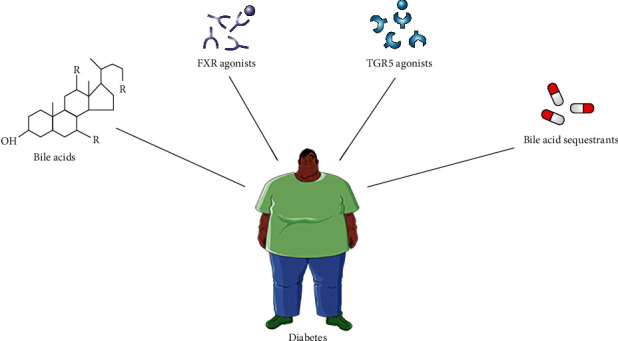
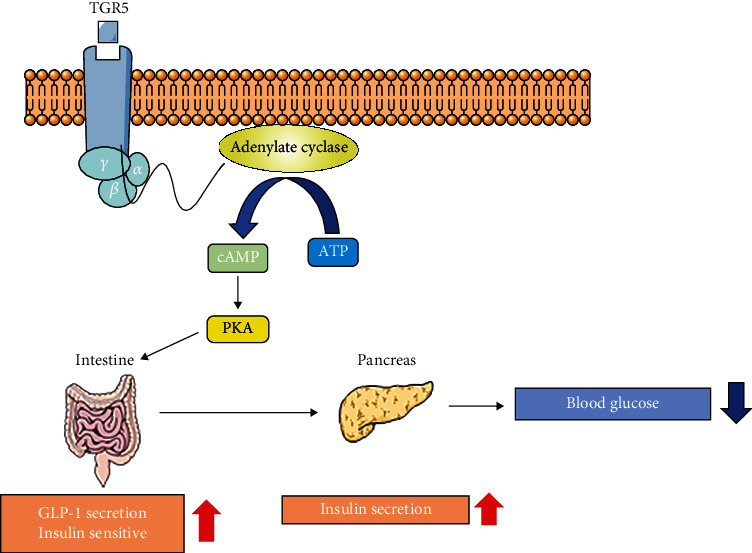
Type 2 diabetes mellitus (T2DM), characterized by insulin resistance and unclear pathogenesis, is a serious menace to human health. Bile acids are the end products of cholesterol catabolism and play an important role in maintaining cholesterol homeostasis. Furthermore, increasing studies suggest that bile acids may regulate glucose tolerance, insulin sensitivity, and energy metabolism, suggesting that bile acids may represent a potential therapeutic target for T2DM. This study summarizes the metabolism of bile acids and, more importantly, changes in their concentrations, constitution, and receptors in diabetes. Furthermore, we provide an overview of the mechanisms underlying the role of bile acids in glucose and lipid metabolism, as well as the occurrence and development of T2DM. Bile acid-targeted therapy may represent a valid approach for T2DM treatment.
2型糖尿病(T2DM)以胰岛素抵抗为特征,发病机制尚不明确,对人类健康构成严重威胁。胆汁酸是胆固醇分解代谢的终产物,在维持胆固醇稳态中起重要作用。此外,越来越多的研究表明,胆汁酸可能调节葡萄糖耐量、胰岛素敏感性和能量代谢,提示胆汁酸可能是T2DM的一个潜在治疗靶点。本研究总结了胆汁酸的代谢,更重要的是,总结了糖尿病患者胆汁酸浓度、组成和受体的变化。此外,我们概述了胆汁酸在糖脂代谢以及T2DM发生发展中作用的潜在机制。胆汁酸靶向治疗可能是治疗T2DM的一种有效方法。