McCrink Conor M, McSorley Emeir M, Grant Kirsty, McNeilly Andrea M, Magee Pamela J
Nutrition Innovation Centre for Food & Health, University of Ulster, Coleraine, Northern Ireland, BT52 1SA, UK.
Sport and Exercise Sciences Research Institute, University of Ulster, Jordanstown, Newtownabbey, Northern Ireland, BT37 0QB, UK.
Eur J Nutr. 2021 Apr;60(3):1465-1473. doi: 10.1007/s00394-020-02341-x. Epub 2020 Jul 30.
To assess the dietary intake, nutrition knowledge and hydration status of Irish Gaelic footballers.
One hundred and sixty-eight male club/county level Irish Gaelic footballers (median [IQR]; age 23 years [20.0, 27.0]; height 1.79 m [1.74, 1.84]; body mass 78.0 kg [73.5, 84.8]) participated in this cross-sectional study. Dietary intake was assessed using a 4-day semi-quantitative food record, with the application of Goldberg cut-offs to define acceptable reporters (n = 62). Nutrition knowledge was assessed using the validated Nutrition for Sport Knowledge Questionnaire in a sub-group of athletes (n = 24), while hydration status was measured using urine specific gravity pre-exercise (USG) in 142 athletes.
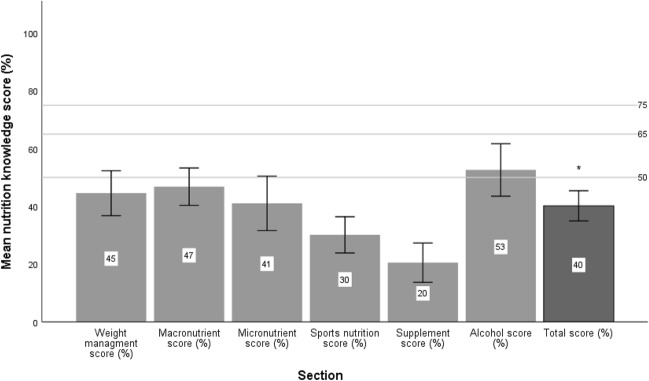
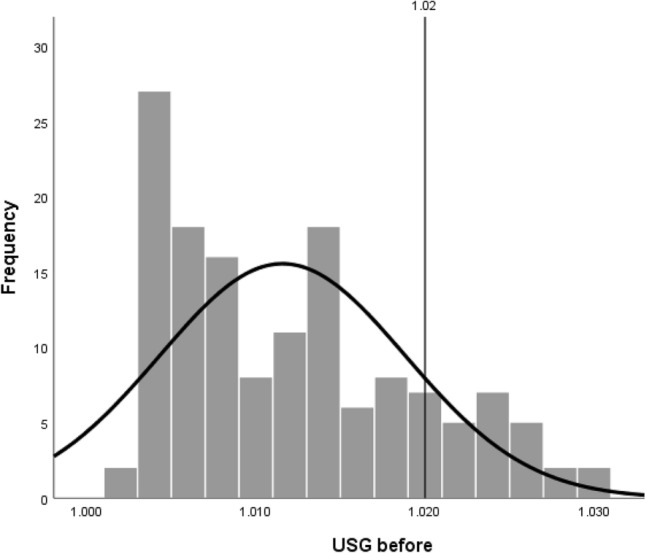
Dietary analysis indicated an energy deficit at the group level (485 kcal [IQR 751,6]) (p < 0.001), with carbohydrate intakes (3.6 g/kg [IQR 3.0,4.1]) below current guidelines for athletes participating in one hour moderate intensity exercise per day (5-7 g/kg; p < 0.001). Average vitamin D (3.8 µg [IQR 1.8, 5.5]) and selenium intakes (54.2 µg [47.2, 76.7]) were significantly below the reference nutrient intakes (p < 0.001). A high proportion of individual athletes also had sub-optimal intakes for: vitamin D (95.2%), selenium (72.6%), vitamin A (38.7%), potassium (30.6%), zinc (25.8%), magnesium (19.4%) and calcium (12.9%). Nutrition knowledge was deemed poor (40.2 ± 12.4%), while pre-exercise hydration status (median USG 1.010 [IQR 1.005, 1.017]) was significantly below the cut-off to denote dehydration (1.020; p < 0.001).
Our findings suggest that Irish Gaelic footballers have sub-optimal dietary practices and lack nutrition knowledge. Individualised nutrition support may benefit these athletes to meet their nutrition requirements, to support health and performance.
评估爱尔兰盖尔式足球运动员的饮食摄入量、营养知识和水合状态。
168名男性俱乐部/郡级爱尔兰盖尔式足球运动员(中位数[四分位间距];年龄23岁[20.0, 27.0];身高1.79米[1.74, 1.84];体重78.0千克[73.5, 84.8])参与了这项横断面研究。饮食摄入量通过4天的半定量食物记录进行评估,并应用戈德堡标准来确定合格的记录者(n = 62)。营养知识在一组运动员(n = 24)中使用经过验证的《运动营养知识问卷》进行评估,而水合状态在142名运动员中通过运动前尿比重(USG)进行测量。
饮食分析表明,该组存在能量不足(485千卡[四分位间距751,6])(p < 0.001),碳水化合物摄入量(3.6克/千克[四分位间距3.0, 4.1])低于目前针对每天进行一小时中等强度运动的运动员的指导标准(5 - 7克/千克;p < 0.001)。维生素D平均摄入量(3.8微克[四分位间距1.8, 5.5])和硒摄入量(54.2微克[47.2, 76.7])显著低于参考营养素摄入量(p < 0.0几)。很大比例的个体运动员在以下营养素的摄入量方面也不理想:维生素D(95.2%)、硒(72.6%)、维生素A(38.7%)、钾(30.6%)、锌(25.8%)、镁(19.4%)和钙(12.9%)。营养知识被认为较差(40.2 ± 12.4%),而运动前水合状态(尿比重中位数1.010[四分位间距1.005, 1.017])显著低于表示脱水的临界值(1.020;p < 0.001)。
我们的研究结果表明,爱尔兰盖尔式足球运动员的饮食习惯不理想,且缺乏营养知识。个性化的营养支持可能有益于这些运动员满足其营养需求,以支持健康和表现。