Department of Oral and Maxillo-facial Implantology, Shanghai Key Laboratory of Stomatology, National Clinical Research Centre for Stomatology, School of Medicine, Shanghai Ninth People Hospital, Shanghai Jiao Tong University, Shanghai, China.
Division of Periodontology and Implant Dentistry, Faculty of Dentistry, University of Hong Kong, Hong Kong, China.
J Clin Periodontol. 2020 Oct;47(10):1219-1226. doi: 10.1111/jcpe.13351. Epub 2020 Aug 31.
Bleeding on brushing (BoB) is an important sign of gingival inflammation. Recently, the use of intelligent toothbrushes and oral health Apps has shown potential to improve oral and periodontal health. In the context of the introduction of an Internet of things network of intelligent power-driven toothbrushes in a supportive periodontal care programme, the aim of this study was (a) to audit the adoption and retention of this new technology; and (b) to preliminarily assess the feasibility to gather data on BoB and associate them with clinical periodontal parameters.
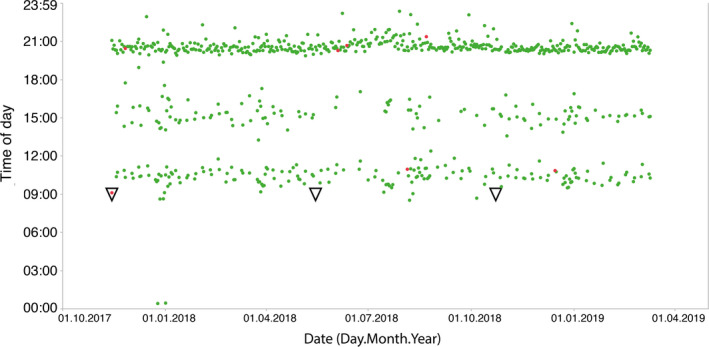
100 subjects with different periodontal case diagnoses participating in supportive periodontal care (SPC) were provided with and instructed on the use of an intelligent power-driven toothbrush connected with an App (I-Brush). Brushing sessions and occurrence of BoB were recorded through the App and stored in a data protection compliant backend. Subject retention was audited over time. BoB recorded in the two weeks before the SPC appointment was associated with clinical parameters observed by the clinician blind to App data.
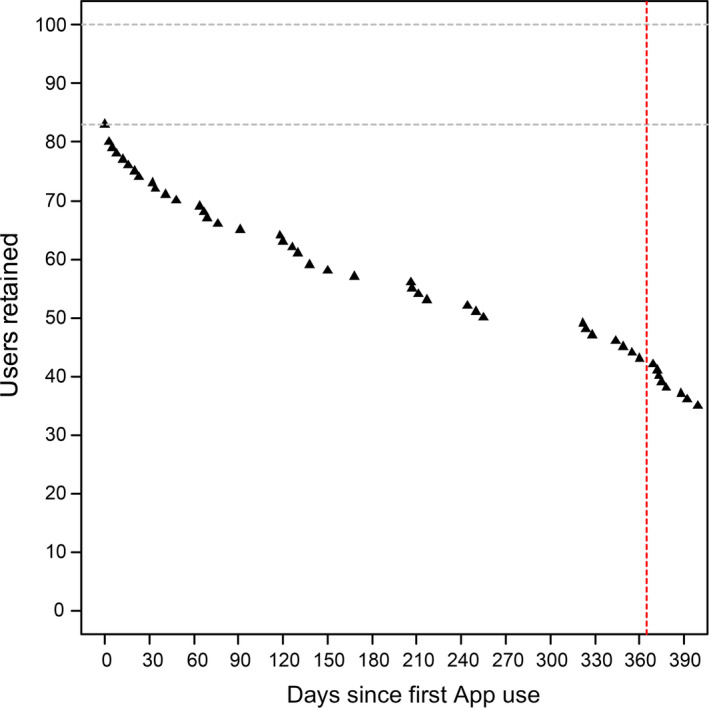
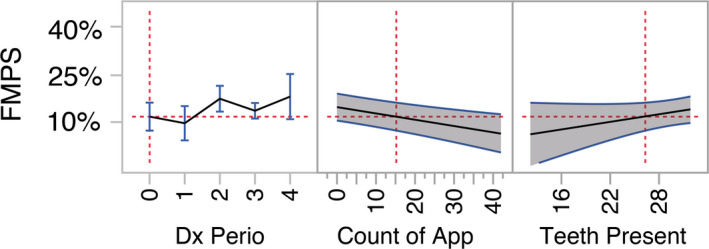
75% of subjects provided data from using the power toothbrush and the App for a minimum of 10 brushing sessions over an average period of 362 days. Compared with baseline, subjects' oral hygiene, bleeding on probing and prevalence of residual pockets improved gradually while using the I-Brush. The number of BoB episodes in the two weeks leading to the SPC appointment and the number of residual pockets predicted BOP (p < .001) detected during the examination. App use in the previous two weeks was associated with lower plaque scores at SPC.
These preliminary observations indicate good adoption and retention of a mobile health system built around an intelligent power toothbrush in a SPC population. The App was able to gather clinically relevant information predicting the observed degree of gingival inflammation. Deployment of mHealth systems seems feasible in dental practice and may bring significant oral health benefits. More investigations are needed in this area.
刷牙出血(BoB)是牙龈炎症的一个重要迹象。最近,智能牙刷和口腔健康应用的使用显示出改善口腔和牙周健康的潜力。在物联网网络的智能动力牙刷引入支持性牙周护理计划的背景下,本研究的目的是(a)审查这种新技术的采用和保留情况;(b)初步评估收集关于 BoB 的数据并将其与临床牙周参数相关联的可行性。
100 名患有不同牙周病诊断的受试者参与支持性牙周护理(SPC),他们被提供并接受了智能动力牙刷(I-Brush)及其配套应用程序(App)的使用说明。刷牙记录和刷牙出血情况通过 App 记录并存储在符合数据保护要求的后端。随着时间的推移,对受试者的保留情况进行了审核。在 SPC 预约前两周内记录的刷牙出血情况与临床医生在不知道 App 数据的情况下观察到的临床参数相关联。
75%的受试者提供了使用电动牙刷和 App 进行至少 10 次刷牙记录的数据,平均持续时间为 362 天。与基线相比,受试者的口腔卫生、探诊出血和残留袋的发生率在使用 I-Brush 时逐渐改善。在 SPC 预约前两周内发生的刷牙出血次数和残留袋数量预测了在检查期间发现的探诊出血(p<0.001)。在 SPC 时,前两周内使用 App 与菌斑评分较低相关。
这些初步观察结果表明,在 SPC 人群中,围绕智能动力牙刷构建的移动健康系统具有良好的采用和保留率。该 App 能够收集预测观察到的牙龈炎症程度的临床相关信息。在牙科实践中部署移动健康系统似乎是可行的,并且可能会带来显著的口腔健康益处。这一领域需要更多的研究。