Department of General Dentistry, Eastman Institute for Oral Health, University of Rochester, 625 Elmwood Ave, Rochester, NY, 14620, USA.
Department of Dentistry, Atlanta VA Medical Center, Atlanta, GA, USA.
BMC Oral Health. 2020 Aug 6;20(1):220. doi: 10.1186/s12903-020-01199-z.
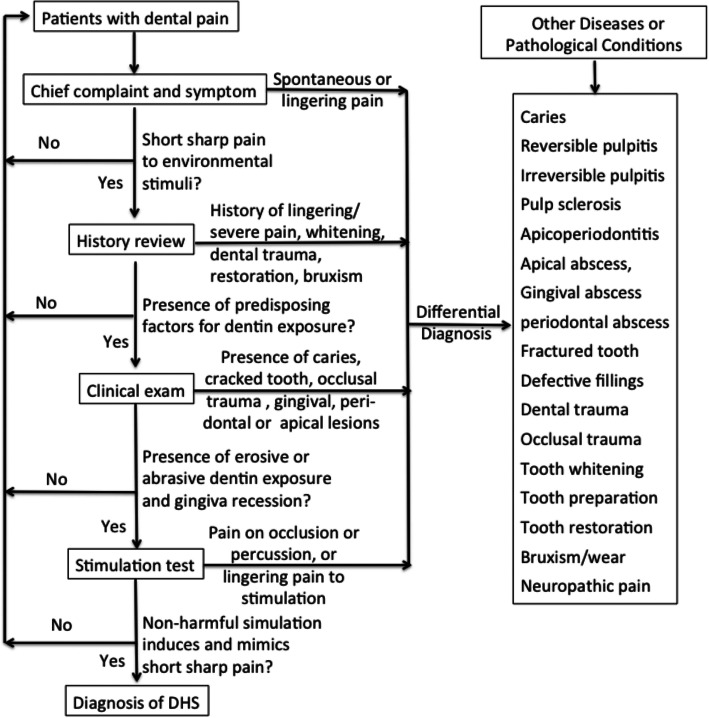
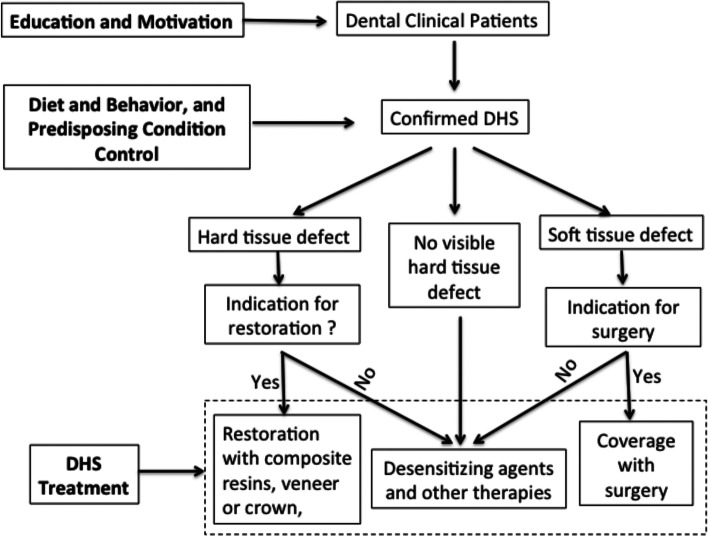
Though dentin hypersensitivity (DHS) is one of the most common complaints from patients in dental clinics, there are no universally accepted guidelines for differential diagnosis as well as selection of reliable treatment modalities for this condition. The neurosensory mechanisms underlying DHS remain unclear, but fluid movements within exposed dentinal tubules, i.e., the hydrodynamic theory, has been a widely accepted explanation for DHS pain. As several dental conditions have symptoms that mimic DHS at different stages of their progression, diagnosis and treatment of DHS are often confusing, especially for inexperienced dental practitioners. In this paper we provide an up-to-date review on risk factors that play a role in the development and chronicity of DHS and summarize the current principles and strategies for differential diagnosis and management of DHS in dental practices. We will outline the etiology, predisposing factors and the underlying putative mechanisms of DHS, and provide principles and indications for its diagnosis and management. Though desensitization remains to be the first choice for DHS for many dental practitioners and most of desensitizing agents reduce the symptoms of DHS by occluding patent dentinal tubules, the long-term outcome of such treatment is uncertain. With improved understanding of the underlying nociceptive mechanisms of DHS, it is expected that promising novel therapies will emerge and provide more effective relief for patients with DHS.
尽管牙本质敏感(DHS)是牙科诊所患者最常见的抱怨之一,但对于这种情况,尚无普遍接受的鉴别诊断指南以及可靠治疗方式的选择。DHS 背后的神经感觉机制仍不清楚,但暴露的牙本质小管内的流体运动,即流体动力理论,一直是 DHS 疼痛的广泛接受的解释。由于一些牙科疾病在其进展的不同阶段具有类似于 DHS 的症状,因此 DHS 的诊断和治疗常常令人困惑,尤其是对于没有经验的牙科从业者。在本文中,我们提供了 DHS 发展和慢性化中起作用的危险因素的最新综述,并总结了 DHS 在牙科实践中的鉴别诊断和管理的当前原则和策略。我们将概述 DHS 的病因,诱发因素和潜在的潜在机制,并提供 DHS 的诊断和管理原则和适应证。尽管脱敏仍然是许多牙科医生治疗 DHS 的首选方法,而且大多数脱敏剂通过阻塞有孔的牙本质小管来减轻 DHS 的症状,但这种治疗的长期效果尚不确定。随着对 DHS 潜在伤害性机制的认识的提高,预计会出现有前途的新型疗法,并为 DHS 患者提供更有效的缓解。