Liu Wu, Deacon John, Yan Huagang, Sun Bo, Liu Yanfeng, Hegan Denise, Li Qin, Coman Daniel, Parent Maxime, Hyder Fahmeed, Roberts Kenneth, Nath Ravinder, Tillement Olivier, Engelman Donald, Glazer Peter
Department of Therapeutic Radiology, Yale University, School of Medicine, New Haven, CT, USA; Department of Radiation Oncology, Stanford University, School of Medicine, Stanford, CA, USA.
Department of Molecular Biophysics and Biochemistry, Yale University, New Haven, CT, USA.
Transl Oncol. 2020 Nov;13(11):100839. doi: 10.1016/j.tranon.2020.100839. Epub 2020 Aug 4.
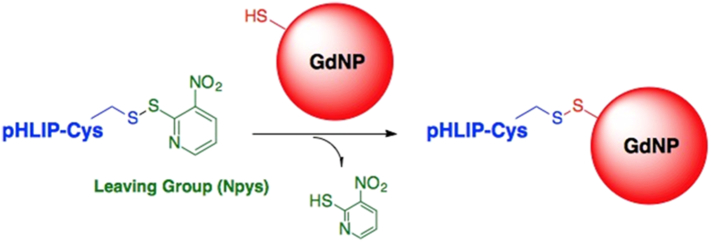
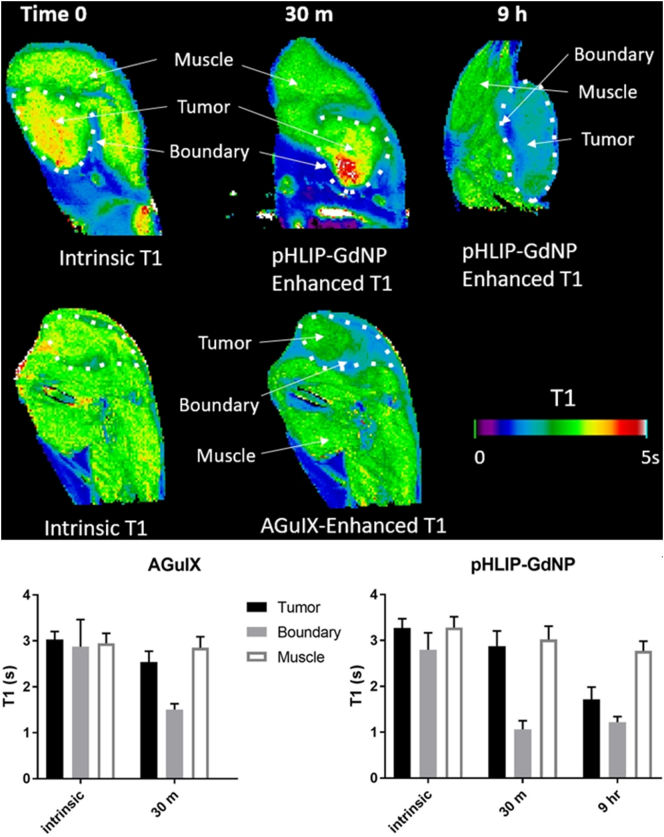
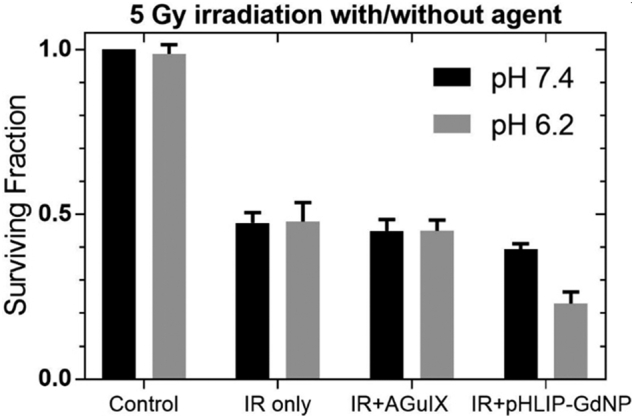
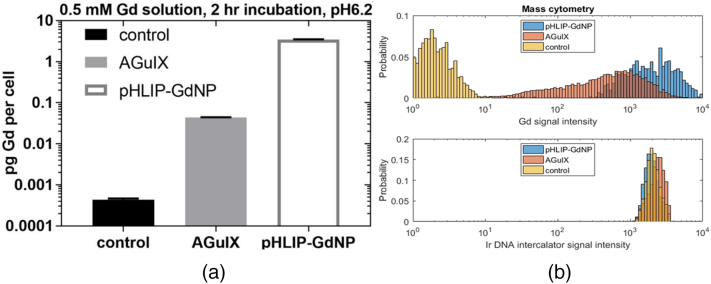
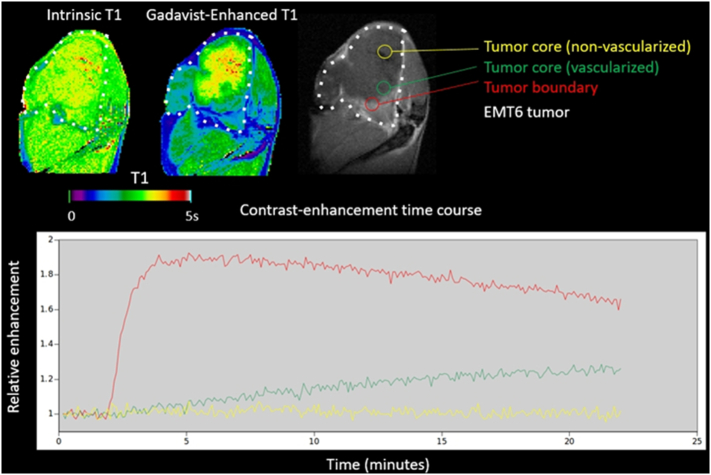
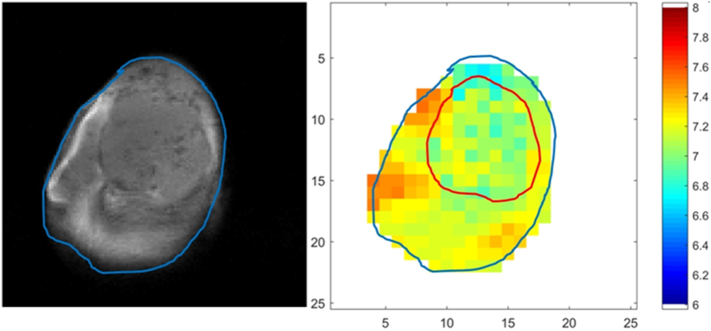
Tumor targeting studies using metallic nanoparticles (NPs) have shown that the enhanced permeability and retention effect may not be sufficient to deliver the amount of intratumoral and intracellular NPs needed for effective in vivo radiosensitization. This work describes a pH-Low Insertion Peptide (pHLIP) targeted theranostic agent to enable image-guided NP-enhanced radiotherapy using a clinically feasible amount of injected NPs. Conventional gadolinium (Gd) NPs were conjugated to pHLIPs and evaluated in vitro for radiosensitivity and in vivo for mouse MRI. Cultured A549 human lung cancer cells were incubated with 0.5 mM of pHLIP-GdNP or conventional GdNP. Mass spectrometry showed 78-fold more cellular Gd uptake with pHLIP-GdNPs, and clonogenic survival assays showed 44% more enhanced radiosensitivity by 5 Gy irradiation with pHLIP-GdNPs at pH 6.2. In contrast to conventional GdNPs, MR imaging of tumor-bearing mice showed pHLIP-GdNPs had a long retention time in the tumor (>9 h), suitable for radiotherapy, and penetrated into the poorly-vascularized tumor core. The Gd-enhanced tumor corresponded with low-pH areas also independently measured by an in vivo molecular MRI technique. pHLIPs actively target cell surface acidity from tumor cell metabolism and deliver GdNPs into cells in solid tumors. Intracellular delivery enhances the effect of short-range radiosensitizing photoelectrons and Auger electrons. Because acidity is a general hallmark of tumor cells, the delivery is more general than antibody targeting. Imaging the in vivo NP biodistribution and more acidic (often more aggressive) tumors has the potential for quantitative radiotherapy treatment planning and pre-selecting patients who will likely benefit more from NP radiation enhancement.
使用金属纳米颗粒(NPs)的肿瘤靶向研究表明,增强的渗透和滞留效应可能不足以递送体内有效放射增敏所需的瘤内和细胞内纳米颗粒数量。这项工作描述了一种pH-低插入肽(pHLIP)靶向的诊疗剂,以使用临床可行剂量的注射纳米颗粒实现图像引导的纳米颗粒增强放射治疗。将传统的钆(Gd)纳米颗粒与pHLIPs偶联,并在体外评估其放射敏感性,在体内评估其对小鼠的磁共振成像(MRI)。将培养的A549人肺癌细胞与0.5 mM的pHLIP-GdNP或传统的GdNP一起孵育。质谱分析显示,pHLIP-GdNPs的细胞钆摄取量多78倍,克隆形成存活试验显示,在pH 6.2条件下,用pHLIP-GdNPs进行5 Gy照射,放射敏感性增强44%。与传统的GdNPs相比,荷瘤小鼠的磁共振成像显示,pHLIP-GdNPs在肿瘤中的滞留时间长(>9小时),适合放射治疗,并能渗透到血管化不良的肿瘤核心。Gd增强的肿瘤也与通过体内分子MRI技术独立测量的低pH区域相对应。pHLIPs从肿瘤细胞代谢中主动靶向细胞表面酸度,并将GdNPs递送到实体瘤细胞中。细胞内递送增强了短程放射增敏光电子和俄歇电子的效应。由于酸度是肿瘤细胞的一个普遍特征,这种递送比抗体靶向更具普遍性。对体内纳米颗粒生物分布和酸性更强(通常更具侵袭性)的肿瘤进行成像,有可能用于定量放射治疗治疗计划,并预先选择可能从纳米颗粒放射增强中获益更多的患者。