Glycoproteomics Laboratory, Department of Parasitology, University of Sao Paulo, Sao Paulo 05508-000, Brazil.
Laboratory of Experimental Immunoparasitology, Department of Parasitology, University of Sao Paulo, Sao Paulo 05508-000, Brazil.
Genes (Basel). 2020 Aug 5;11(8):894. doi: 10.3390/genes11080894.
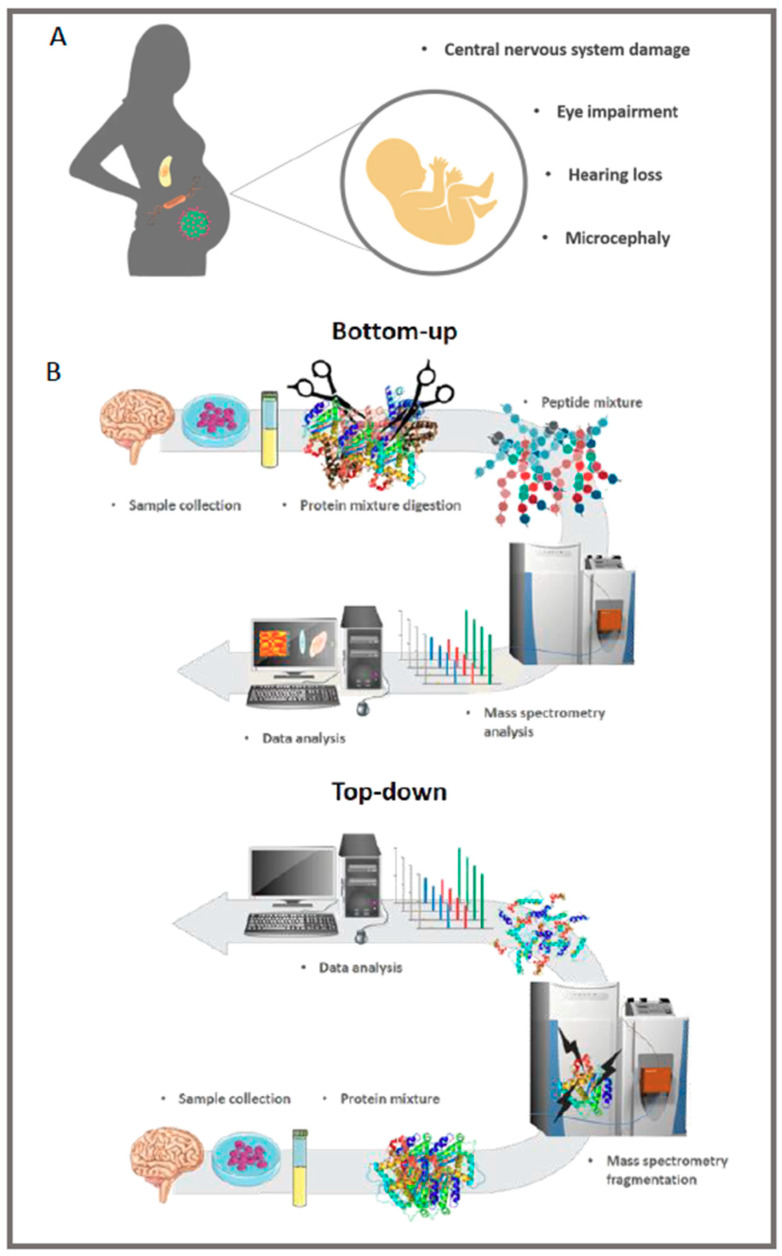
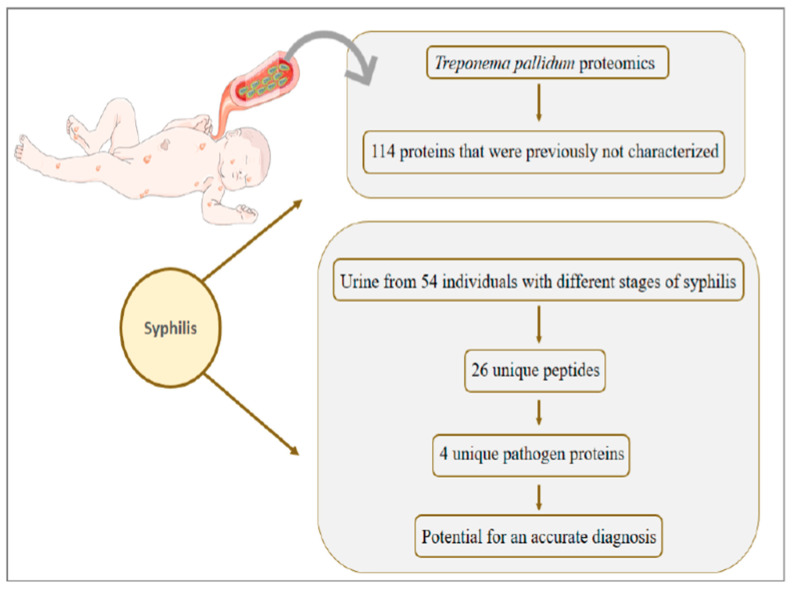
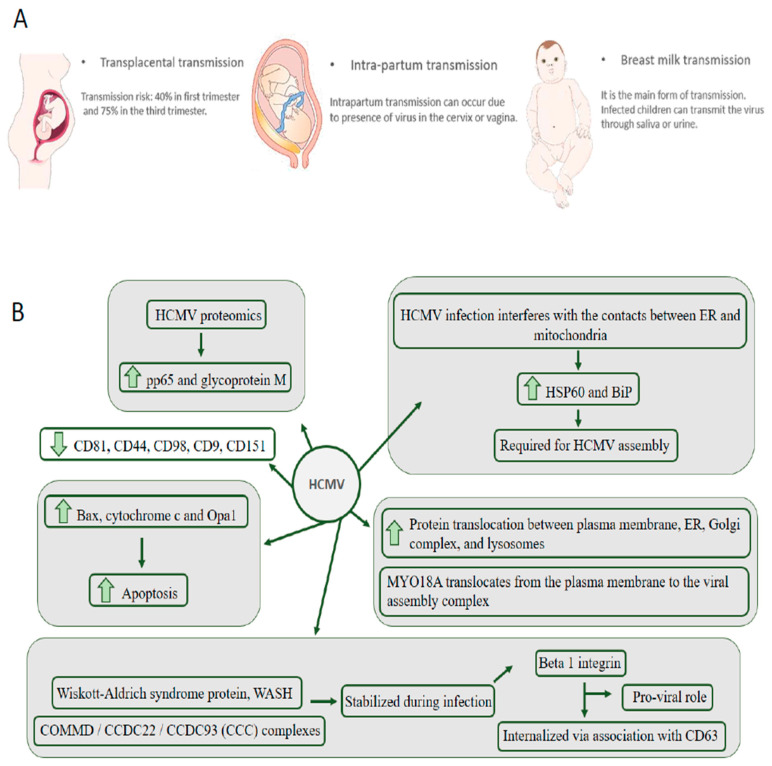
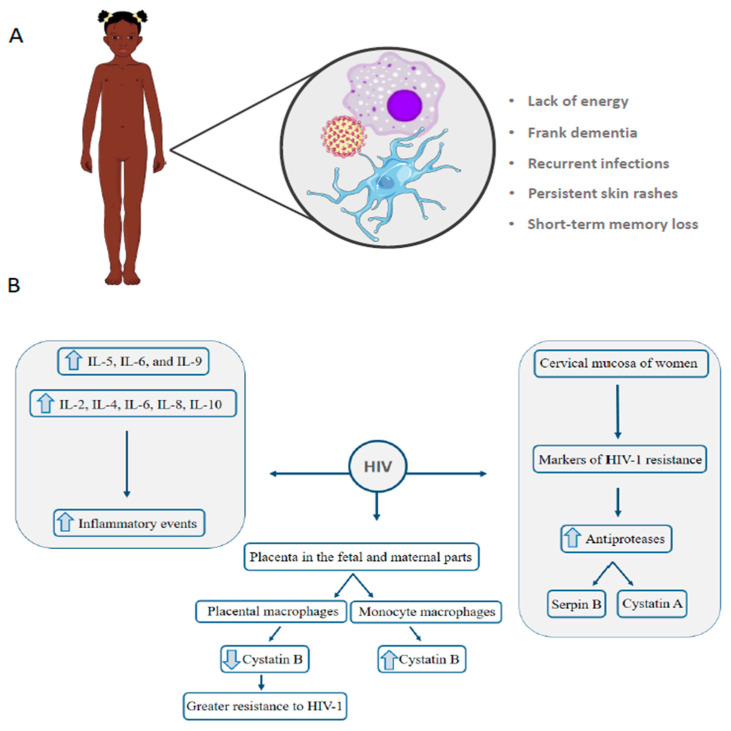
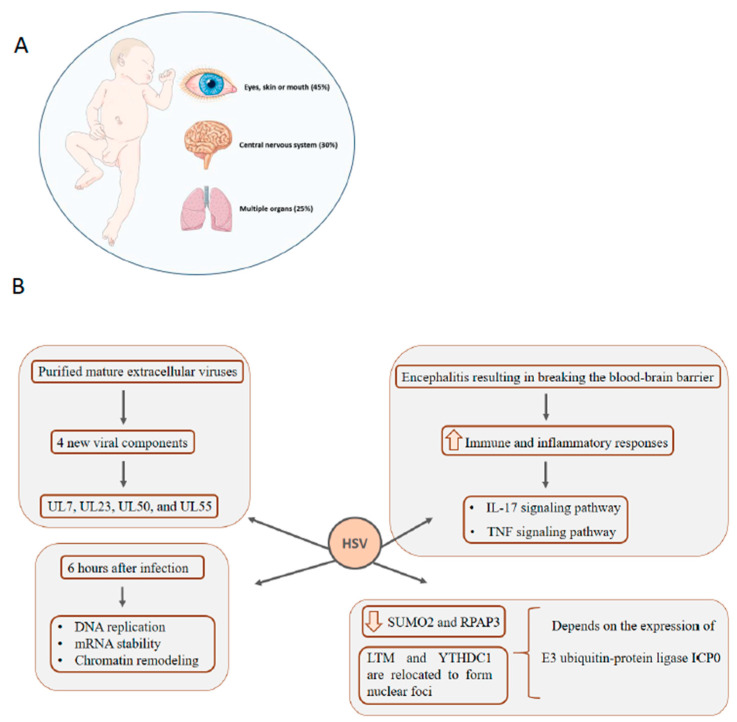
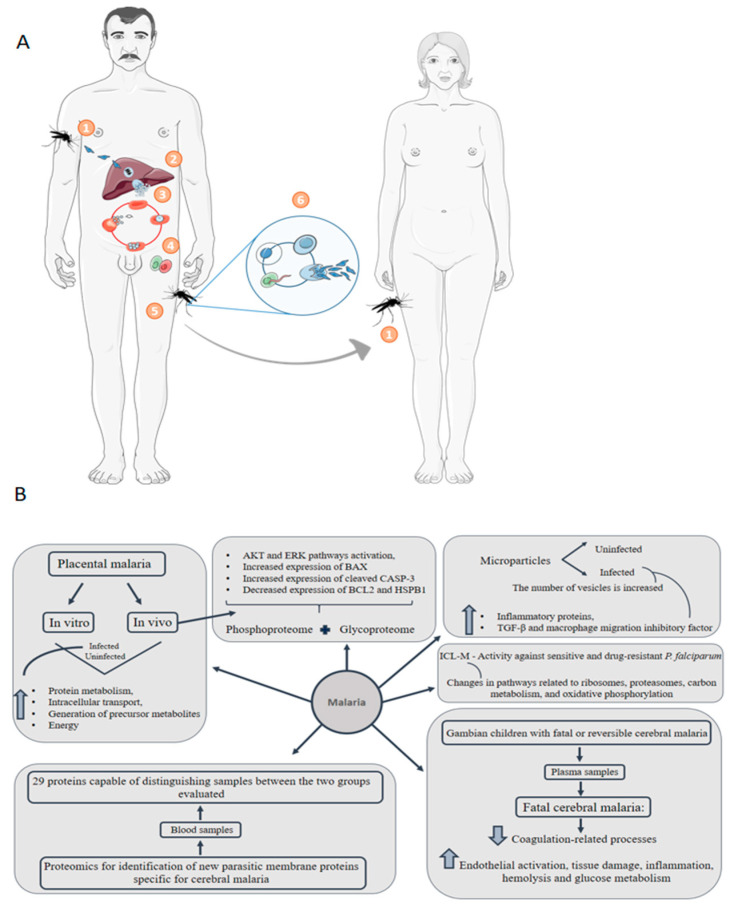
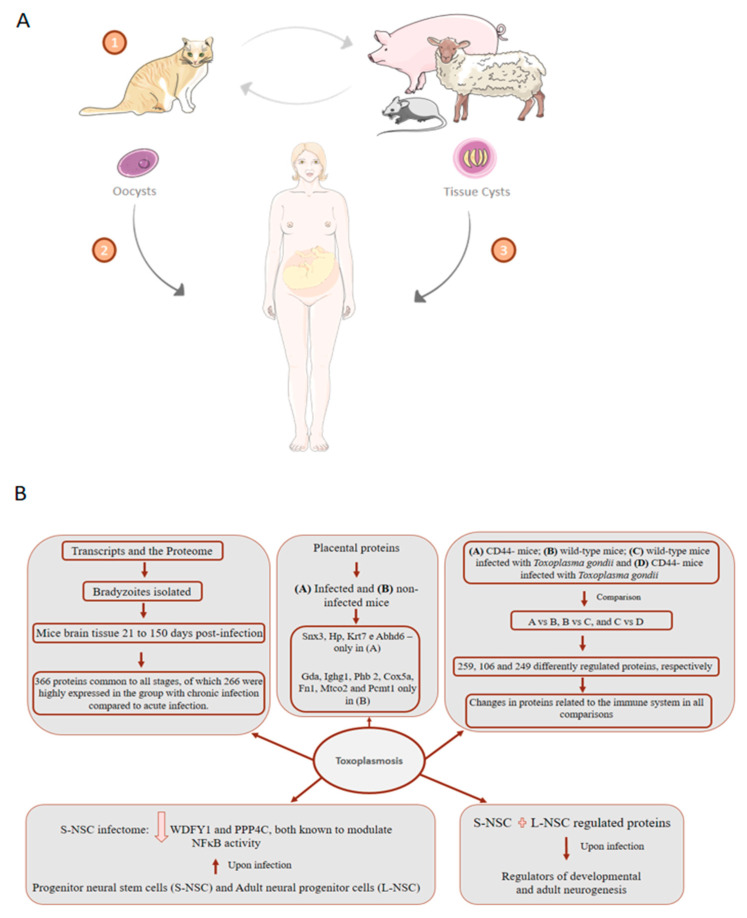
Congenital abnormalities cause serious fetal consequences. The term TORCH is used to designate the most common perinatal infections, where: (T) refers to toxoplasmosis, (O) means "others" and includes syphilis, varicella-zoster, parvovirus B19, zika virus (ZIKV), and malaria among others, (R) refers to rubella, (C) relates to cytomegalovirus infection, and (H) to herpes simplex virus infections. Among the main abnormalities identified in neonates exposed to congenital infections are central nervous system (CNS) damage, microcephaly, hearing loss, and ophthalmological impairment, all requiring regular follow-up to monitor its progression. Protein changes such as mutations, post-translational modifications, abundance, structure, and function may indicate a pathological condition before the onset of the first symptoms, allowing early diagnosis and understanding of a particular disease or infection. The term "proteomics" is defined as the science that studies the proteome, which consists of the total protein content of a cell, tissue or organism in a given space and time, including post-translational modifications (PTMs) and interactions between proteins. Currently, quantitative bottom-up proteomic strategies allow rapid and high throughput characterization of complex biological mixtures. Investigating proteome modulation during host-pathogen interaction helps in elucidating the mechanisms of infection and in predicting disease progression. This "molecular battle" between host and pathogen is a key to identify drug targets and diagnostic markers. Here, we conducted a survey on proteomic techniques applied to congenital diseases classified in the terminology "TORCH", including toxoplasmosis, ZIKV, malaria, syphilis, human immunodeficiency virus (HIV), herpes simplex virus (HSV) and human cytomegalovirus (HCVM). We have highlighted proteins and/or protein complexes actively involved in the infection. Most of the proteomic studies reported have been performed in cell line models, and the evaluation of tissues (brain, muscle, and placenta) and biofluids (plasma, serum and urine) in animal models is still underexplored. Moreover, there are a plethora of studies focusing on the pathogen or the host without considering the triad mother-fetus-pathogen as a dynamic and interconnected system.
先天性异常会导致严重的胎儿后果。术语 TORCH 用于指定最常见的围产期感染,其中:(T)指弓形体病,(O)表示“其他”,包括梅毒、水痘-带状疱疹、细小病毒 B19、寨卡病毒(ZIKV)和疟疾等,(R)指风疹,(C)指巨细胞病毒感染,(H)指单纯疱疹病毒感染。在暴露于先天性感染的新生儿中发现的主要异常包括中枢神经系统(CNS)损伤、小头畸形、听力损失和眼科损伤,所有这些都需要定期随访以监测其进展。蛋白质变化,如突变、翻译后修饰、丰度、结构和功能,可能在出现第一个症状之前表明存在病理状况,从而允许早期诊断和了解特定疾病或感染。“蛋白质组学”一词被定义为研究蛋白质组的科学,蛋白质组由特定空间和时间内细胞、组织或生物体的总蛋白质含量组成,包括翻译后修饰(PTMs)和蛋白质之间的相互作用。目前,定量的底向上蛋白质组学策略允许快速和高通量地描述复杂的生物混合物。研究宿主-病原体相互作用过程中蛋白质组的调节有助于阐明感染机制并预测疾病进展。宿主与病原体之间的这种“分子斗争”是识别药物靶点和诊断标志物的关键。在这里,我们对应用于分类为“TORCH”的先天性疾病的蛋白质组学技术进行了调查,包括弓形体病、ZIKV、疟疾、梅毒、人类免疫缺陷病毒(HIV)、单纯疱疹病毒(HSV)和人类巨细胞病毒(HCVM)。我们强调了积极参与感染的蛋白质和/或蛋白质复合物。大多数报道的蛋白质组学研究都是在细胞系模型中进行的,而对动物模型中的组织(大脑、肌肉和胎盘)和生物流体(血浆、血清和尿液)的评估仍未得到充分探索。此外,有大量研究侧重于病原体或宿主,而没有将母亲-胎儿-病原体三联体视为一个动态和相互关联的系统。