Li Jianfeng, Liu Xiao, Crook Jeremy M, Wallace Gordon G
ARC Centre of Excellence for Electromaterials Science, Intelligent Polymer Research Institute, AIIM Facility, University of Wollongong, Wollongong, NSW, Australia.
Illawarra Health and Medical Research Institute, University of Wollongong, Wollongong, NSW, Australia.
Front Bioeng Biotechnol. 2020 Jul 17;8:824. doi: 10.3389/fbioe.2020.00824. eCollection 2020.
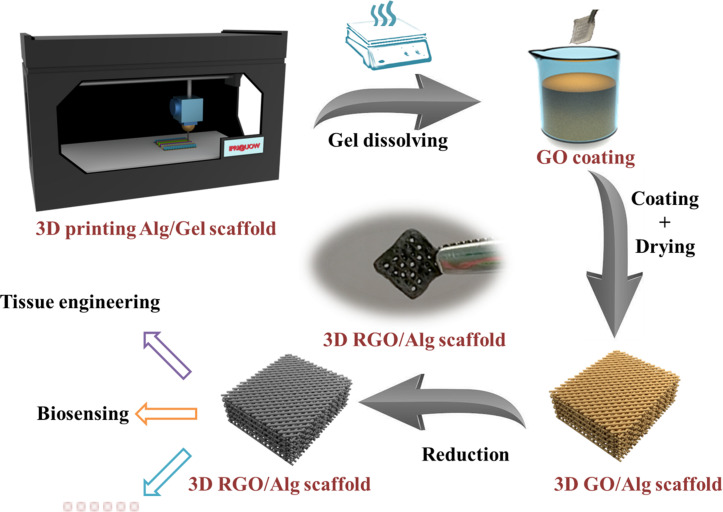
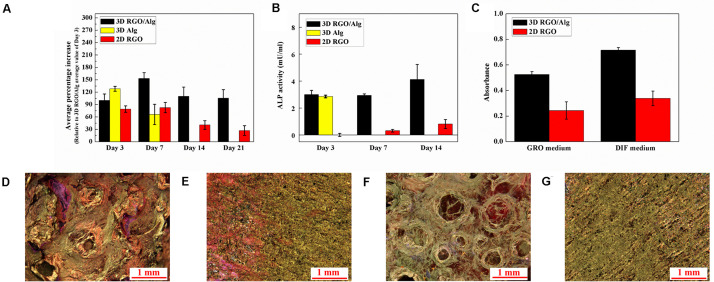
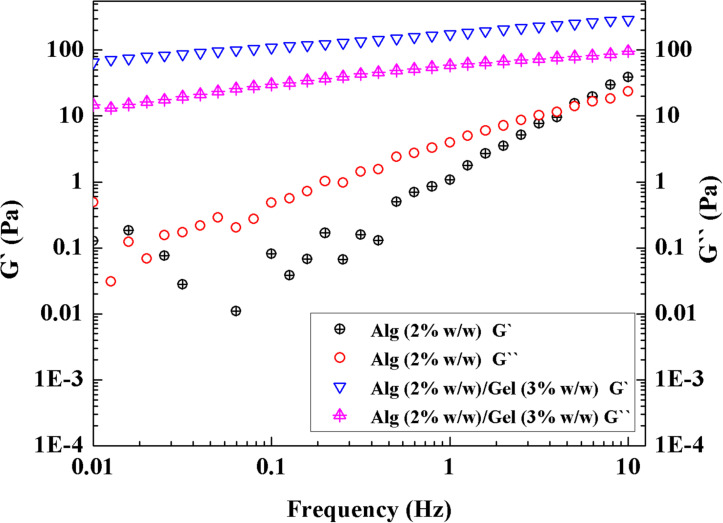
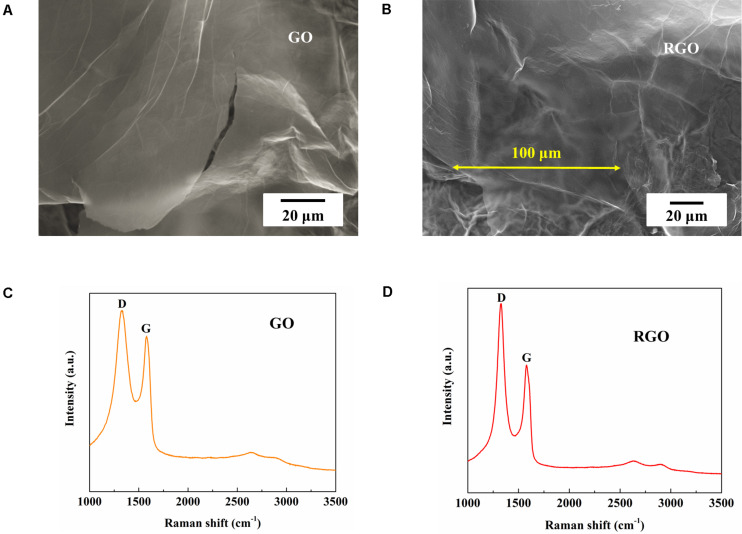
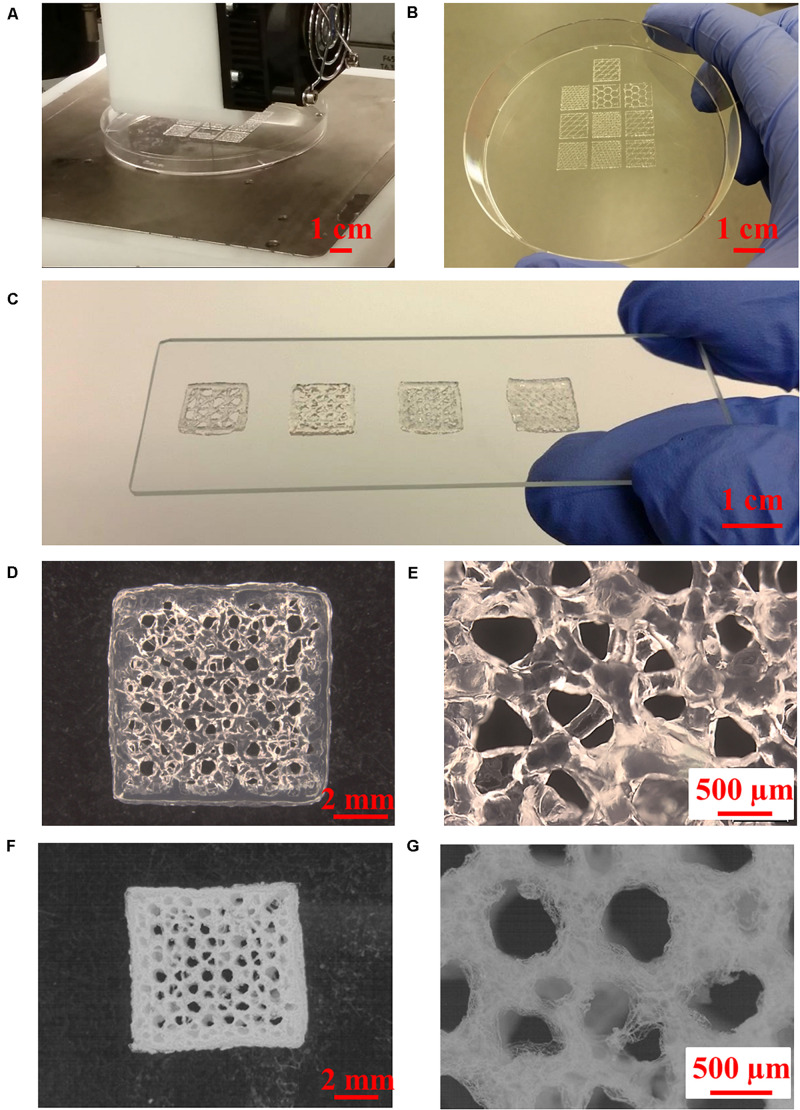
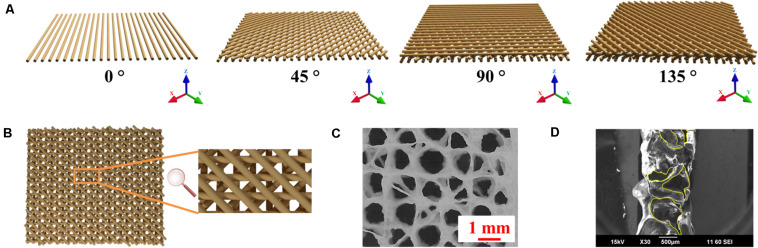
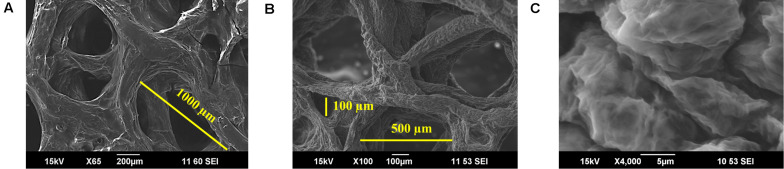
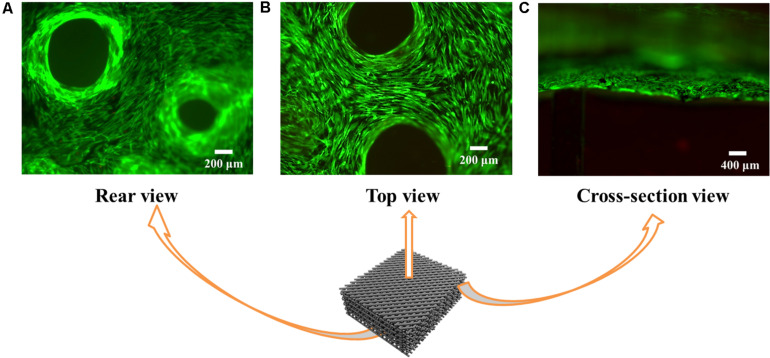
Tissue engineering, based on a combination of 3D printing, biomaterials blending and stem cell technology, offers the potential to establish customized, transplantable autologous implants using a patient's own cells. Graphene, as a two-dimensional (2D) version of carbon, has shown great potential for tissue engineering. Here, we describe a novel combination of graphene with 3D printed alginate (Alg)-based scaffolds for human adipose stem cell (ADSC) support and osteogenic induction. Alg printing was enabled through addition of gelatin (Gel) that was removed after printing, and the 3D structure was then coated with graphene oxide (GO). GO was chemically reduced with a biocompatible reductant (ascorbic acid) to provide electrical conductivity and cell affinity sites. The reduced 3D graphene oxide (RGO)/Alg scaffold has good cytocompatibility and can support human ADSC proliferation and osteogenic differentiation. Our finding supports the potential for the printed scaffold's use for engineering of bone and other tissues using ADSCs and potentially other human stem cells, as well as regenerative medicine.
组织工程学基于3D打印、生物材料混合和干细胞技术的结合,提供了使用患者自身细胞建立定制化、可移植自体植入物的潜力。石墨烯作为碳的二维(2D)形式,在组织工程学中显示出巨大潜力。在此,我们描述了石墨烯与3D打印的基于海藻酸盐(Alg)的支架的一种新型组合,用于支持人脂肪干细胞(ADSC)并进行成骨诱导。通过添加明胶(Gel)实现Alg打印,打印后将其去除,然后用氧化石墨烯(GO)涂覆3D结构。用生物相容性还原剂(抗坏血酸)对GO进行化学还原,以提供导电性和细胞亲和位点。还原后的3D氧化石墨烯(RGO)/Alg支架具有良好的细胞相容性,能够支持人ADSC增殖和成骨分化。我们的发现支持了这种打印支架用于利用ADSC以及潜在的其他人类干细胞进行骨和其他组织工程以及再生医学的潜力。