Kay Anthony David, Blazevich Anthony John, Fraser Millie, Ashmore Lucy, Hill Mathew William
Centre for Physical Activity and Life Sciences, Faculty of Art, Science and Technology, University of Northampton, Northamptonshire, UK.
Centre for Exercise and Sports Science Research (CESSR), School of Exercise and Health Sciences, Edith Cowan University, Joondalup, Australia.
Eur J Appl Physiol. 2020 Nov;120(11):2383-2395. doi: 10.1007/s00421-020-04466-7. Epub 2020 Aug 9.
Eccentric exercise can reverse age-related decreases in muscle strength and mass; however, no data exist describing its effects on postural sway. As the ankle may be more important for postural sway than hip and knee joints, and with older adults prone to periods of inactivity, the effects of two 6-week seated isokinetic eccentric exercise programmes, and an 8-week detraining period, were examined in 27 older adults (67.1 ± 6.0 years).
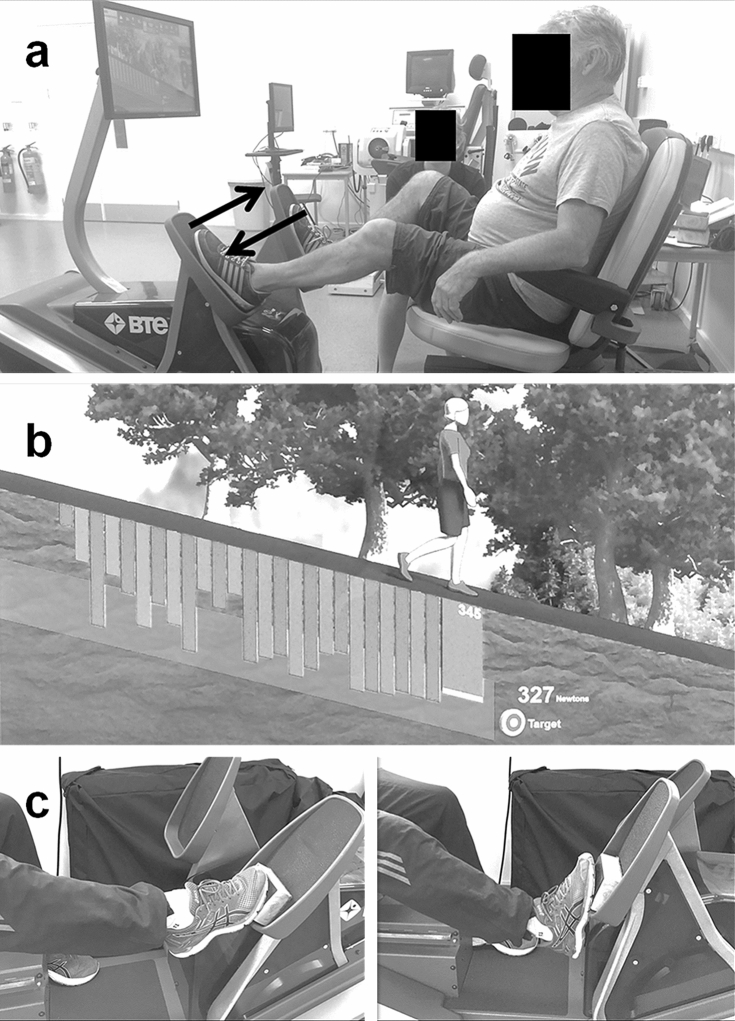
Neuromuscular parameters were measured before and after training and detraining periods with subjects assigned to ECC (twice-weekly eccentric-only hip and knee extensor contractions) or ECC (identical training with additional eccentric-only plantarflexor contractions) training programmes.
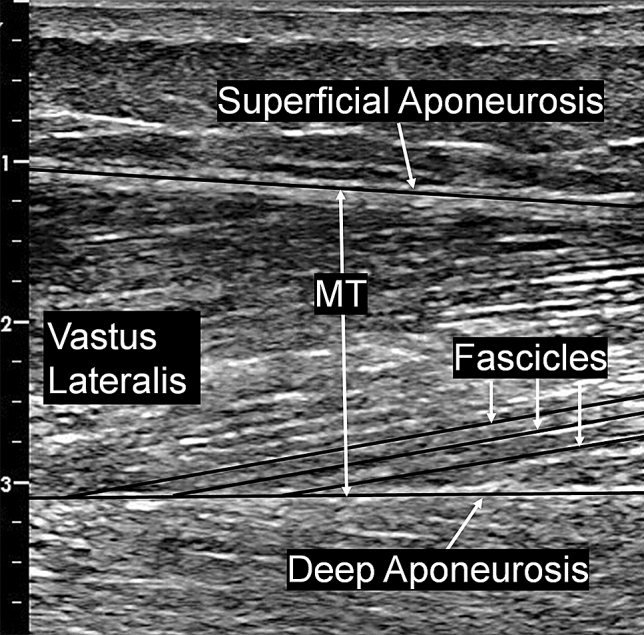
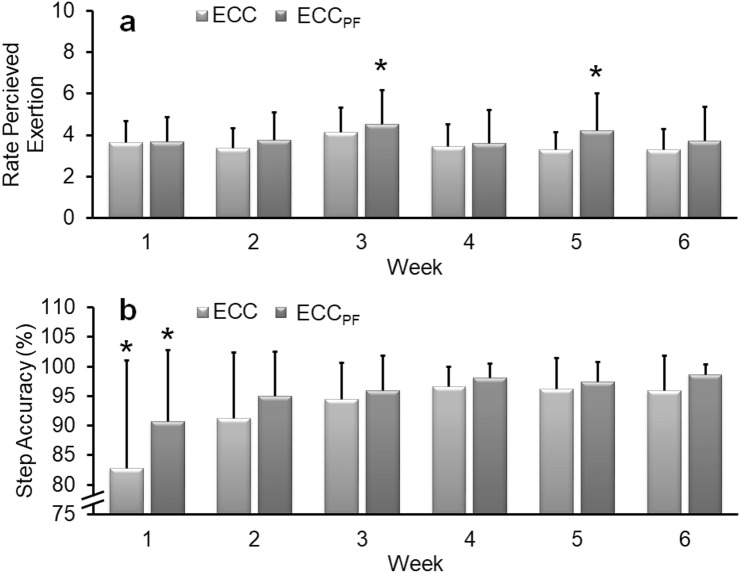
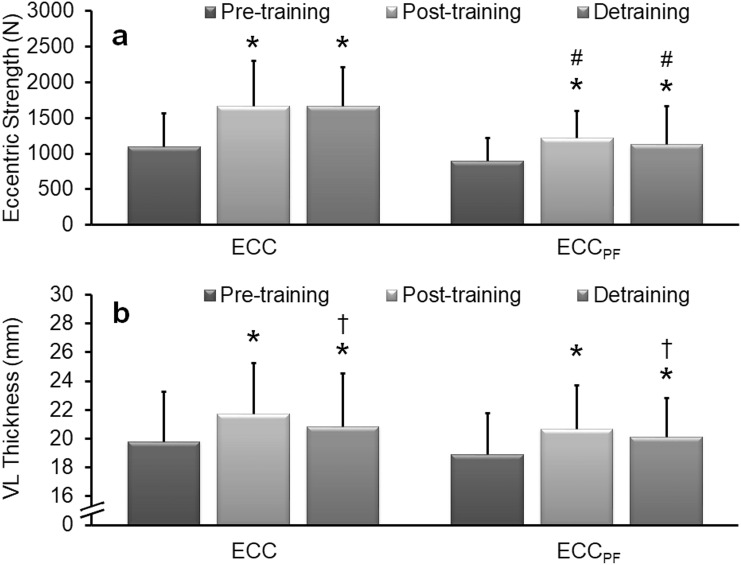
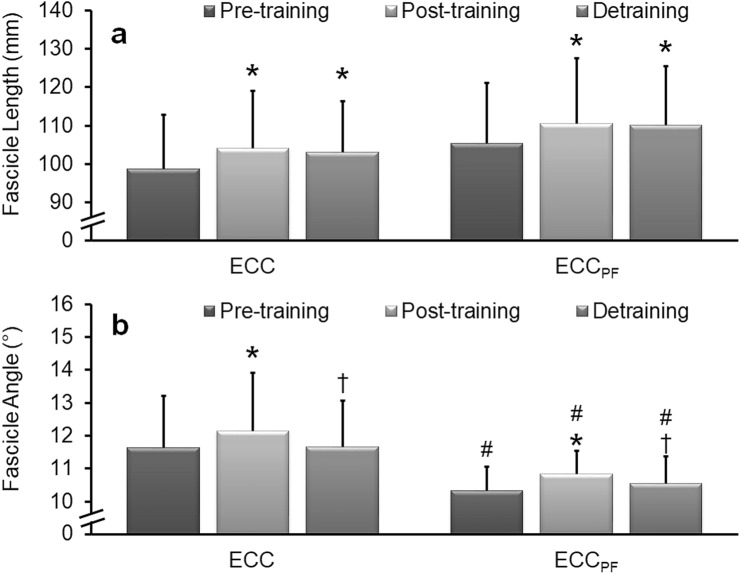
Significant (P < 0.05) increases in mobility (decreased timed-up-and-go time [- 7.7 to - 12.0%]), eccentric strength (39.4-58.8%) and vastus lateralis thickness (9.8-9.9%) occurred after both training programmes, with low-to-moderate weekly rate of perceived exertion (3.3-4.5/10) reported. No significant change in any postural sway metric occurred after either training programme. After 8 weeks of detraining, mobility (- 8.2 to - 11.3%), eccentric strength (30.5-50.4%) and vastus lateralis thickness (6.1-7.1%) remained significantly greater than baseline in both groups.
Despite improvements in functional mobility, muscle strength and size, lower-limb eccentric training targeting hip, knee and ankle extensor muscle groups was not sufficient to influence static balance. Nonetheless, as the beneficial functional and structural adaptations were largely maintained through an 8-week detraining period, these findings have important implications for clinical exercise prescription as the exercise modality, low perceived training intensity, and adaptive profile are well suited to the needs of older adults.
离心运动可逆转与年龄相关的肌肉力量和质量下降;然而,尚无数据描述其对姿势摇摆的影响。由于踝关节对姿势摇摆的重要性可能高于髋关节和膝关节,且老年人容易出现活动不足的时期,因此对27名老年人(67.1±6.0岁)进行了两项为期6周的坐姿等速离心运动计划以及8周停训期的影响研究。
在训练期和停训期前后测量神经肌肉参数,受试者被分配到ECC(每周两次仅进行髋关节和膝关节伸肌离心收缩)或ECC(相同训练并额外进行仅跖屈肌离心收缩)训练计划。
两项训练计划后,移动能力(计时起立行走时间减少[-7.7%至-12.0%])、离心力量(增加39.4%至58.8%)和股外侧肌厚度(增加9.8%至9.9%)均有显著(P<0.05)增加,报告的每周感知运动强度为低至中度(3.3至4.5/10)。两项训练计划后,任何姿势摇摆指标均无显著变化。停训8周后,两组的移动能力(-8.2%至-11.3%)、离心力量(30.5%至50.4%)和股外侧肌厚度(6.1%至7.1%)仍显著高于基线水平。
尽管在功能移动性、肌肉力量和尺寸方面有所改善,但针对髋、膝和踝关节伸肌肌群的下肢离心训练不足以影响静态平衡。尽管如此,由于有益的功能和结构适应性在8周的停训期内基本得以维持,这些发现对临床运动处方具有重要意义,因为这种运动方式、低感知训练强度和适应性特征非常适合老年人的需求。