• 文献检索
  • 文档翻译
  • 深度研究
  • 学术资讯
  • Suppr Zotero 插件Zotero 插件
  • 邀请有礼
  • 套餐&价格
  • 历史记录
应用&插件
Suppr Zotero 插件Zotero 插件浏览器插件Mac 客户端Windows 客户端微信小程序
定价
高级版会员购买积分包购买API积分包
服务
文献检索文档翻译深度研究API 文档MCP 服务
关于我们
关于 Suppr公司介绍联系我们用户协议隐私条款
关注我们

Suppr 超能文献

核心技术专利:CN118964589B侵权必究
粤ICP备2023148730 号-1Suppr @ 2026

文献检索

告别复杂PubMed语法,用中文像聊天一样搜索,搜遍4000万医学文献。AI智能推荐,让科研检索更轻松。

立即免费搜索

文件翻译

保留排版,准确专业,支持PDF/Word/PPT等文件格式,支持 12+语言互译。

免费翻译文档

深度研究

AI帮你快速写综述,25分钟生成高质量综述,智能提取关键信息,辅助科研写作。

立即免费体验

自助选择浴室辅助技术:电子决策支持系统的开发(卫生学 2.0)。

Self-Selection of Bathroom-Assistive Technology: Development of an Electronic Decision Support System (Hygiene 2.0).

机构信息

School of Rehabilitation, Université de Sherbrooke, Sherbrooke, QC, Canada.

Center for Research on Aging, Sherbrooke, QC, Canada.

出版信息

J Med Internet Res. 2020 Aug 10;22(8):e16175. doi: 10.2196/16175.

DOI:10.2196/16175
PMID:32773380
原文链接:https://pmc.ncbi.nlm.nih.gov/articles/PMC7445614/
Abstract

BACKGROUND

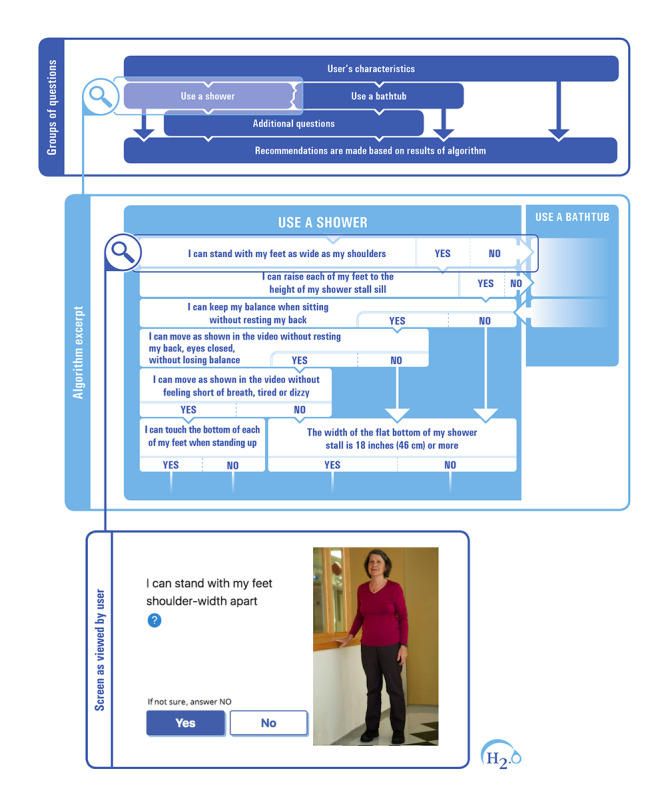
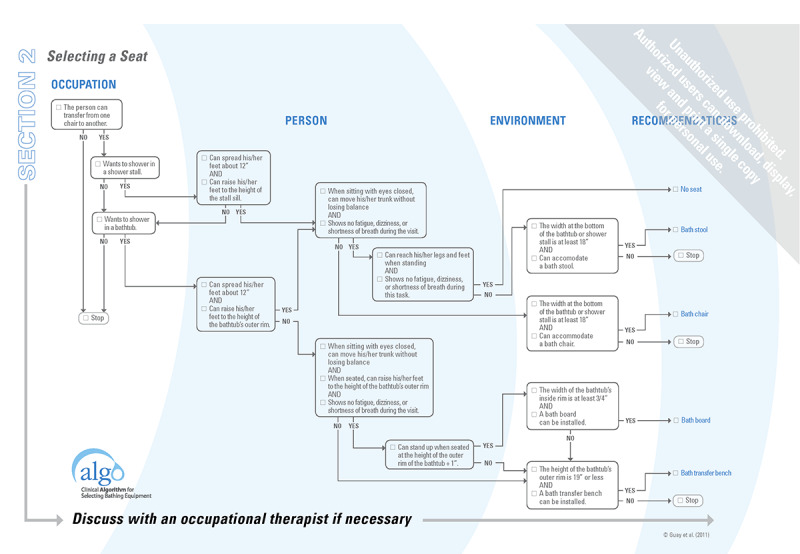
A clinical algorithm (Algo) in paper form is used in Quebec, Canada, to allow health care workers other than occupational therapists (OTs) to make bathroom adaptation recommendations for older adults. An integrated knowledge transfer process around Algo suggested an electronic version of this decision support system (electronic decision support system [e-DSS]) to be used by older adults and their caregivers in search of information and solutions for their autonomy and safety in the bathroom.

OBJECTIVE

This study aims to (1) create an e-DSS for the self-selection of bathroom-assistive technology by community-dwelling older adults and their caregivers and (2) assess usability with lay users and experts to improve the design accordingly.

METHODS

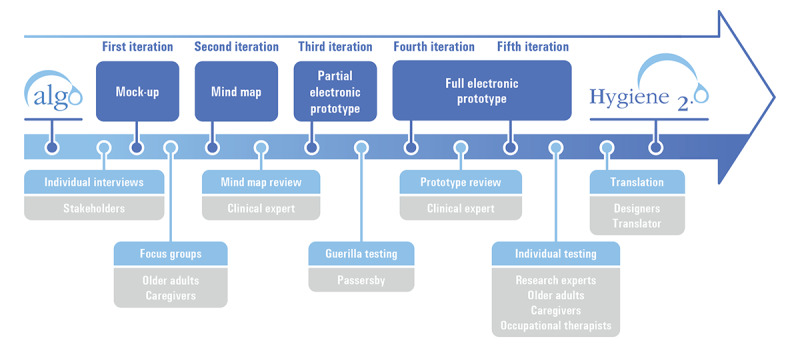
On the basis of a user-centered design approach, the process started with content identification for the prototype through 7 semistructured interviews with key informants of various backgrounds (health care providers, assistive technology providers, and community services) and 4 focus groups (2 with older adults and 2 with caregivers). A thematic content transcript analysis was carried out and used during the creation of the prototype. The prototype was refined iteratively using think-aloud and observation methods with a clinical expert (n=1), researchers (n=3), OTs (n=3), older adults (n=3), and caregivers (n=3), who provided information on the usability of the e-DSS.

RESULTS

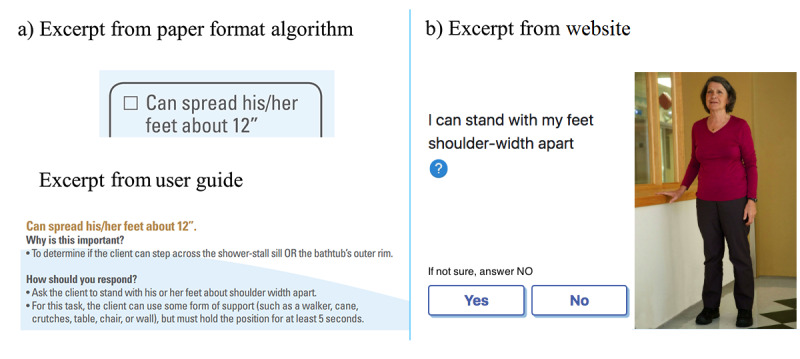
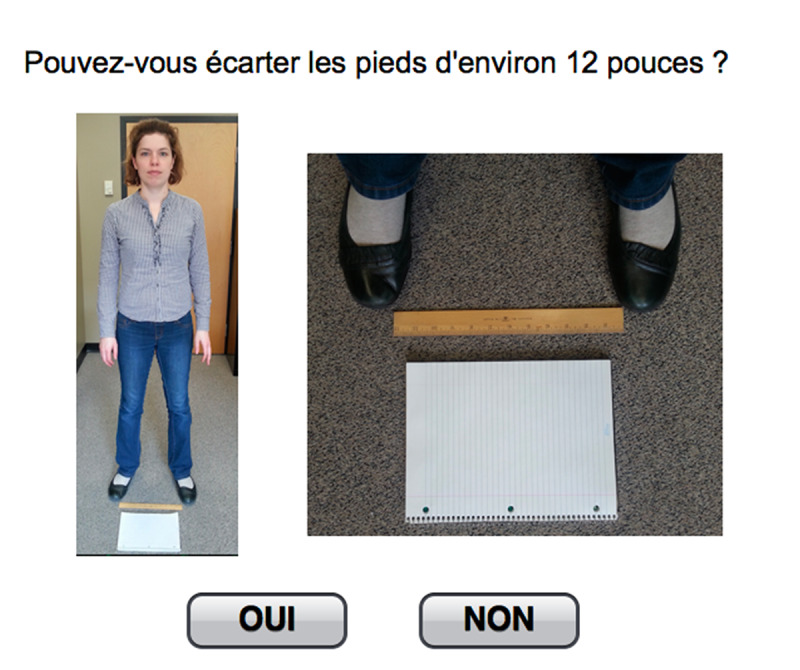
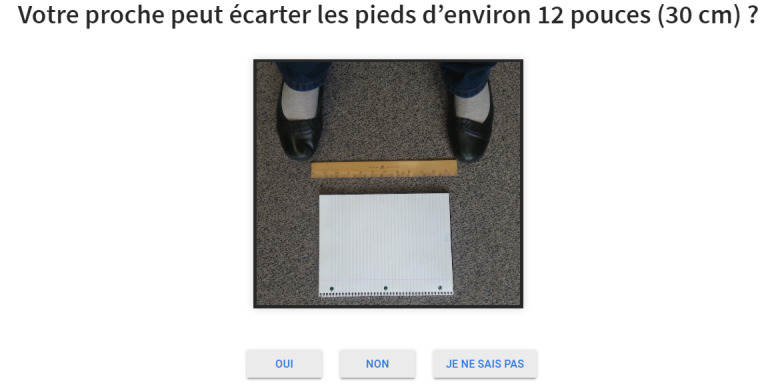
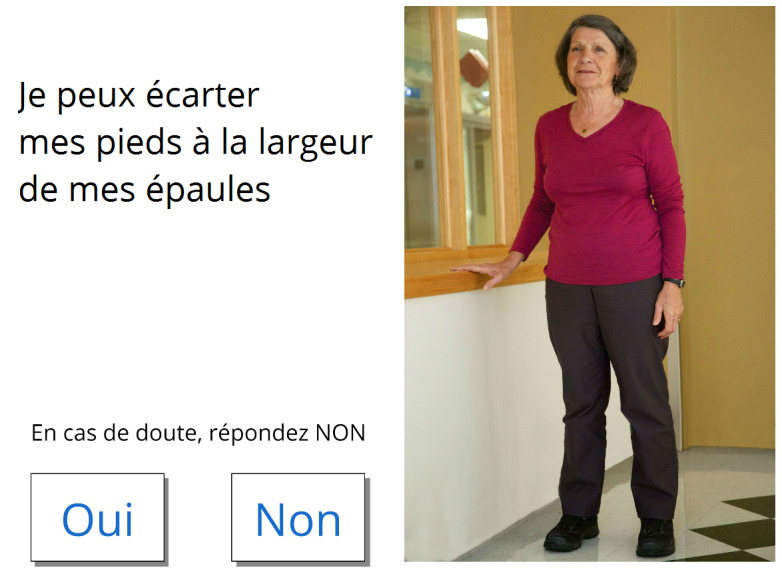
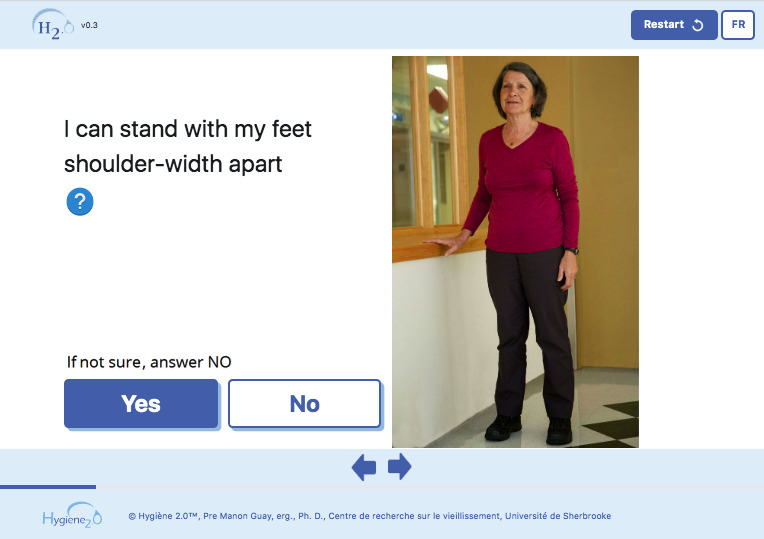
Overall, 4 themes served as the criteria for the prototype of the electronic Algo (Hygiene 2.0 [H.0]): focus (safety, confidentiality, well-being, and autonomy), engage, facilitate (simplify, clarify, and illustrate), and access. For example, users first pay attention to the images (engage and illustrate) that can be used to depict safe postures (safety), illustrate questions embedded in the decision support tool (clarify and illustrate), and demonstrate the context of the use of assistive technology (safety and clarify).

CONCLUSIONS

The user-centered design of H.0 allowed the cocreation of an e-DSS in the form of a website, in line with the needs of community-dwelling older adults and their caregivers seeking bathroom-assistive technology that enables personal hygiene. Each iteration improved usability and brought more insight into the users' realities, tailoring the e-DSS to the implementation context.

摘要

背景

加拿大魁北克省使用一种纸质临床算法(Algo),允许非职业治疗师(OT)的医疗保健工作者为老年人提出浴室适应性建议。围绕 Algo 的综合知识转移过程建议开发一种针对老年人及其护理人员的浴室辅助技术自我选择的电子决策支持系统(电子决策支持系统 [e-DSS]),以帮助他们在浴室中寻找信息和解决方案,以实现自主和安全。

目的

本研究旨在(1)为社区居住的老年人及其护理人员创建一个用于自助选择浴室辅助技术的 e-DSS,(2)通过与非专业用户和专家进行可用性评估来改进设计。

方法

基于以用户为中心的设计方法,该过程首先通过对不同背景的关键信息提供者(包括医疗保健提供者、辅助技术提供者和社区服务提供者)进行 7 次半结构化访谈和 4 次焦点小组(2 次针对老年人,2 次针对护理人员),确定了原型的内容。进行了主题内容的转录分析,并在原型创建过程中使用了该分析。通过与临床专家(n=1)、研究人员(n=3)、OT(n=3)、老年人(n=3)和护理人员(n=3)进行的出声思维和观察方法,迭代式地改进了原型,这些用户提供了有关 e-DSS 可用性的信息。

结果

总体而言,4 个主题作为电子 Algo 原型的标准(卫生 2.0 [H.0]):重点(安全、保密性、幸福感和自主性)、参与、促进(简化、澄清和说明)和访问。例如,用户首先关注图像(参与和说明),这些图像可用于描绘安全姿势(安全),说明决策支持工具中嵌入的问题(澄清和说明),并展示辅助技术使用的上下文(安全和澄清)。

结论

H.0 的以用户为中心的设计允许以网站的形式共同创建 e-DSS,符合社区居住的老年人及其护理人员对浴室辅助技术的需求,这些技术可帮助他们进行个人卫生。每次迭代都提高了可用性,并使我们对用户的实际情况有了更深入的了解,使 e-DSS 能够适应实施环境。
https://cdn.ncbi.nlm.nih.gov/pmc/blobs/c786/7445614/cf503844b21a/jmir_v22i8e16175_fig8.jpg
https://cdn.ncbi.nlm.nih.gov/pmc/blobs/c786/7445614/fe6eda43bb9a/jmir_v22i8e16175_fig1.jpg
https://cdn.ncbi.nlm.nih.gov/pmc/blobs/c786/7445614/46c83b73f446/jmir_v22i8e16175_fig2.jpg
https://cdn.ncbi.nlm.nih.gov/pmc/blobs/c786/7445614/737de149567f/jmir_v22i8e16175_fig3.jpg
https://cdn.ncbi.nlm.nih.gov/pmc/blobs/c786/7445614/df3efa6cfa80/jmir_v22i8e16175_fig4.jpg
https://cdn.ncbi.nlm.nih.gov/pmc/blobs/c786/7445614/53b0c4d47776/jmir_v22i8e16175_fig5.jpg
https://cdn.ncbi.nlm.nih.gov/pmc/blobs/c786/7445614/d9ba760bf5e1/jmir_v22i8e16175_fig6.jpg
https://cdn.ncbi.nlm.nih.gov/pmc/blobs/c786/7445614/689f6cf7a4dc/jmir_v22i8e16175_fig7.jpg
https://cdn.ncbi.nlm.nih.gov/pmc/blobs/c786/7445614/cf503844b21a/jmir_v22i8e16175_fig8.jpg
https://cdn.ncbi.nlm.nih.gov/pmc/blobs/c786/7445614/fe6eda43bb9a/jmir_v22i8e16175_fig1.jpg
https://cdn.ncbi.nlm.nih.gov/pmc/blobs/c786/7445614/46c83b73f446/jmir_v22i8e16175_fig2.jpg
https://cdn.ncbi.nlm.nih.gov/pmc/blobs/c786/7445614/737de149567f/jmir_v22i8e16175_fig3.jpg
https://cdn.ncbi.nlm.nih.gov/pmc/blobs/c786/7445614/df3efa6cfa80/jmir_v22i8e16175_fig4.jpg
https://cdn.ncbi.nlm.nih.gov/pmc/blobs/c786/7445614/53b0c4d47776/jmir_v22i8e16175_fig5.jpg
https://cdn.ncbi.nlm.nih.gov/pmc/blobs/c786/7445614/d9ba760bf5e1/jmir_v22i8e16175_fig6.jpg
https://cdn.ncbi.nlm.nih.gov/pmc/blobs/c786/7445614/689f6cf7a4dc/jmir_v22i8e16175_fig7.jpg
https://cdn.ncbi.nlm.nih.gov/pmc/blobs/c786/7445614/cf503844b21a/jmir_v22i8e16175_fig8.jpg

相似文献

1
Self-Selection of Bathroom-Assistive Technology: Development of an Electronic Decision Support System (Hygiene 2.0).自助选择浴室辅助技术:电子决策支持系统的开发(卫生学 2.0)。
J Med Internet Res. 2020 Aug 10;22(8):e16175. doi: 10.2196/16175.
2
Interrater reliability of Algo used by non-occupational therapist members of homecare interdisciplinary teams.家庭护理跨学科团队中非职业治疗师成员所使用算法的评分者间信度。
Disabil Rehabil. 2017 May;39(9):883-888. doi: 10.3109/09638288.2016.1168488. Epub 2016 Apr 25.
3
Can home health aids using the clinical algorithm Algo choose the right bath seat for clients having a straightforward problem?家庭健康助理能否使用临床算法 Algo 为有简单问题的客户选择合适的浴椅?
Clin Rehabil. 2014 Feb;28(2):172-82. doi: 10.1177/0269215513494027. Epub 2013 Jul 29.
4
Co-construction of an Internet-based intervention for older assistive technology users and their family caregivers: stakeholders' perceptions.为老年辅助技术使用者及其家庭照顾者共同构建基于互联网的干预措施:利益相关者的看法。
Disabil Rehabil Assist Technol. 2019 Aug;14(6):602-611. doi: 10.1080/17483107.2018.1499138. Epub 2018 Oct 14.
5
Exploring the use of assistive products to promote functional independence in self-care activities in the bathroom.探索使用辅助产品促进浴室自理活动中的功能独立性。
PLoS One. 2019 Apr 8;14(4):e0215002. doi: 10.1371/journal.pone.0215002. eCollection 2019.
6
Algo Used by Homecare Nonoccupational Therapists Selecting Bathing Assistive Technology: Enhancing Standardization by Exploring Clinical Reasoning.家庭护理非职业治疗师选择沐浴辅助技术所使用的算法:通过探索临床推理提高标准化程度。
Occup Ther Health Care. 2017 Jan;31(1):20-33. doi: 10.1080/07380577.2016.1270481. Epub 2017 Jan 17.
7
User-Centered Design and Evaluation of a Web-Based Decision Aid for Older Adults Living With Mild Cognitive Impairment and Their Health Care Providers: Mixed Methods Study.基于用户为中心的设计和评估:一个适用于轻度认知障碍老年人及其医护人员的基于网络的决策辅助工具:混合方法研究。
J Med Internet Res. 2020 Aug 19;22(8):e17406. doi: 10.2196/17406.
8
Does assistive technology contribute to safety among home-dwelling older adults?辅助技术是否有助于居家老年成年人的安全?
BMC Health Serv Res. 2024 Jun 19;24(1):750. doi: 10.1186/s12913-024-11185-8.
9
Older adults' use of an online decision support system: Usability and stability of assistive technology recommendations.老年人对在线决策支持系统的使用:辅助技术建议的可用性和稳定性
Assist Technol. 2022 May 4;34(3):316-325. doi: 10.1080/10400435.2020.1815251. Epub 2020 Oct 13.
10
Exploring the factors that influence the decision to adopt and engage with an integrated assistive telehealth and telecare service in Cambridgeshire, UK: a nested qualitative study of patient 'users' and 'non-users'.探索影响英国剑桥郡采用并参与综合辅助远程医疗和远程护理服务决策的因素:一项针对患者“使用者”和“非使用者”的嵌套式定性研究。
BMC Health Serv Res. 2016 Apr 19;16:137. doi: 10.1186/s12913-016-1379-5.

引用本文的文献

1
Grab Bar Grasp Location During Bathtub Exit and Sit-to-Stand Transfers: Biomechanical Evaluation.浴缸起身及从坐姿到站姿转移过程中扶手抓握位置的生物力学评估
JMIR Rehabil Assist Technol. 2025 Jul 22;12:e69442. doi: 10.2196/69442.
2
Efficacy of Installation of Temporary Bathing Transfer Aids by Older Adults.老年人安装临时沐浴转移辅助器具的效果
Gerontol Geriatr Med. 2024 Mar 13;10:23337214241237119. doi: 10.1177/23337214241237119. eCollection 2024 Jan-Dec.
3
Usability evaluation of mHealth apps for elderly individuals: a scoping review.

本文引用的文献

1
Deimplementing Untested Practices in Homecare Services: A Preobservational-Postobservational Design.在家庭护理服务中摒弃未经检验的做法:一项观察前-观察后设计。
Occup Ther Int. 2019 Mar 19;2019:5638939. doi: 10.1155/2019/5638939. eCollection 2019.
2
Development of Algo, a clinical algorithm for non-occupational therapists selecting bathing equipment.开发Algo,一种供非职业治疗师选择沐浴设备的临床算法。
Can J Occup Ther. 2014 Oct;81(4):237-246. doi: 10.1177/0008417414539643.
3
Cultural adaptation and validation of patient decision aids: a scoping review.
移动医疗应用程序在老年人中的可用性评估:范围综述。
BMC Med Inform Decis Mak. 2022 Dec 2;22(1):317. doi: 10.1186/s12911-022-02064-5.
4
Towards Robot-Assisted Therapy for Children With Autism-The Ontological Knowledge Models and Reinforcement Learning-Based Algorithms.迈向自闭症儿童的机器人辅助治疗——本体知识模型与基于强化学习的算法
Front Robot AI. 2022 Apr 6;9:713964. doi: 10.3389/frobt.2022.713964. eCollection 2022.
患者决策辅助工具的文化适应与验证:一项范围综述
Patient Prefer Adherence. 2018 Mar 2;12:321-332. doi: 10.2147/PPA.S151833. eCollection 2018.
4
Effect of Bathroom Aids and Age on Balance Control During Bathing Transfers.浴室辅助器具及年龄对沐浴转移过程中平衡控制的影响
Am J Occup Ther. 2017 Nov/Dec;71(6):7106165030p1-7106165030p9. doi: 10.5014/ajot.2017.027136.
5
Algo Used by Homecare Nonoccupational Therapists Selecting Bathing Assistive Technology: Enhancing Standardization by Exploring Clinical Reasoning.家庭护理非职业治疗师选择沐浴辅助技术所使用的算法:通过探索临床推理提高标准化程度。
Occup Ther Health Care. 2017 Jan;31(1):20-33. doi: 10.1080/07380577.2016.1270481. Epub 2017 Jan 17.
6
Interrater reliability of Algo used by non-occupational therapist members of homecare interdisciplinary teams.家庭护理跨学科团队中非职业治疗师成员所使用算法的评分者间信度。
Disabil Rehabil. 2017 May;39(9):883-888. doi: 10.3109/09638288.2016.1168488. Epub 2016 Apr 25.
7
Exponential increases in the prevalence of disability in the oldest old: a Canadian national survey.最年长者残疾患病率呈指数级增长:一项加拿大全国性调查。
Gerontology. 2014;60(5):395-401. doi: 10.1159/000358059. Epub 2014 May 7.
8
Can home health aids using the clinical algorithm Algo choose the right bath seat for clients having a straightforward problem?家庭健康助理能否使用临床算法 Algo 为有简单问题的客户选择合适的浴椅?
Clin Rehabil. 2014 Feb;28(2):172-82. doi: 10.1177/0269215513494027. Epub 2013 Jul 29.
9
Exploring support needed by home health aides in choosing bathing equipment: new challenges for occupational therapy collaboration.探索家庭健康助理在选择沐浴设备时所需的支持:职业治疗协作面临的新挑战。
Work. 2013 Jan 1;46(3):263-71. doi: 10.3233/WOR-121527.
10
Health Literacy Online: A Guide to Writing and Designing Easy-to-Use Health Web Sites.《在线健康素养:编写与设计易用型健康网站指南》
Health Promot Pract. 2012 Sep;13(5):577-80. doi: 10.1177/1524839912446480. Epub 2012 Jul 3.