Unit of General Surgery "V. Bonomo", Department of Biomedical Sciences and Human Oncology, University of Bari "Aldo Moro", Policlinico, Piazza Giulio Cesare, 11, 70124, Bari, Italy.
Department of Digestive Surgery, Assistance Publique Hôpitaux de Paris, Henri Mondor Hospital, Université Paris-Est (UEP), Créteil, France.
Surg Endosc. 2021 Jul;35(7):3698-3708. doi: 10.1007/s00464-020-07852-6. Epub 2020 Aug 11.
Laparoscopic cholecystectomy is considered the gold standard for the treatment of gallbladder lithiasis; nevertheless, the incidence of bile duct injuries (BDI) is still high (0.3-0.8%) compared to open cholecystectomy (0.2%). In 1995, Strasberg introduced the "Critical View of Safety" (CVS) to reduce the risk of BDI. Despite its widespread use, the scientific evidence supporting this technique to prevent BDI is controversial.
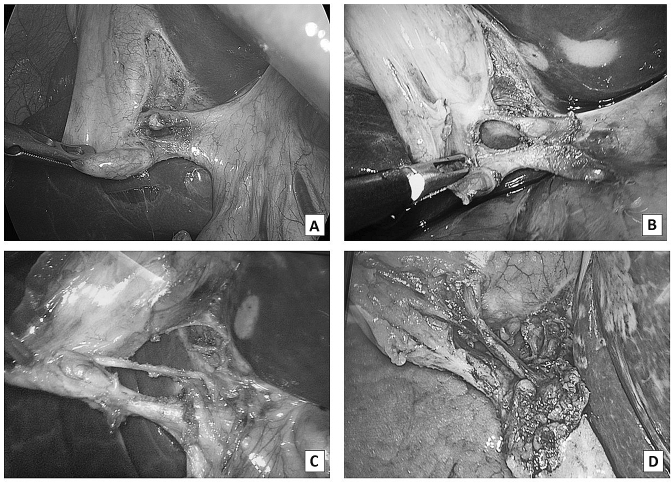
Between March 2017 and March 2019, the data of patients submitted to laparoscopic cholecystectomy in 30 Italian surgical departments were collected on a national database. A survey was submitted to all members of Italian Digestive Pathology Society to obtain data on the preoperative workup, the surgical and postoperative management of patients and to judge, at the end of the procedure, if the isolation of the elements was performed according to the CVS. In the case of a declared critical view, iconographic documentation was obtained, finally reviewed by an external auditor.
Data from 604 patients were analysed. The study population was divided into two groups according to the evidence (Group A; n = 11) or absence (Group B; N = 593) of BDI and perioperative bleeding. The non-use of CVS was found in 54.6% of procedures in the Group A, and 25.8% in the Group B, and evaluating the operator-related variables the execution of CVS was associated with a significantly lower incidence of BDI and intraoperative bleeding.
The CVS confirmed to be the safest technique to recognize the elements of the Calot triangle and, if correctly performed, it significantly impacted on preventing intraoperative complications. Additional educational programs on the correct application of CVS in clinical practice would be desirable to avoid extreme conditions that may require additional procedures.
腹腔镜胆囊切除术被认为是治疗胆囊结石的金标准;然而,与开腹胆囊切除术(0.2%)相比,胆管损伤(BDI)的发生率仍然很高(0.3-0.8%)。1995 年,Strasberg 提出了“安全关键视角”(CVS)以降低 BDI 的风险。尽管它被广泛应用,但支持该技术预防 BDI 的科学证据仍存在争议。
2017 年 3 月至 2019 年 3 月,在国家数据库中收集了 30 个意大利外科部门接受腹腔镜胆囊切除术的患者数据。向意大利消化病理学学会的所有成员提交了一项调查,以获取有关患者术前检查、手术和术后管理的数据,并在手术结束时判断是否根据 CVS 进行了元素的隔离。在声明关键视图的情况下,获得了影像学文档,并最终由外部审核员进行了审查。
分析了 604 名患者的数据。根据有无 BDI 和围手术期出血(A 组,n=11;B 组,n=593)将研究人群分为两组。在 A 组中,54.6%的手术未使用 CVS,而 B 组为 25.8%,评估操作者相关变量,CVS 的执行与 BDI 和术中出血发生率显著降低相关。
CVS 被证实是识别 Calot 三角元素的最安全技术,如果正确执行,它可以显著预防术中并发症。在临床实践中,关于 CVS 正确应用的额外教育计划将是理想的,以避免可能需要额外手术的极端情况。