Health Economics and Organization Performance, The Canadian Partnership Against Cancer, Toronto, Ontario, Canada.
Institute of Health Policy Management and Evaluation, University of Toronto, Toronto, Ontario, Canada.
Psychooncology. 2020 Nov;29(11):1746-1760. doi: 10.1002/pon.5516. Epub 2020 Sep 6.
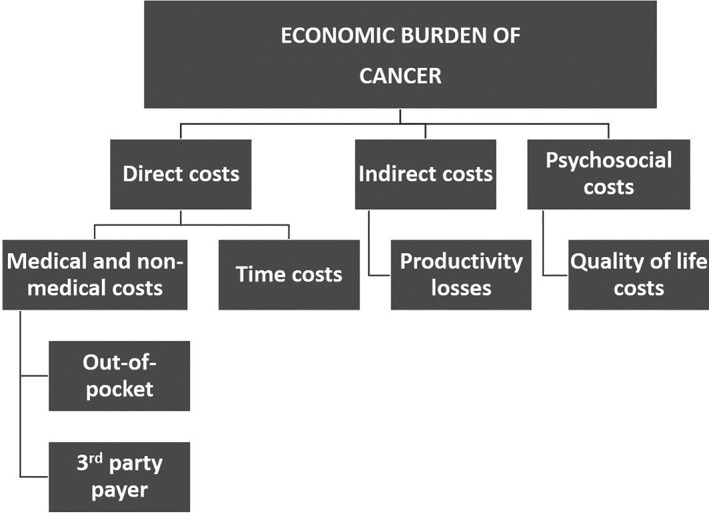
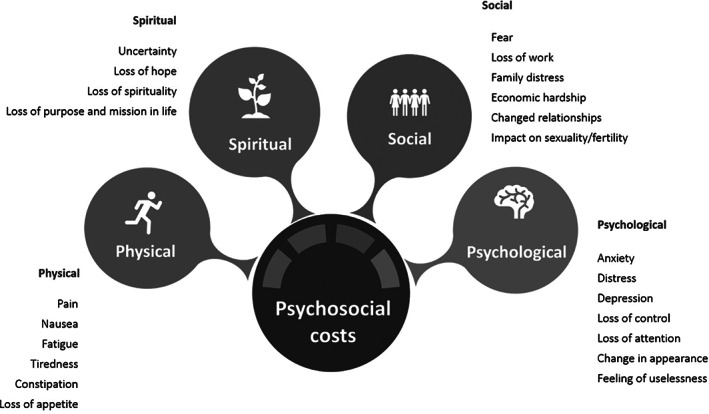
Psychosocial costs, or quality of life costs, account for psychological distress, pain, suffering and other negative experiences associated with cancer. They contribute to the overall economic burden of cancer that patients experience. But this category of costs remains poorly understood. This hinders opportunities to make the best cancer control policy decisions. This study explored the psychosocial cost burden associated with cancer, how studies measure psychosocial costs and the impact of this burden.
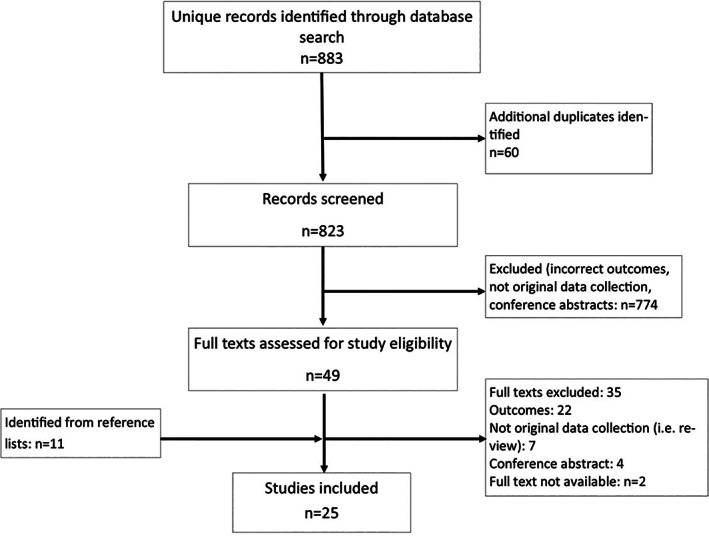
A systematic literature review of academic and grey literature published from 2008 to 2018 was conducted by searching electronic databases, guided by the Institute of Medicine's conceptualization of psychosocial burden. Results were analyzed using a narrative synthesis and a weighted proportion of populations affected was calculated. Study quality was assessed using the Ottawa-Newcastle instrument.
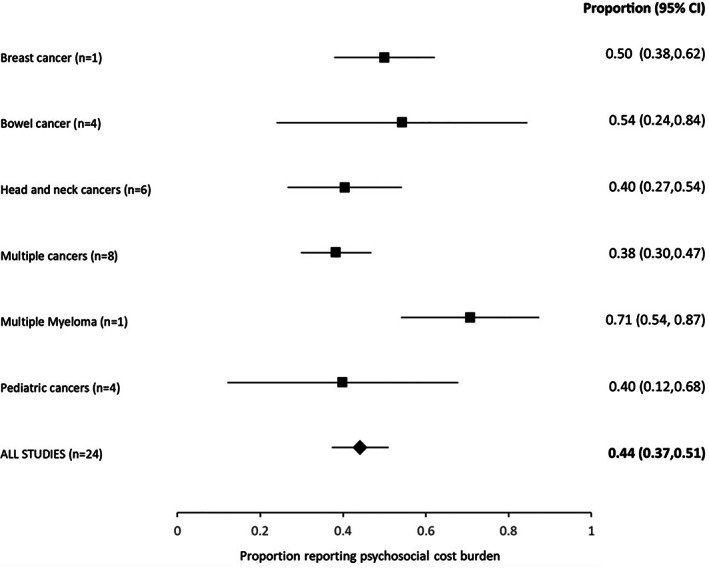
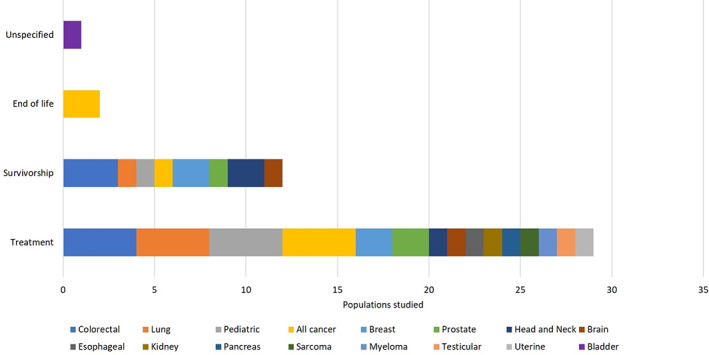
A total of 25 studies were included. There was variation in how psychosocial costs were conceptualized and an inconsistent approach to measurement. Most studies measured social dimensions and focused on the financial consequences of paying for care. Fewer studies assessed costs associated with the other domains of this burden, including psychological, physical, and spiritual dimensions. Fourty-four percent of cancer populations studied were impacted by psychosocial costs and this varied by disease site (38%-71%). Two studies monetized the psychosocial cost burden, estimating a lifetime cost per case ranging from CAD$427753 to CAD$528769. Studies were of varying quality; 60% of cross-sectional studies had a high risk of bias.
Consistency in approach to measurement would help to elevate this issue for researchers and decision makers. At two-thirds of the total economic burden of cancer, economic evaluations should account for psychosocial costs to better inform decision-making. More support is needed to address the psychosocial cost burden faced by patients and their families.
心理社会成本,或生活质量成本,包括与癌症相关的心理困扰、疼痛、痛苦和其他负面体验。它们是癌症患者整体经济负担的一部分。但这一类成本仍未被充分理解。这阻碍了做出最佳癌症控制政策决策的机会。本研究探讨了与癌症相关的心理社会成本负担、研究如何衡量心理社会成本以及这种负担的影响。
通过搜索电子数据库,根据医学研究所对心理社会负担的概念化,对 2008 年至 2018 年发表的学术和灰色文献进行了系统的文献回顾。使用叙述性综合和受影响人群的加权比例对结果进行了分析。使用渥太华-纽卡斯尔工具评估研究质量。
共纳入 25 项研究。心理社会成本的概念化方式存在差异,衡量方法也不一致。大多数研究衡量了社会层面,并侧重于支付护理费用的经济后果。较少的研究评估了这种负担的其他领域(包括心理、身体和精神方面)的成本。研究中 44%的癌症患者受到心理社会成本的影响,这因疾病部位而异(38%-71%)。有两项研究对心理社会成本负担进行了货币化,估计每个病例的终身成本范围为 427753 加元至 528769 加元。研究质量参差不齐;60%的横断面研究存在较高的偏倚风险。
在衡量方法上保持一致将有助于研究人员和决策者重视这一问题。在癌症总经济负担的三分之二中,经济评估应考虑心理社会成本,以更好地为决策提供信息。需要更多的支持来解决患者及其家属面临的心理社会成本负担。