Patient Experience Research Centre, School of Public Health, Imperial College London, United Kingdom.
Imperial College Healthcare NHS Trust, United Kingdom.
Clin Infect Dis. 2021 May 4;72(9):e384-e393. doi: 10.1093/cid/ciaa1178.
This study assesses acceptability and usability of home-based self-testing for severe acute respiratory syndrome coronavirus 2 (SARS-CoV-2) antibodies using lateral flow immunoassays (LFIA).
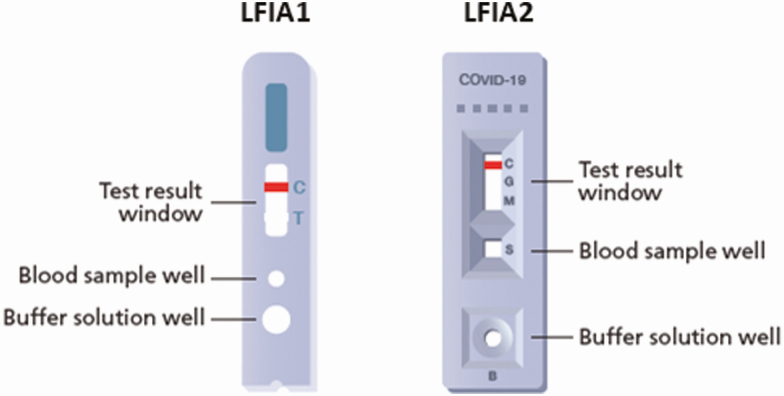
We carried out public involvement and pilot testing in 315 volunteers to improve usability. Feedback was obtained through online discussions, questionnaires, observations, and interviews of people who tried the test at home. This informed the design of a nationally representative survey of adults in England using two LFIAs (LFIA1 and LFIA2) which were sent to 10 600 and 3800 participants, respectively, who provided further feedback.
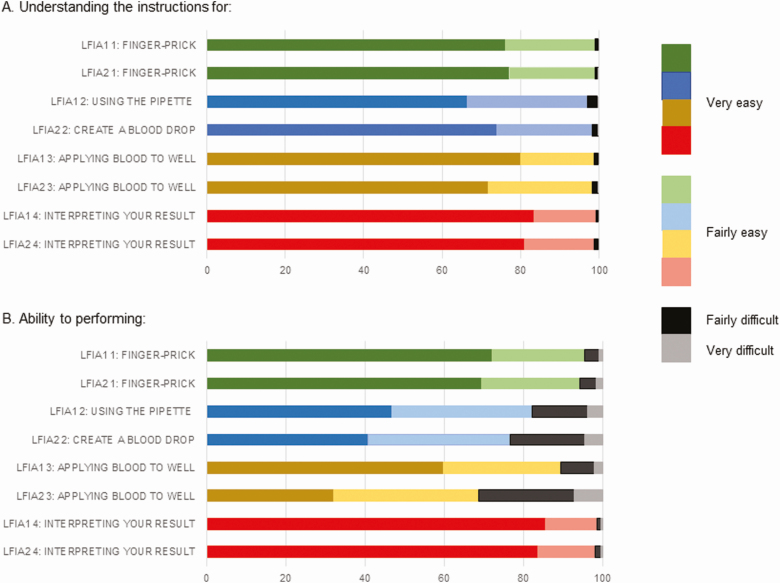
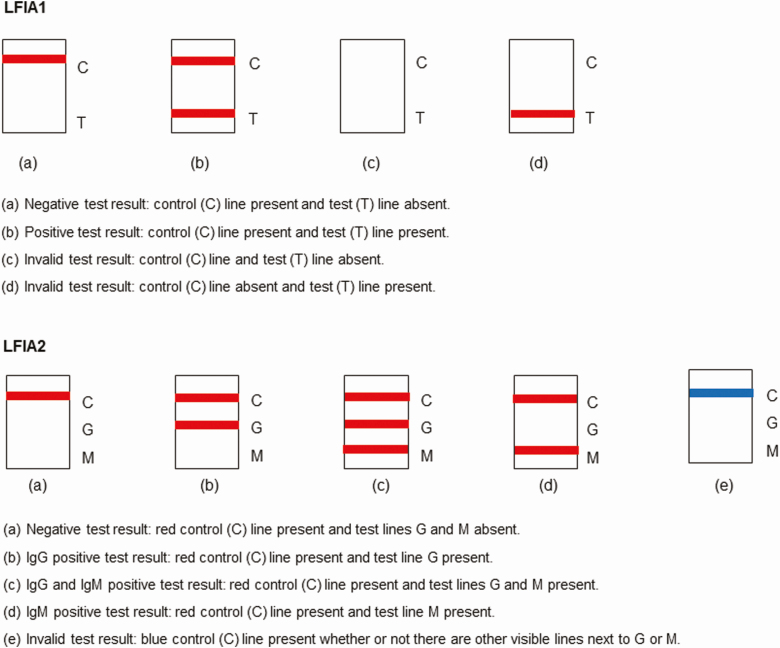
Public involvement and pilot testing showed high levels of acceptability, but limitations with the usability of kits. Most people reported completing the test; however, they identified difficulties with practical aspects of the kit, particularly the lancet and pipette, a need for clearer instructions and more guidance on interpretation of results. In the national study, 99.3% (8693/8754) of LFIA1 and 98.4% (2911/2957) of LFIA2 respondents attempted the test and 97.5% and 97.8% of respondents completed it, respectively. Most found the instructions easy to understand, but some reported difficulties using the pipette (LFIA1: 17.7%) and applying the blood drop to the cassette (LFIA2: 31.3%). Most respondents obtained a valid result (LFIA1: 91.5%; LFIA2: 94.4%). Overall there was substantial concordance between participant and clinician interpreted results (kappa: LFIA1 0.72; LFIA2 0.89).
Impactful public involvement is feasible in a rapid response setting. Home self-testing with LFIAs can be used with a high degree of acceptability and usability by adults, making them a good option for use in seroprevalence surveys.
本研究使用侧向流动免疫分析(LFIA)评估了基于家庭的严重急性呼吸综合征冠状病毒 2(SARS-CoV-2)抗体自我检测的可接受性和可用性。
我们在 315 名志愿者中进行了公众参与和试点测试,以提高可用性。通过在线讨论、问卷调查、观察和在家中尝试测试的人的访谈获得了反馈。这为使用两种 LFIA(LFIA1 和 LFIA2)对英格兰成年人进行全国代表性调查提供了信息,分别向 10600 名和 3800 名参与者发送了 LFIA1 和 LFIA2,他们提供了进一步的反馈。
公众参与和试点测试表明,该检测具有很高的可接受性,但试剂盒的可用性存在一些局限性。大多数人报告完成了测试;然而,他们发现试剂盒在实际方面存在困难,特别是 lancet 和移液器,需要更清晰的说明和更多关于结果解释的指导。在全国性研究中,8754 名 LFIA1 受访者中的 99.3%(8693 名)和 2957 名 LFIA2 受访者中的 98.4%(2911 名)尝试了该检测,分别有 97.5%和 97.8%的受访者完成了该检测。大多数人认为说明易懂,但有些人报告在使用移液器(LFIA1:17.7%)和将血滴涂到盒式卡上(LFIA2:31.3%)方面存在困难。大多数受访者获得了有效的结果(LFIA1:91.5%;LFIA2:94.4%)。总体而言,参与者和临床医生解释的结果之间存在高度一致性(kappa:LFIA1 为 0.72;LFIA2 为 0.89)。
在快速反应环境中进行有影响力的公众参与是可行的。成年人可以高度接受和使用 LFIA 进行家庭自我检测,使其成为血清流行率调查的一个很好的选择。