Vijayasarveswari V, Andrew A M, Jusoh M, Sabapathy T, Raof R A A, Yasin M N M, Ahmad R B, Khatun S, Rahim H A
Advanced Communication Engineering (ACE) Centre of Excellence, Universiti Malaysia Perlis, Kangar, Perlis, West Malaysia.
Faculty of Electrical & Electronic Engineering, Universiti Malaysia Pahang, Pekan, Pahang.
PLoS One. 2020 Aug 13;15(8):e0229367. doi: 10.1371/journal.pone.0229367. eCollection 2020.
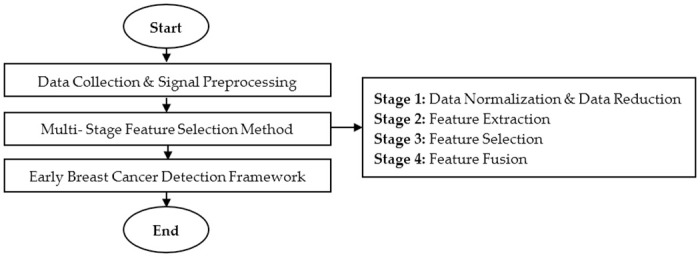
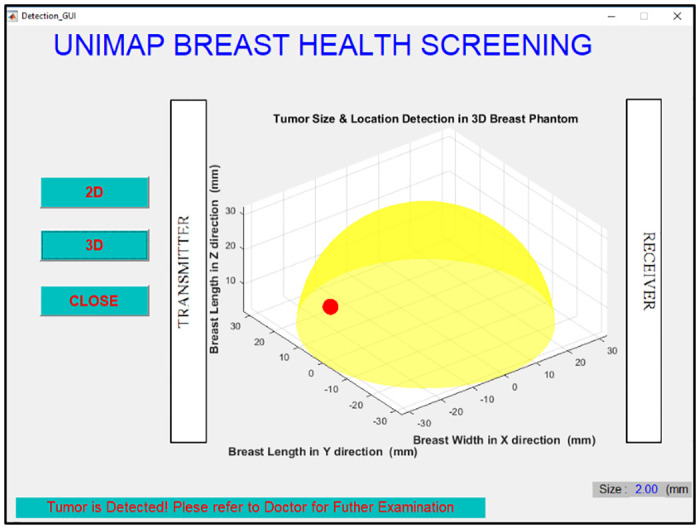
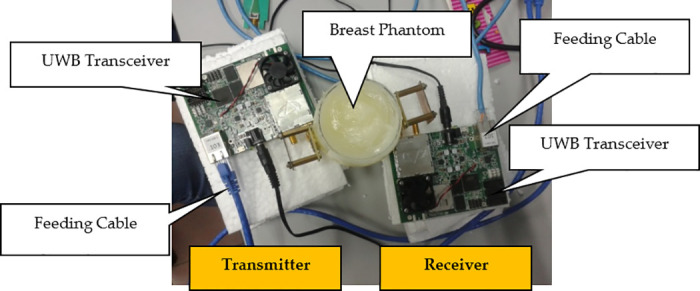
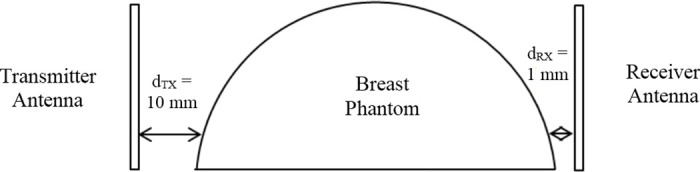
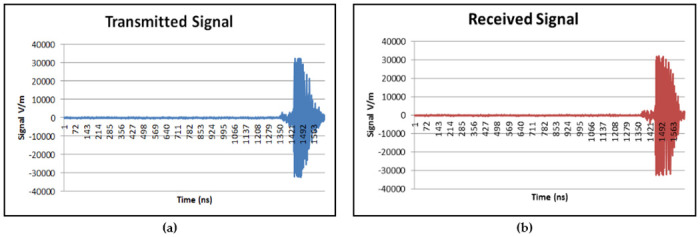
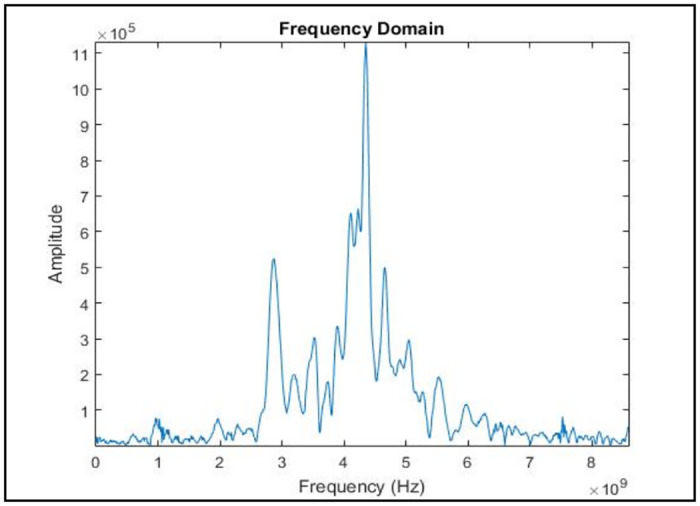
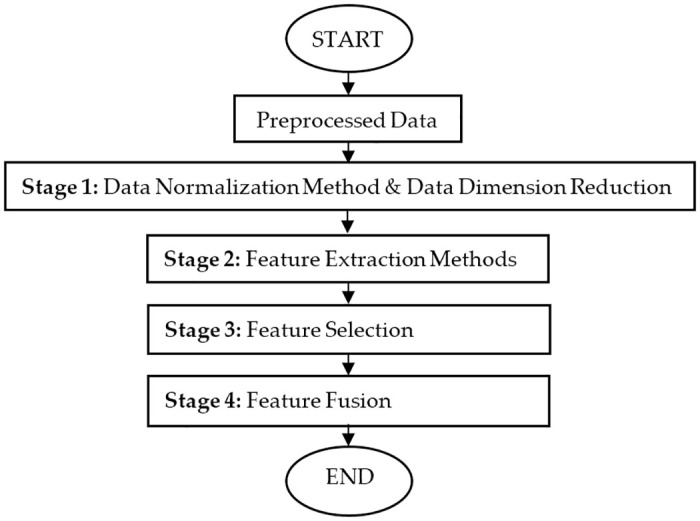
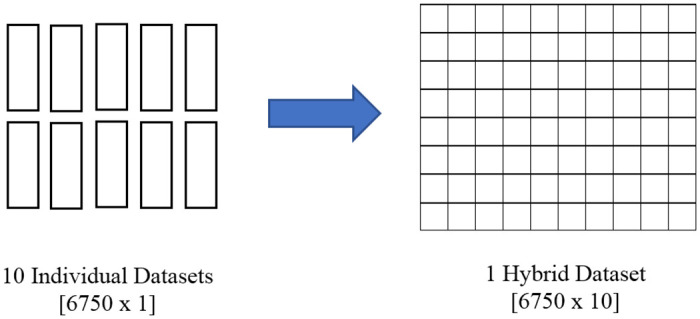
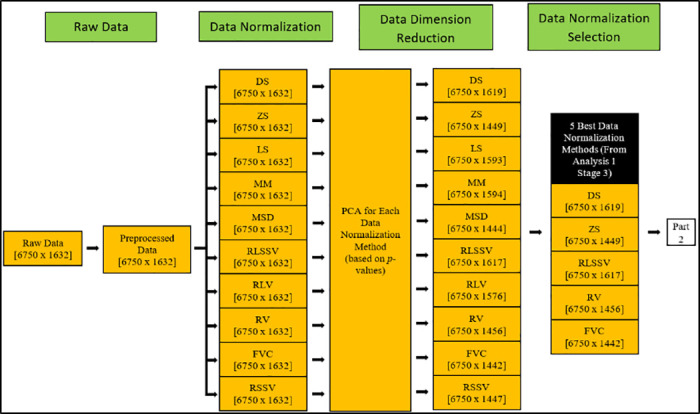
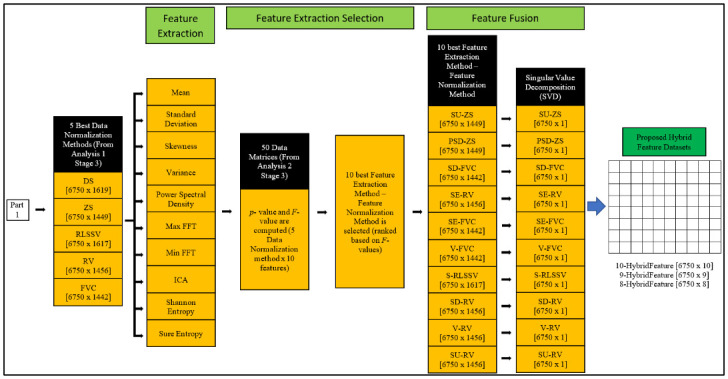
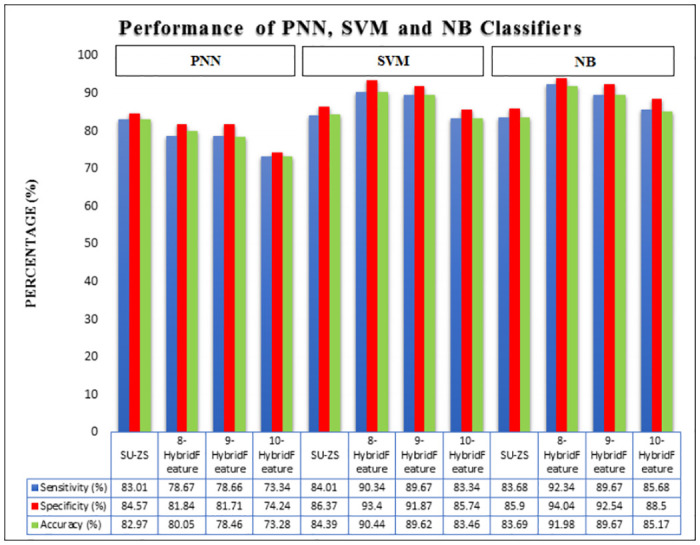
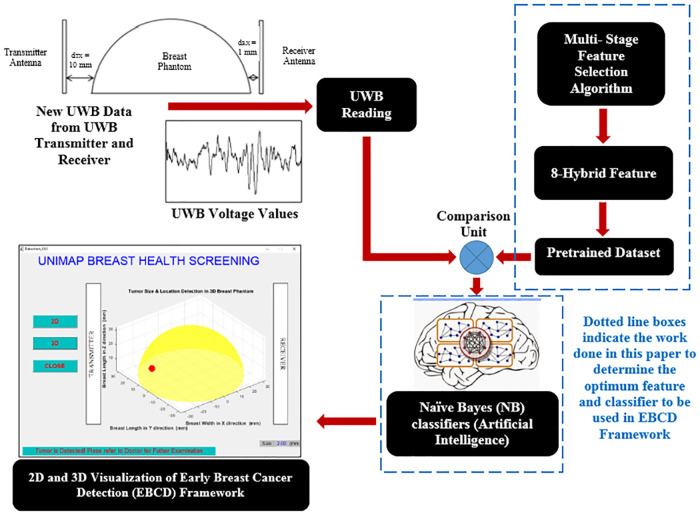
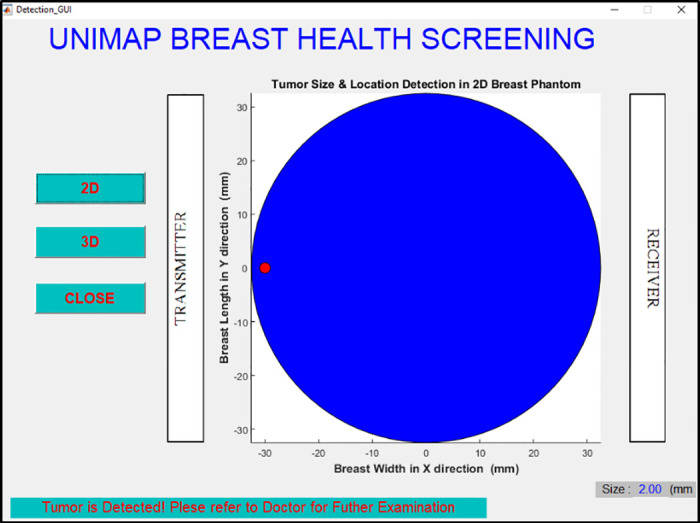
Breast cancer is the most common cancer among women and it is one of the main causes of death for women worldwide. To attain an optimum medical treatment for breast cancer, an early breast cancer detection is crucial. This paper proposes a multi- stage feature selection method that extracts statistically significant features for breast cancer size detection using proposed data normalization techniques. Ultra-wideband (UWB) signals, controlled using microcontroller are transmitted via an antenna from one end of the breast phantom and are received on the other end. These ultra-wideband analogue signals are represented in both time and frequency domain. The preprocessed digital data is passed to the proposed multi- stage feature selection algorithm. This algorithm has four selection stages. It comprises of data normalization methods, feature extraction, data dimensional reduction and feature fusion. The output data is fused together to form the proposed datasets, namely, 8-HybridFeature, 9-HybridFeature and 10-HybridFeature datasets. The classification performance of these datasets is tested using the Support Vector Machine, Probabilistic Neural Network and Naïve Bayes classifiers for breast cancer size classification. The research findings indicate that the 8-HybridFeature dataset performs better in comparison to the other two datasets. For the 8-HybridFeature dataset, the Naïve Bayes classifier (91.98%) outperformed the Support Vector Machine (90.44%) and Probabilistic Neural Network (80.05%) classifiers in terms of classification accuracy. The finalized method is tested and visualized in the MATLAB based 2D and 3D environment.
乳腺癌是女性中最常见的癌症,也是全球女性主要死因之一。为了实现乳腺癌的最佳治疗,早期乳腺癌检测至关重要。本文提出了一种多阶段特征选择方法,该方法使用所提出的数据归一化技术提取用于乳腺癌大小检测的具有统计学意义的特征。通过微控制器控制的超宽带(UWB)信号通过天线从乳腺模型的一端发射,并在另一端接收。这些超宽带模拟信号在时域和频域中都有表示。预处理后的数字数据被传递到所提出的多阶段特征选择算法。该算法有四个选择阶段。它包括数据归一化方法、特征提取、数据降维和特征融合。输出数据融合在一起形成所提出的数据集,即8-混合特征、9-混合特征和10-混合特征数据集。使用支持向量机、概率神经网络和朴素贝叶斯分类器对这些数据集进行乳腺癌大小分类的分类性能测试。研究结果表明,8-混合特征数据集的表现优于其他两个数据集。对于8-混合特征数据集,朴素贝叶斯分类器(91.98%)在分类准确率方面优于支持向量机(90.44%)和概率神经网络(80.05%)分类器。最终方法在基于MATLAB的二维和三维环境中进行测试和可视化。