Trinity Translational Medicine Institute, St. James's Hospital, Trinity College, The University of Dublin, Dublin, Ireland.
Front Immunol. 2020 Jul 23;11:1609. doi: 10.3389/fimmu.2020.01609. eCollection 2020.
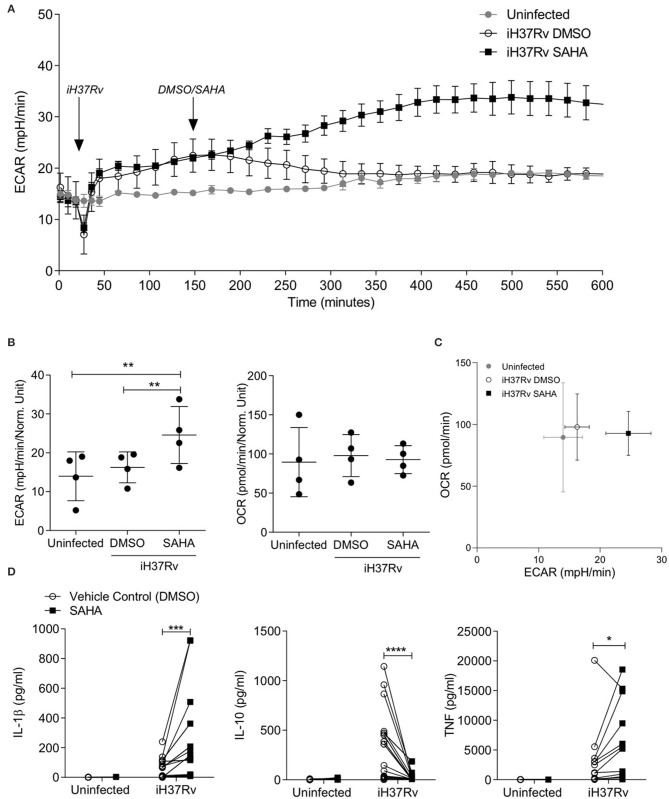
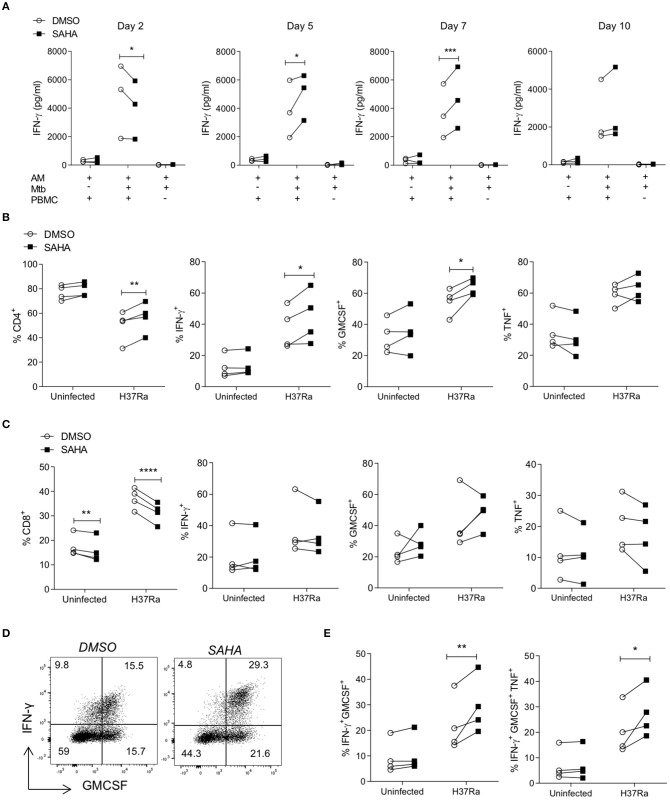
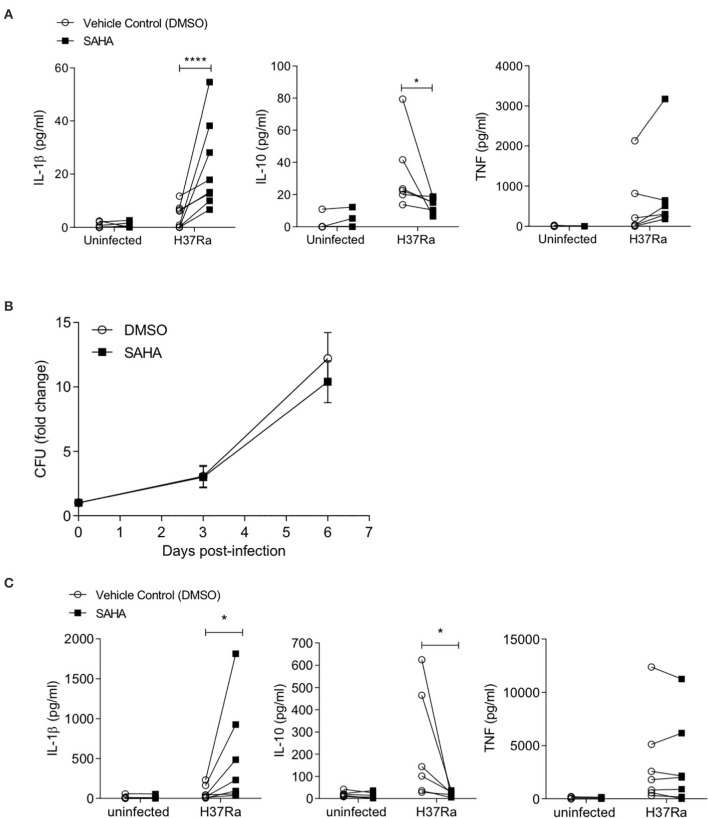
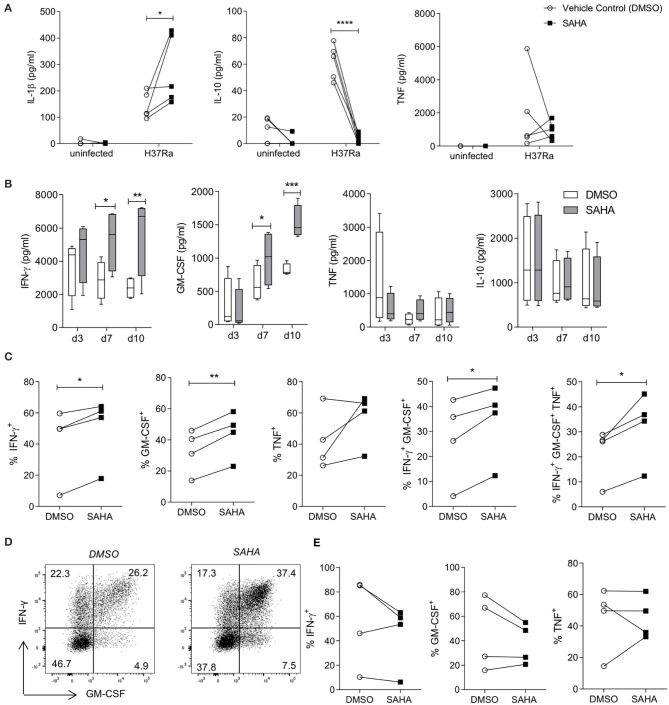
Tuberculosis (TB) is the leading infectious killer in the world. (Mtb), the bacteria that causes the disease, is phagocytosed by alveolar macrophages (AM) and infiltrating monocyte-derived macrophages (MDM) in the lung. Infected macrophages then upregulate effector functions through epigenetic modifications to make DNA accessible for transcription. The metabolic switch to glycolysis and the production of proinflammatory cytokines are key effector functions, governed by epigenetic changes, that are integral to the ability of the macrophage to mount an effective immune response against Mtb. We hypothesised that suberanilohydroxamic acid (SAHA), an FDA-approved histone deacetylase inhibitor (HDACi), can modulate epigenetic changes upstream of the metabolic switch and support immune responses during Mtb infection. The rate of glycolysis in human MDM, infected with Mtb and treated with SAHA, was tracked in real time on the Seahorse XFe24 Analyzer. SAHA promoted glycolysis early in the response to Mtb. This was associated with significantly increased production of IL-1β and significantly reduced IL-10 in human MDM and AM. Since innate immune function directs downstream adaptive immune responses, we used SAHA-treated Mtb-infected AM or MDM in a co-culture system to stimulate T cells. Mtb-infected macrophages that had previously been treated with SAHA promoted IFN-γ, GM-CSF, and TNF co-production in responding T helper cells but did not affect cytotoxic T cells. These results indicate that SAHA promoted the early switch to glycolysis, increased IL-1β, and reduced IL-10 production in human macrophages infected with Mtb. Moreover, the elevated proinflammatory function of SAHA-treated macrophages resulted in enhanced T helper cell cytokine polyfunctionality. These data provide an proof-of-concept for the use of HDACi to modulate human immunometabolic processes in macrophages to promote innate and subsequent adaptive proinflammatory responses.
结核病 (TB) 是世界上主要的传染性致死病因。导致该疾病的细菌(结核分枝杆菌)被肺泡巨噬细胞 (AM) 和肺部浸润的单核细胞衍生的巨噬细胞 (MDM) 吞噬。受感染的巨噬细胞随后通过表观遗传修饰上调效应功能,使 DNA 可用于转录。糖酵解和促炎细胞因子产生的代谢转换是关键的效应功能,受表观遗传变化调控,这是巨噬细胞对抗结核分枝杆菌产生有效免疫反应的关键。我们假设,丁酸钠(SAHA),一种美国食品和药物管理局批准的组蛋白去乙酰化酶抑制剂(HDACi),可以调节代谢转换之前的表观遗传变化,并在结核分枝杆菌感染期间支持免疫反应。在 Seahorse XFe24 分析仪上实时跟踪感染结核分枝杆菌并接受 SAHA 治疗的人 MDM 中的糖酵解速率。SAHA 在对 Mtb 反应的早期促进糖酵解。这与人类 MDM 和 AM 中 IL-1β 的产量显著增加和 IL-10 的产量显著降低有关。由于先天免疫功能指导下游适应性免疫反应,我们使用经 SAHA 处理的 Mtb 感染的 AM 或 MDM 在共培养系统中刺激 T 细胞。先前用 SAHA 处理的感染 Mtb 的巨噬细胞促进了反应性 T 辅助细胞中 IFN-γ、GM-CSF 和 TNF 的共同产生,但不影响细胞毒性 T 细胞。这些结果表明,SAHA 促进了感染 Mtb 的人巨噬细胞中糖酵解的早期转换,增加了 IL-1β 的产生,降低了 IL-10 的产生。此外,SAHA 处理的巨噬细胞升高的促炎功能导致 T 辅助细胞细胞因子多功能性增强。这些数据为使用 HDACi 来调节巨噬细胞中的人类免疫代谢过程以促进先天和随后的适应性促炎反应提供了 概念验证。