Neurobehavioral Clinical Research Section, Social and Behavioral Research Branch, National Human Genome Research Institute, National Institutes of Health, Bethesda, Maryland.
Office of the Clinical Director, National Institute of Mental Health, National Institutes of Health, Bethesda, Maryland.
Biol Psychiatry. 2021 Mar 1;89(5):443-450. doi: 10.1016/j.biopsych.2020.06.007. Epub 2020 Jun 13.
Twin studies show that age-related change in symptoms of attention-deficit/hyperactivity disorder (ADHD) is heritable. However, we do not know the heritability of the development of the neural substrates underlying the disorder. Here, we estimated the heritability of developmental change in white matter tracts and the brain's intrinsic functional connectivity using longitudinal data. We further determined associations with change in ADHD symptoms.
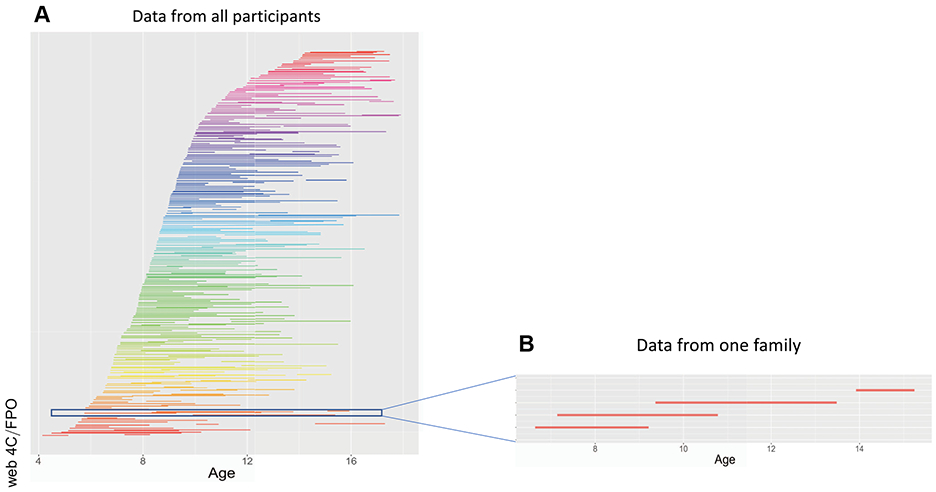
The study reports on 288 children, which included 127 siblings, 19 cousins, and 142 singletons; 150 (52%) had a diagnosis of ADHD (determined by clinician interview with parent); 188 were male. All had two clinical assessments (overall baseline mean age: 9.4 ± 2.4 years; follow-up: 12.5 ± 2.6 years). Diffusion tensor imaging estimated microstructural properties of white matter tracts on 252 participants. Resting-state functional magnetic resonance imaging estimated intrinsic connectivity within and between major brain networks on 226 participants. Total additive genetic heritability (h) of the annual rate of change in these neural phenotypes was calculated using SOLAR (Sequential Oligogenic Linkage Analysis Routines).
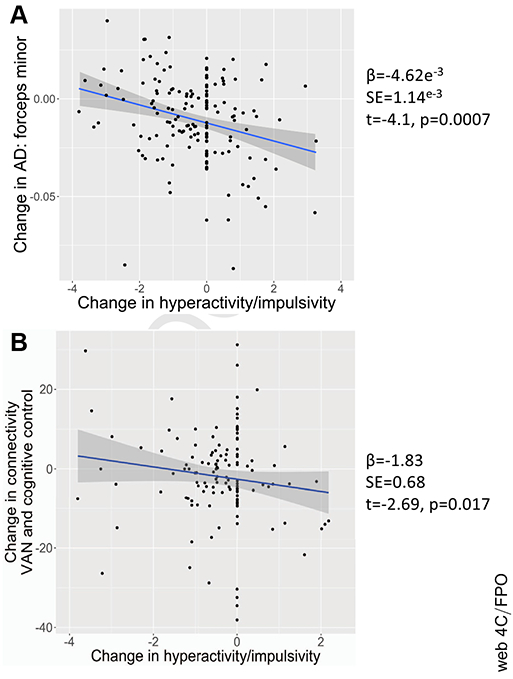
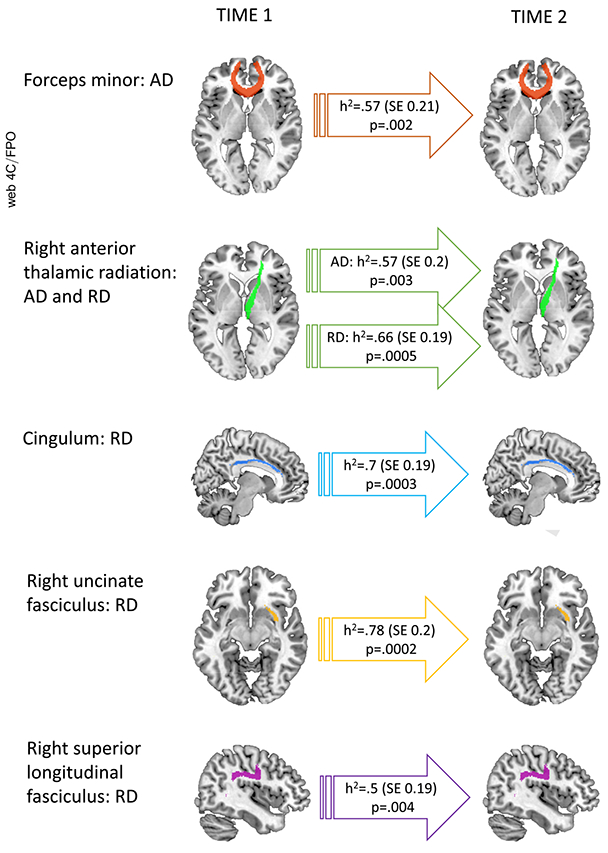
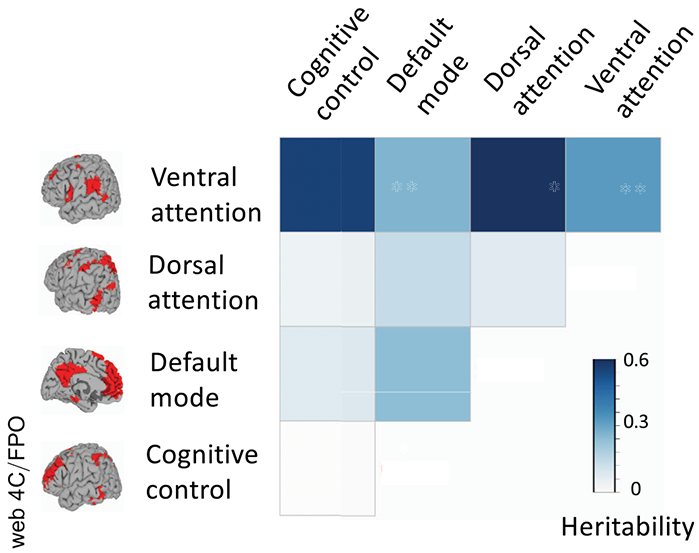
Significant heritability was found for the rates of change of 6 white matter tract microstructural properties and for change in the connectivity between the ventral attention network and both the cognitive control and dorsal attention networks. Change in hyperactivity-impulsivity was associated with heritable change in white matter tracts metrics and change in the connectivity between the ventral attention and cognitive networks.
The relatively small number of heritable, ADHD-associated developmental neural phenotypes can serve as phenotypes for future gene discovery and understanding.
双胞胎研究表明,注意力缺陷多动障碍(ADHD)症状随年龄的变化具有遗传性。然而,我们尚不清楚导致这种疾病的神经基础结构的发育变化是否具有遗传性。在此,我们利用纵向数据来估计大脑白质束和内在功能连接的发育变化的遗传性,并进一步确定其与 ADHD 症状变化的相关性。
本研究报告了 288 名儿童的数据,其中包括 127 对兄弟姐妹、19 对表亲以及 142 对独生子;150 名(52%)儿童被诊断为 ADHD(通过临床医生与父母面谈确定);188 名男性。所有儿童均接受了两次临床评估(总体基线平均年龄:9.4 ± 2.4 岁;随访:12.5 ± 2.6 岁)。252 名参与者接受了弥散张量成像以评估白质束的微观结构特性;226 名参与者接受了静息态功能磁共振成像以评估主要脑网络内和之间的内在连通性。使用 SOLAR(序贯连锁分析程序)计算了这些神经表型的年度变化率的总加性遗传率(h)。
发现 6 种白质束微观结构特性的变化率以及腹侧注意网络与认知控制和背侧注意网络之间的连接变化率具有显著的遗传性。多动冲动的变化与白质束指标和腹侧注意与认知网络之间的连接变化的遗传性变化相关。
相对较少的遗传性、与 ADHD 相关的发育性神经表型可作为未来基因发现和理解的表型。