Bu Xiancong, Li Dong, Wang Feng, Sun Qimeng, Zhang Zixian
Department of Neurology, Zaozhuang Municipal Hospital, Zaozhuang, Shandong 277100, People's Republic of China.
Department of Neurology, Zaozhuang Hospital of Zaozhuang Mining Group, Zaozhuang, Shandong 277100, People's Republic of China.
Neuropsychiatr Dis Treat. 2020 Jul 31;16:1863-1877. doi: 10.2147/NDT.S260748. eCollection 2020.
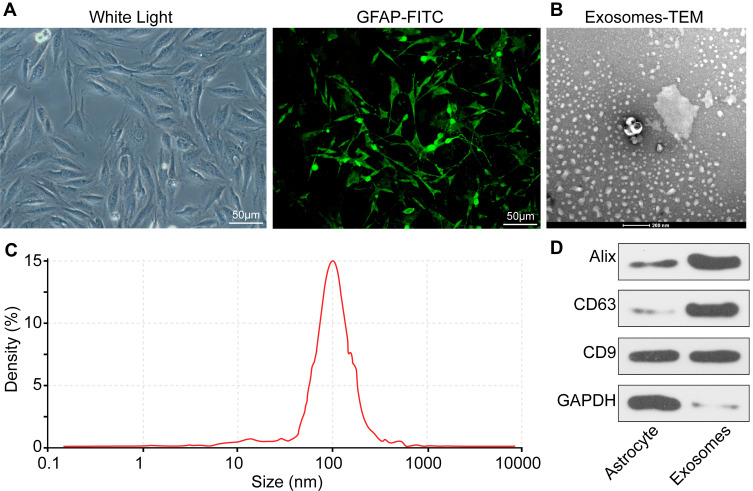
Evidence has shown that microRNAs (miRNAs) are implicated in ischemic diseases. Therefore, the aim of the present study was to identify the functions of astrocyte (ATC)-derived exosomal on cerebral ischemic-reperfusion (I/R) injury.
A rat model of cerebral I/R injury was initially established, followed by injection of ATC-derived exosomes. Next, the protective function of ATC-derived exosomes in rats with cerebral I/R injury was evaluated, and then the effect of on rats with cerebral I/R injury was evaluated by changing expression in exosomes. PC12 cells that underwent oxygen-glucose deprivation/reoxygenation were used to simulate I/R in vitro. The effect of ATC-derived exosomal on the viability and apoptosis of OGD/R-treated PC12 cells was also assessed. The bioinformatic analysis predicted the targeted gene of .
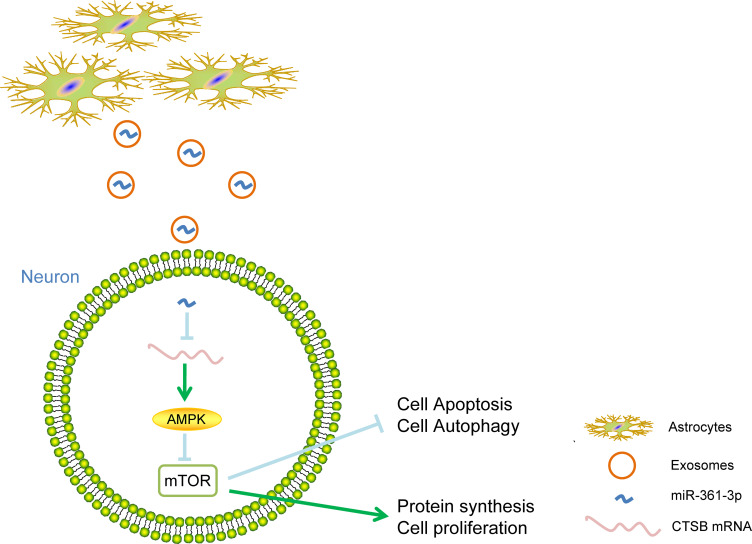
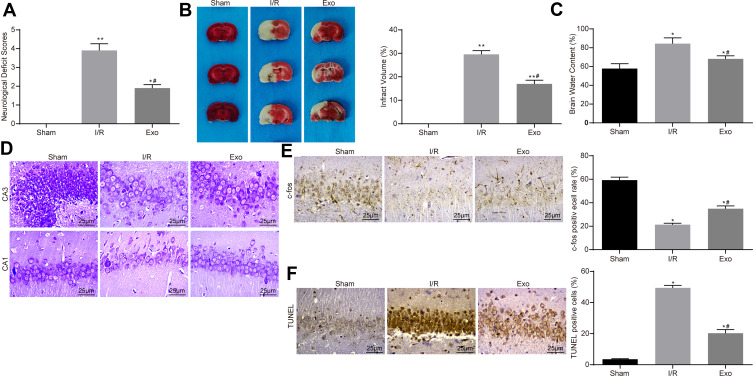
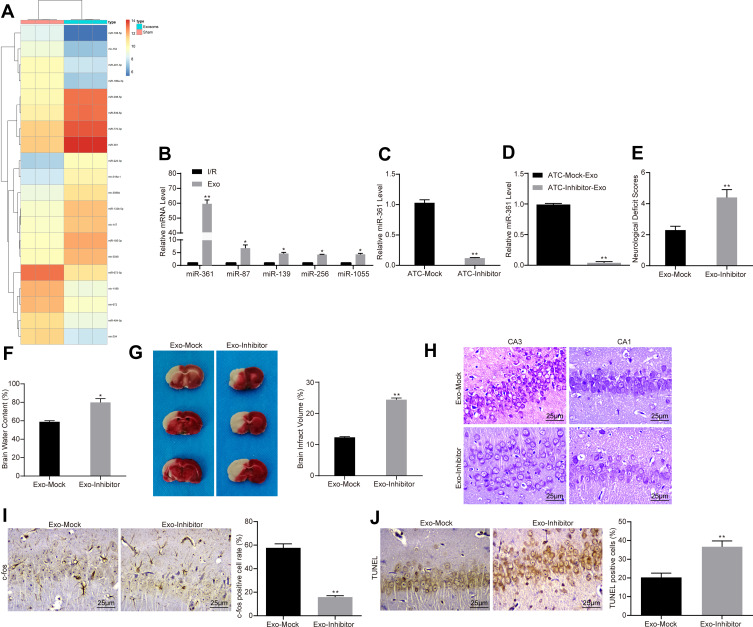
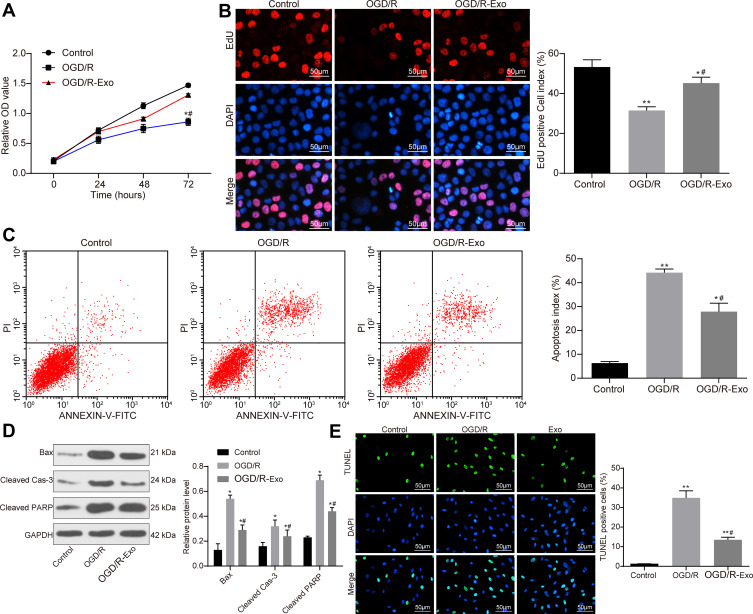
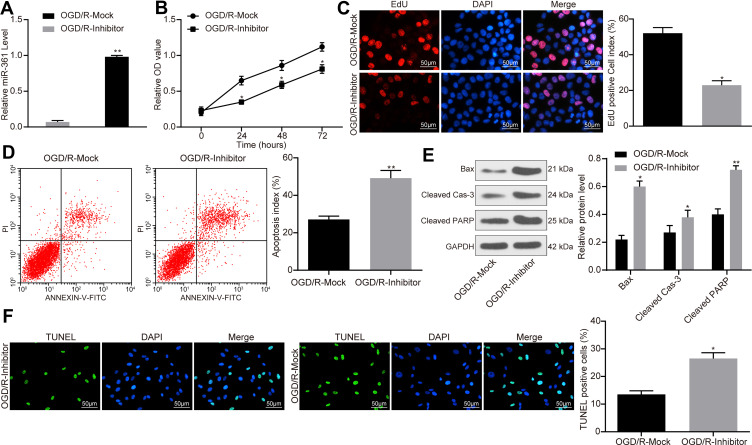
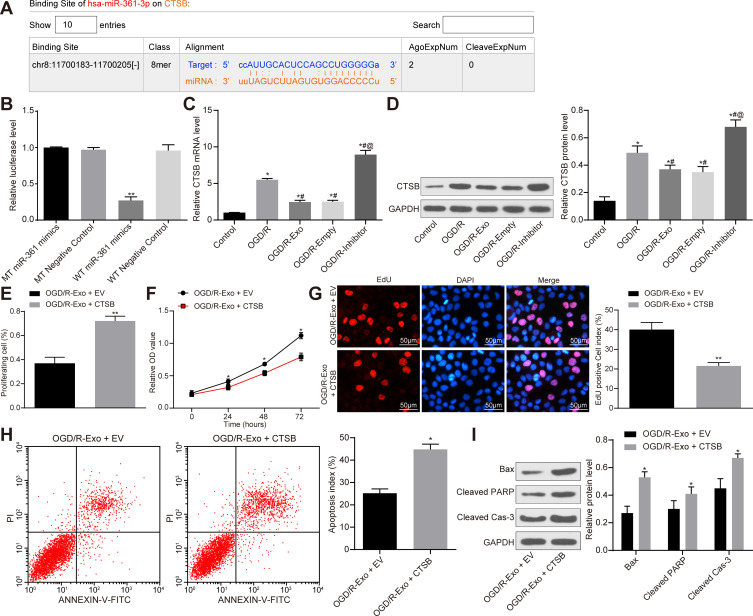
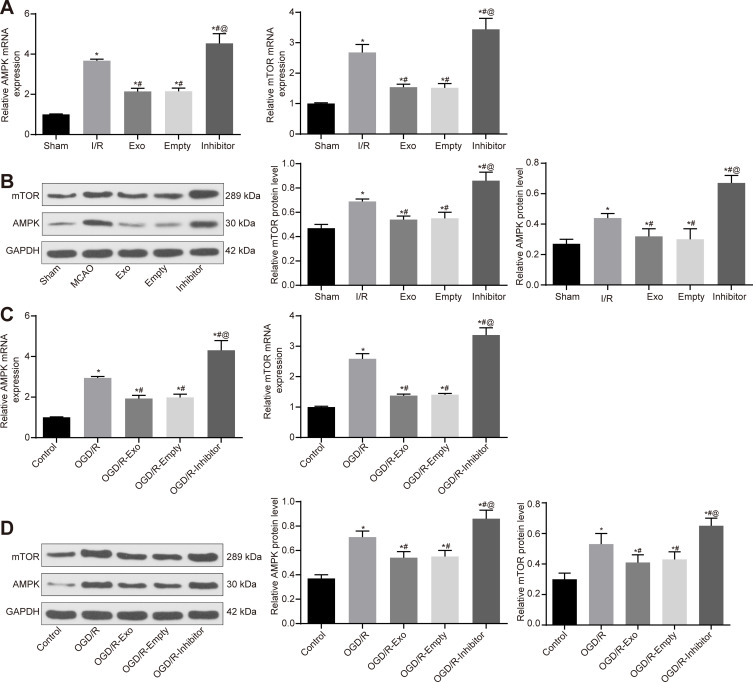
It was found that I/R was damaging to the brain nerves of rats, while ATC-derived exosomal relieved nerve damage caused by I/R. Furthermore, the in vitro experiments demonstrated that ATC-derived exosomal increased OGD/R-inhibited PC12 cell activity and suppressed cell apoptosis. Bioinformatics predicted that targeted cathepsin B (). upregulation blocked the protective roles of . In addition, was found to downregulate the signaling pathway by targeting .
The present study demonstrated that ATC-derived exosomal alleviates nerve damage in rats with cerebral I/R injury by targeting and downregulating the pathway. This may offer novel insights into treatment for I/R injury.
有证据表明,微小RNA(miRNA)与缺血性疾病有关。因此,本研究的目的是确定星形胶质细胞(ATC)衍生的外泌体对脑缺血再灌注(I/R)损伤的作用。
首先建立大鼠脑I/R损伤模型,随后注射ATC衍生的外泌体。接下来,评估ATC衍生的外泌体对脑I/R损伤大鼠的保护作用,然后通过改变外泌体中的表达来评估其对脑I/R损伤大鼠的影响。使用经历氧葡萄糖剥夺/复氧的PC12细胞在体外模拟I/R。还评估了ATC衍生的外泌体对OGD/R处理的PC12细胞活力和凋亡的影响。生物信息学分析预测了的靶向基因。
发现I/R对大鼠脑神经有损害作用,而ATC衍生的外泌体可减轻I/R引起的神经损伤。此外,体外实验表明,ATC衍生的外泌体增加了OGD/R抑制的PC12细胞活性并抑制了细胞凋亡。生物信息学预测靶向组织蛋白酶B()。的上调阻断了的保护作用。此外,发现通过靶向下调信号通路。
本研究表明,ATC衍生的外泌体通过靶向并下调途径减轻脑I/R损伤大鼠的神经损伤。这可能为I/R损伤的治疗提供新的见解。