Department of Neurology, University Hospital Essen, University of Duisburg-Essen, Essen, Germany.
Department of Neurology, University of Göttingen Medical School, Göttingen, Germany.
Theranostics. 2022 Jul 18;12(13):5776-5802. doi: 10.7150/thno.73931. eCollection 2022.
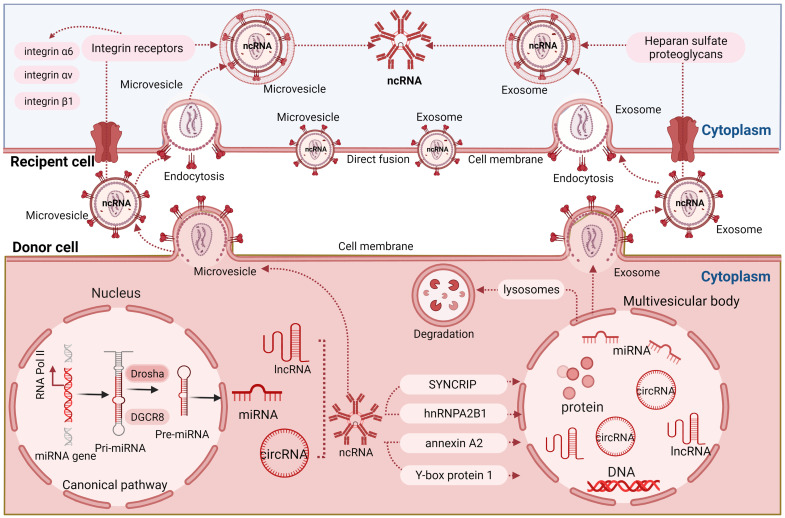
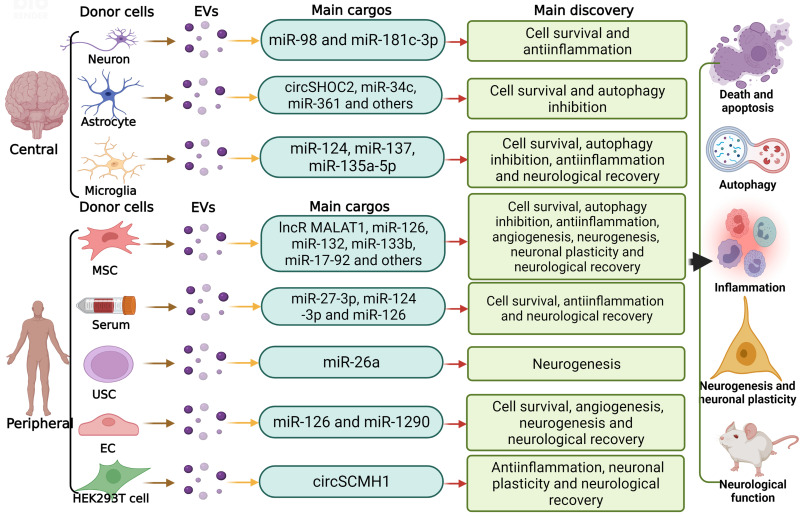
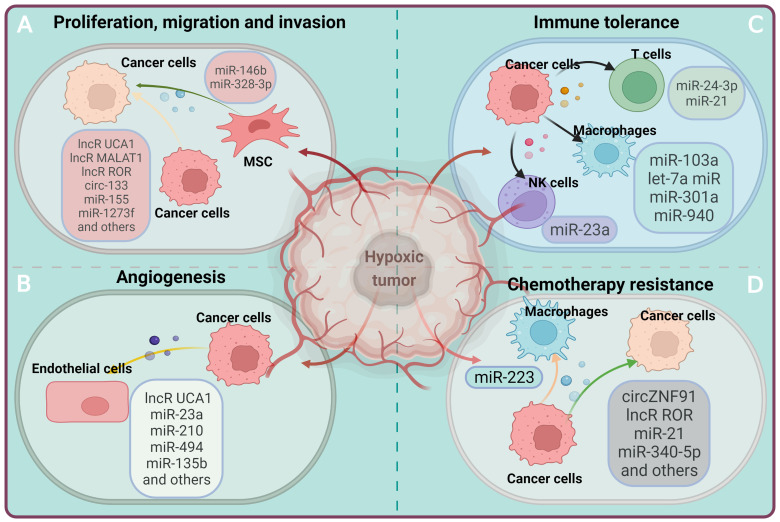
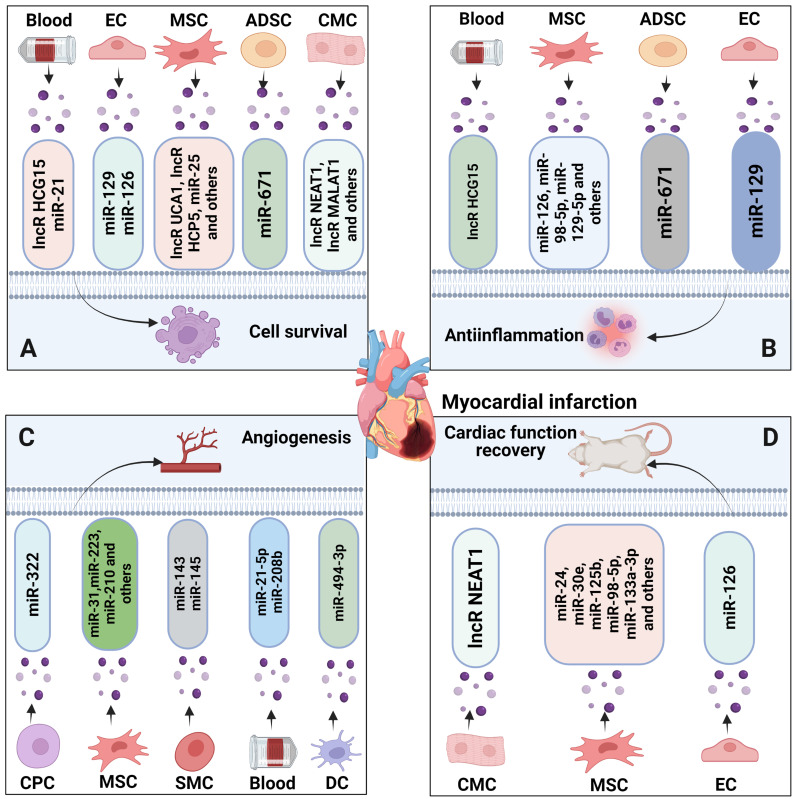
Hypoxia is a central pathophysiological component in cancer, myocardial infarction and ischemic stroke, which represent the most common medical conditions resulting in long-term disability and death. Recent evidence suggests common signaling pathways in these diverse settings mediated by non-coding RNAs (ncRNAs), which are packaged in extracellular vesicles (EVs) protecting ncRNAs from degradation. EVs are a heterogeneous group of lipid bilayer-covered vesicles released from virtually all cells, which have important roles in intercellular communication. Recent studies pointed out that ncRNAs including long non-coding RNAs (lncRNAs) and microRNAs (miRNAs) are selectively sorted into EVs, modulating specific aspects of cancer development, namely cell proliferation, migration, invasion, angiogenesis, immune tolerance or drug resistance, under conditions of hypoxia in recipient cells. In myocardial infarction and stroke, ncRNAs shuttled via EVs have been shown to control tissue survival and remodeling post-hypoxia by regulating cell injury, inflammatory responses, angiogenesis, neurogenesis or neuronal plasticity. This review discusses recent evidence on EV-associated ncRNAs in hypoxic cancer, myocardial infarction and stroke, discussing their cellular origin, biological function and disease significance. The emerging concept of lncRNA-circular RNA/ miRNA/ mRNA networks is outlined, upon which ncRNAs synergistically respond to hypoxia in order to modify disease responses. Particular notion is given to ncRNAs participating in at least two of the three conditions, which revealed a large degree of overlaps across pathophysiological conditions. Possible roles of EV-ncRNAs as therapeutic products or theranostic markers are defined.
缺氧是癌症、心肌梗死和缺血性中风的中心病理生理组成部分,这些疾病是导致长期残疾和死亡的最常见的医疗状况。最近的证据表明,这些不同环境中存在共同的信号通路,由非编码 RNA(ncRNA)介导,这些 ncRNA 被包裹在细胞外囊泡(EV)中,从而防止 ncRNA 降解。EV 是一组异质的脂质双层覆盖的囊泡,几乎所有细胞都能释放 EV,它们在细胞间通讯中起着重要作用。最近的研究指出,包括长非编码 RNA(lncRNA)和 microRNA(miRNA)在内的 ncRNA 被选择性地分拣到 EV 中,在接受细胞缺氧的情况下,调节癌症发展的特定方面,即细胞增殖、迁移、侵袭、血管生成、免疫耐受或耐药性。在心肌梗死和中风中,通过 EV 转运的 ncRNA 已被证明通过调节细胞损伤、炎症反应、血管生成、神经发生或神经元可塑性来控制缺氧后组织的存活和重塑。本文综述了 EV 相关 ncRNA 在缺氧性癌症、心肌梗死和中风中的最新研究证据,讨论了它们的细胞来源、生物学功能和疾病意义。概述了 lncRNA-环状 RNA/miRNA/mRNA 网络的新兴概念,ncRNA 协同响应缺氧以改变疾病反应。特别提到了至少参与三种情况中的两种的 ncRNA,这揭示了病理生理状况之间存在很大程度的重叠。还定义了 EV-ncRNA 作为治疗产品或治疗性生物标志物的可能作用。