Ogbodo Jude Nwakpoke, Onwe Emmanuel Chike, Chukwu Joseph, Nwasum Chinedu Jude, Nwakpu Ekwutosi Sanita, Nwankwo Simon Ugochukwu, Nwamini Samuel, Elem Stephen, Iroabuchi Ogbaeja Nelson
Department of Mass Communication, Ebonyi State University, Abakaliki, Nigeria.
Oasis Research Institute, 35 Afkpo Road, Abakaliki, Nigeria.
Health Promot Perspect. 2020 Jul 12;10(3):257-269. doi: 10.34172/hpp.2020.40. eCollection 2020.
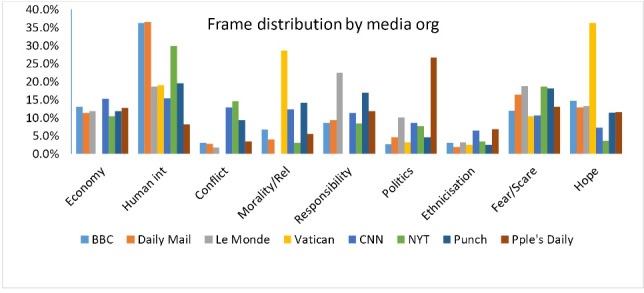
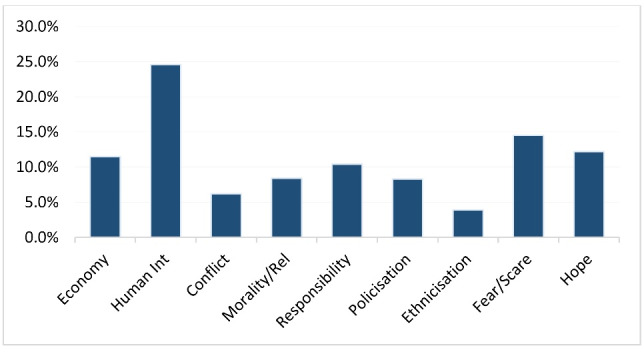
This study examines the global media framing of coronavirus disease 2019(COVID-19) to understand the dominant frames and how choice of words compares in the media. Periods of health crisis such as the outbreak of coronavirus pandemic add to the enormous burden of the media in keeping people constantly informed. Extant literature suggests that when a message is released through the media, what matters most is not what is said but how it is said. As such, the media could either mitigate or accentuate the crisis depending on the major frames adopted for the coverage. The study utilises content analysis. Data were sourced from LexisNexis database and two websites that yielded 6145 items used for the analysis. Nine predetermined frames were used for the coding. Human Interest and fear/scaremongering frames dominated the global media coverage of the pandemic. We align our finding with the constructionist frame perspective which assumes that the media as information processor creates 'interpretative packages' in order to both reflect and add to the 'issue culture' because frames that paradigmatically dominate event coverage also dominate audience response. The language of the coverage of COVID-19 combines gloom, hope, precaution and frustration at varied proportions. We conclude that global media coverage of COVID-19 was high, but the framing lacks coherence and sufficient self-efficacy and this can be associated with media's obsession for breaking news. The preponderance of these frames not only shapes public perception and attitudes towards the pandemic but also risks causing more problems for those with existing health conditions due to fear or panic attack.
本研究考察了全球媒体对2019冠状病毒病(COVID-19)的框架构建,以了解主导框架以及媒体在措辞选择上的比较情况。诸如冠状病毒大流行爆发这样的健康危机时期,增加了媒体让人们持续了解情况的巨大负担。现有文献表明,当一条信息通过媒体发布时,最重要的不是说了什么,而是怎么说的。因此,媒体根据报道所采用的主要框架,既可能缓解危机,也可能加剧危机。该研究采用内容分析法。数据来源于LexisNexis数据库以及两个网站,共获得6145条用于分析的条目。使用了九个预先确定的框架进行编码。人情味和恐惧/危言耸听框架在全球媒体对该大流行的报道中占主导地位。我们将研究结果与建构主义框架观点相结合,该观点认为,作为信息处理器的媒体会创建“解释性套餐”,以便既反映又丰富“问题文化”,因为典型地主导事件报道的框架也主导受众的反应。对COVID-19的报道语言以不同比例融合了悲观、希望、预防和沮丧。我们得出结论,全球媒体对COVID-19的报道量很大,但框架缺乏连贯性和足够的自我效能感,这可能与媒体对突发新闻的痴迷有关。这些框架的主导不仅塑造了公众对大流行的认知和态度,还可能因恐惧或恐慌发作给现有健康状况的人带来更多问题。