Martin-Gonzalez Paula, Crispin-Ortuzar Mireia, Rundo Leonardo, Delgado-Ortet Maria, Reinius Marika, Beer Lucian, Woitek Ramona, Ursprung Stephan, Addley Helen, Brenton James D, Markowetz Florian, Sala Evis
Cancer Research UK Cambridge Institute, University of Cambridge, Cambridge, CB2 0RE, UK.
Cancer Research UK Cambridge Centre, University of Cambridge, Cambridge, CB2 0RE, UK.
Insights Imaging. 2020 Aug 17;11(1):94. doi: 10.1186/s13244-020-00895-2.
Ovarian cancer survival rates have not changed in the last 20 years. The majority of cases are High-grade serous ovarian carcinomas (HGSOCs), which are typically diagnosed at an advanced stage with multiple metastatic lesions. Taking biopsies of all sites of disease is infeasible, which challenges the implementation of stratification tools based on molecular profiling.
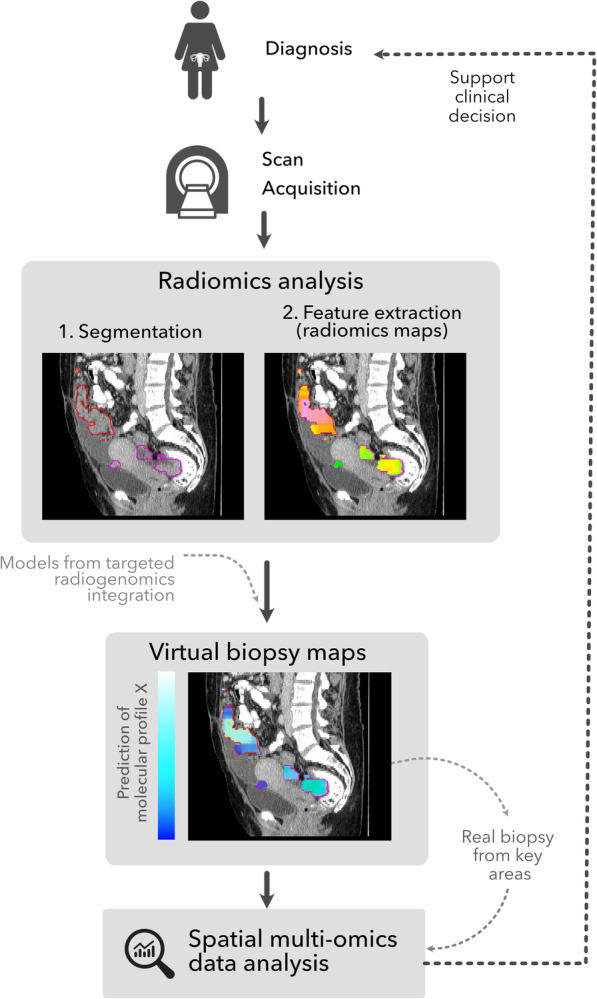
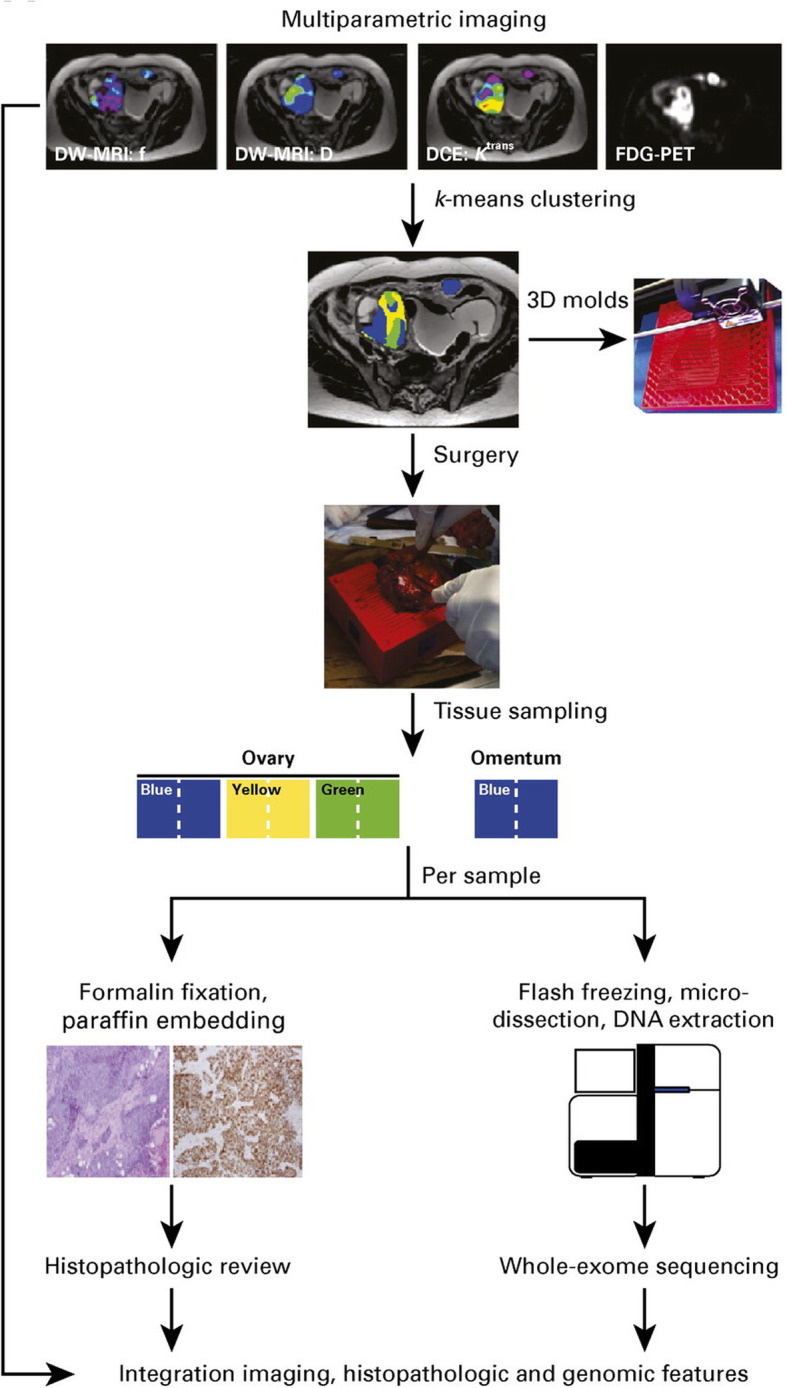
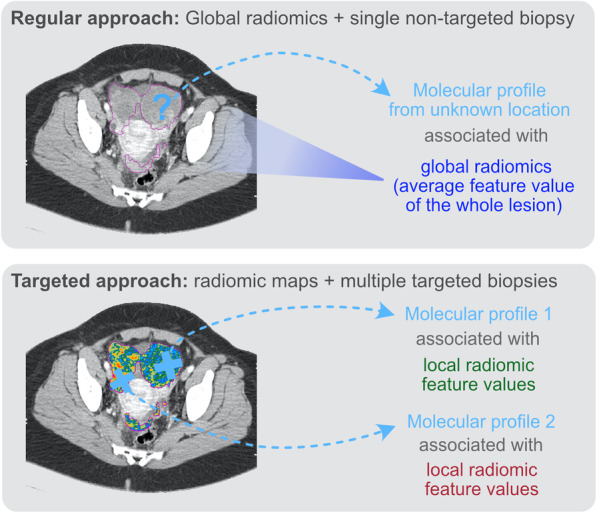
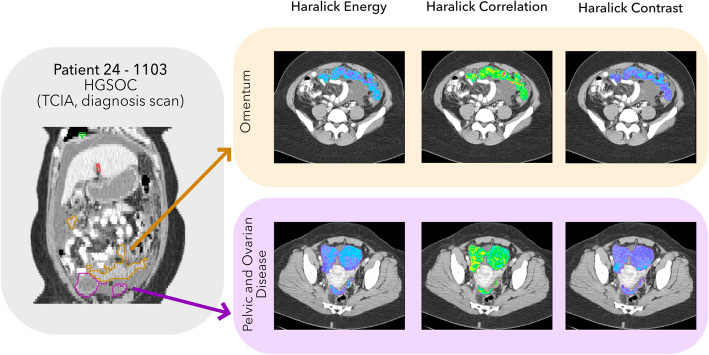
In this review, we describe how these challenges might be overcome by integrating quantitative features extracted from medical imaging with the analysis of paired genomic profiles, a combined approach called radiogenomics, to generate virtual biopsies. Radiomic studies have been used to model different imaging phenotypes, and some radiomic signatures have been associated with paired molecular profiles to monitor spatiotemporal changes in the heterogeneity of tumours. We describe different strategies to integrate radiogenomic information in a global and local manner, the latter by targeted sampling of tumour habitats, defined as regions with distinct radiomic phenotypes.
Linking radiomics and biological correlates in a targeted manner could potentially improve the clinical management of ovarian cancer. Radiogenomic signatures could be used to monitor tumours during the course of therapy, offering additional information for clinical decision making. In summary, radiogenomics may pave the way to virtual biopsies and treatment monitoring tools for integrative tumour analysis.
卵巢癌的生存率在过去20年中没有变化。大多数病例为高级别浆液性卵巢癌(HGSOC),通常在晚期伴有多个转移病灶时被诊断出来。对所有病灶部位进行活检是不可行的,这对基于分子图谱的分层工具的实施提出了挑战。
在本综述中,我们描述了如何通过将从医学影像中提取的定量特征与配对基因组图谱分析相结合(一种称为放射基因组学的联合方法)来克服这些挑战,以生成虚拟活检。放射组学研究已被用于对不同的影像表型进行建模,并且一些放射组学特征已与配对分子图谱相关联,以监测肿瘤异质性的时空变化。我们描述了以全局和局部方式整合放射基因组信息的不同策略,后者通过对肿瘤栖息地进行靶向采样来实现,肿瘤栖息地定义为具有不同放射组学表型的区域。
以靶向方式将放射组学与生物学关联联系起来可能会改善卵巢癌的临床管理。放射基因组特征可用于在治疗过程中监测肿瘤,为临床决策提供额外信息。总之,放射基因组学可能为虚拟活检和用于综合肿瘤分析的治疗监测工具铺平道路。