Department of Physiology and Biophysics, Weill Cornell Medicine-Qatar, Education City, Qatar Foundation, Doha P.O. Box 24144, Qatar.
Clinic of Obstetrics and Gynecology, Jessenius Faculty of Medicine, Comenius University in Bratislava, 03601 Martin, Slovakia.
Biomolecules. 2020 Jan 27;10(2):191. doi: 10.3390/biom10020191.
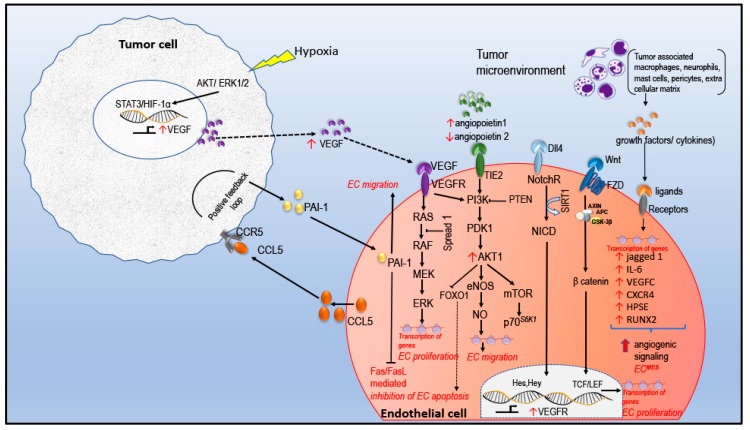
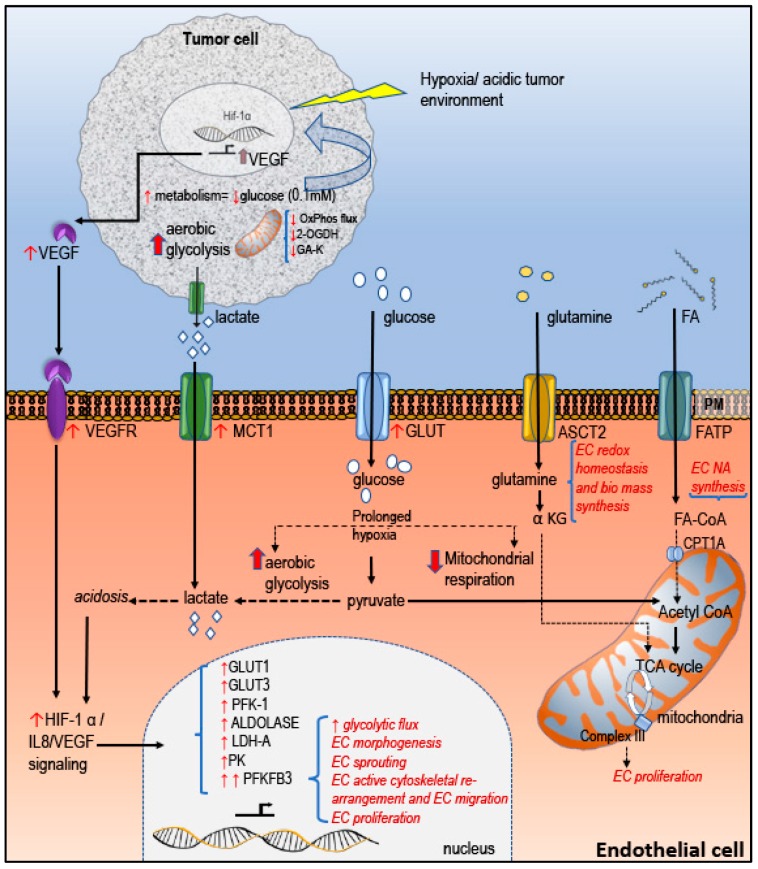
Several phytochemicals have been identified for their role in modifying miRNA regulating tumor progression. miRNAs modulate the expression of several oncogenes and tumor suppressor genes including the genes that regulate tumor angiogenesis. Hypoxia inducible factor-1 alpha (HIF-1α) signaling is a central axis that activates oncogenic signaling and acts as a metabolic switch in endothelial cell (EC) driven tumor angiogenesis. Tumor angiogenesis driven by metabolic reprogramming of EC is crucial for tumor progression and metastasis in many different cancers, including breast cancers, and has been linked to aberrant miRNA expression profiles. In the current article, we identify different miRNAs that regulate tumor angiogenesis in the context of oncogenic signaling and metabolic reprogramming in ECs and review how selected phytochemicals could modulate miRNA levels to induce an anti-angiogenic action in breast cancer. Studies involving genistein, epigallocatechin gallate (EGCG) and resveratrol demonstrate the regulation of miRNA-21, miRNA-221/222 and miRNA-27, which are prognostic markers in triple negative breast cancers (TNBCs). Modulating the metabolic pathway is a novel strategy for controlling tumor angiogenesis and tumor growth. Cardamonin, curcumin and resveratrol exhibit their anti-angiogenic property by targeting the miRNAs that regulate EC metabolism. Here we suggest that using phytochemicals to target miRNAs, which in turn suppresses tumor angiogenesis, should have the potential to inhibit tumor growth, progression, invasion and metastasis and may be developed into an effective therapeutic strategy for the treatment of many different cancers where tumor angiogenesis plays a significant role in tumor growth and progression.
已经确定了几种植物化学物质在调节 miRNA 调节肿瘤进展中的作用。miRNA 调节多种癌基因和肿瘤抑制基因的表达,包括调节肿瘤血管生成的基因。缺氧诱导因子-1α(HIF-1α)信号是激活致癌信号的中心轴,并在内皮细胞(EC)驱动的肿瘤血管生成中充当代谢开关。EC 的代谢重编程驱动的肿瘤血管生成对于许多不同癌症(包括乳腺癌)的肿瘤进展和转移至关重要,并与异常的 miRNA 表达谱有关。在当前的文章中,我们确定了不同的 miRNA,这些 miRNA 在 EC 中的致癌信号和代谢重编程背景下调节肿瘤血管生成,并回顾了如何选择植物化学物质来调节 miRNA 水平,以在乳腺癌中诱导抗血管生成作用。涉及染料木黄酮、表没食子儿茶素没食子酸酯(EGCG)和白藜芦醇的研究表明,miRNA-21、miRNA-221/222 和 miRNA-27 的调节与三阴性乳腺癌(TNBCs)中的预后标志物有关。调节代谢途径是控制肿瘤血管生成和肿瘤生长的一种新策略。小豆蔻明、姜黄素和白藜芦醇通过靶向调节 EC 代谢的 miRNA 来表现出其抗血管生成特性。在这里,我们建议使用植物化学物质来靶向 miRNA,从而抑制肿瘤血管生成,这有可能抑制肿瘤生长、进展、侵袭和转移,并可能开发成为治疗许多不同癌症的有效治疗策略,其中肿瘤血管生成在肿瘤生长和进展中起着重要作用。