Division of Engineering, New York University Abu Dhabi, Abu Dhabi, UAE.
Department of Mechanical and Aerospace Engineering, Tandon School of Engineering, New York University, Brooklyn, NY 11201, USA.
Int J Mol Sci. 2020 Aug 12;21(16):5792. doi: 10.3390/ijms21165792.
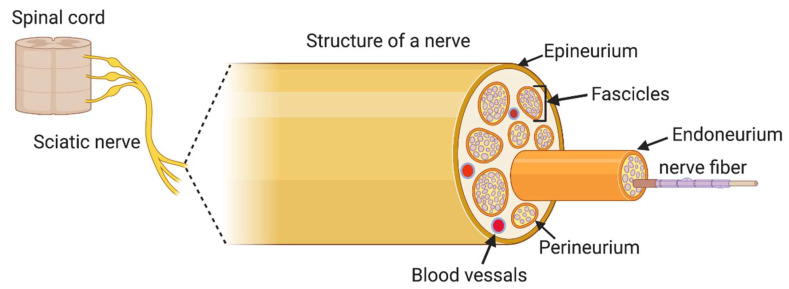
The peripheral nervous system controls the functions of sensation, movement and motor coordination of the body. Peripheral nerves can get damaged easily by trauma or neurodegenerative diseases. The injury can cause a devastating effect on the affected individual and his aides. Treatment modalities include anti-inflammatory medications, physiotherapy, surgery, nerve grafting and rehabilitation. 3D bioprinted peripheral nerve conduits serve as nerve grafts to fill the gaps of severed nerve bodies. The application of induced pluripotent stem cells, its derivatives and bioprinting are important techniques that come in handy while making living peripheral nerve conduits. The design of nerve conduits and bioprinting require comprehensive information on neural architecture, type of injury, neural supporting cells, scaffold materials to use, neural growth factors to add and to streamline the mechanical properties of the conduit. This paper gives a perspective on the factors to consider while bioprinting the peripheral nerve conduits.
周围神经系统控制着身体的感觉、运动和运动协调功能。周围神经很容易因创伤或神经退行性疾病而受损。损伤会对受影响的个体及其护理人员造成毁灭性的影响。治疗方法包括抗炎药物、物理疗法、手术、神经移植和康复。3D 生物打印的周围神经导管作为神经移植物,用于填补切断的神经体的间隙。诱导多能干细胞及其衍生物的应用和生物打印是制造活体周围神经导管的重要技术。神经导管的设计和生物打印需要全面了解神经结构、损伤类型、神经支持细胞、使用的支架材料、添加的神经生长因子以及使导管的机械性能流线化等信息。本文介绍了在生物打印周围神经导管时需要考虑的因素。