Broad Institute of MIT and Harvard, Cambridge, Massachusetts, USA.
Department of Immunology and Infectious Diseases, Harvard T.H. Chan School of Public Health, Harvard University, Boston, Massachusetts, USA.
Nat Commun. 2020 Aug 17;11(1):4131. doi: 10.1038/s41467-020-17994-9.
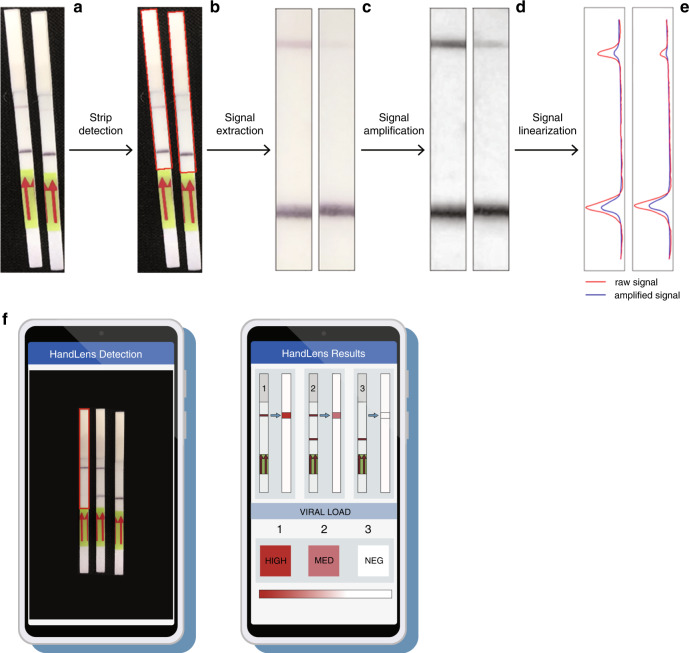
Recent outbreaks of viral hemorrhagic fevers (VHFs), including Ebola virus disease (EVD) and Lassa fever (LF), highlight the urgent need for sensitive, deployable tests to diagnose these devastating human diseases. Here we develop CRISPR-Cas13a-based (SHERLOCK) diagnostics targeting Ebola virus (EBOV) and Lassa virus (LASV), with both fluorescent and lateral flow readouts. We demonstrate on laboratory and clinical samples the sensitivity of these assays and the capacity of the SHERLOCK platform to handle virus-specific diagnostic challenges. We perform safety testing to demonstrate the efficacy of our HUDSON protocol in heat-inactivating VHF viruses before SHERLOCK testing, eliminating the need for an extraction. We develop a user-friendly protocol and mobile application (HandLens) to report results, facilitating SHERLOCK's use in endemic regions. Finally, we successfully deploy our tests in Sierra Leone and Nigeria in response to recent outbreaks.
最近爆发的病毒性出血热(VHF),包括埃博拉病毒病(EVD)和拉沙热(LF),凸显了迫切需要灵敏、可部署的检测方法来诊断这些严重的人类疾病。在这里,我们开发了基于 CRISPR-Cas13a 的(SHERLOCK)诊断方法,针对埃博拉病毒(EBOV)和拉沙病毒(LASV),具有荧光和侧流读取结果。我们在实验室和临床样本中证明了这些检测方法的灵敏度,以及 SHERLOCK 平台处理病毒特异性诊断挑战的能力。我们进行了安全性测试,以证明我们的 HUDSON 方案在进行 SHERLOCK 检测之前能够有效地使 VHF 病毒失活,从而无需提取。我们开发了一个用户友好的协议和移动应用程序(HandLens)来报告结果,方便 SHERLOCK 在流行地区的使用。最后,我们成功地在塞拉利昂和尼日利亚部署了我们的检测方法,以应对最近的疫情爆发。