Blanc Roméo S, Kallenbach Jacob G, Bachman John F, Mitchell Amanda, Paris Nicole D, Chakkalakal Joe V
Department of Pharmacology and Physiology, University of Rochester Medical Center, Rochester, NY, USA.
Wilmot Cancer Institute, Stem Cell and Regenerative Medicine Institute, and The Rochester Aging Research Center, University of Rochester Medical Center, Rochester, NY, USA.
Nat Commun. 2020 Aug 20;11(1):4167. doi: 10.1038/s41467-020-17620-8.
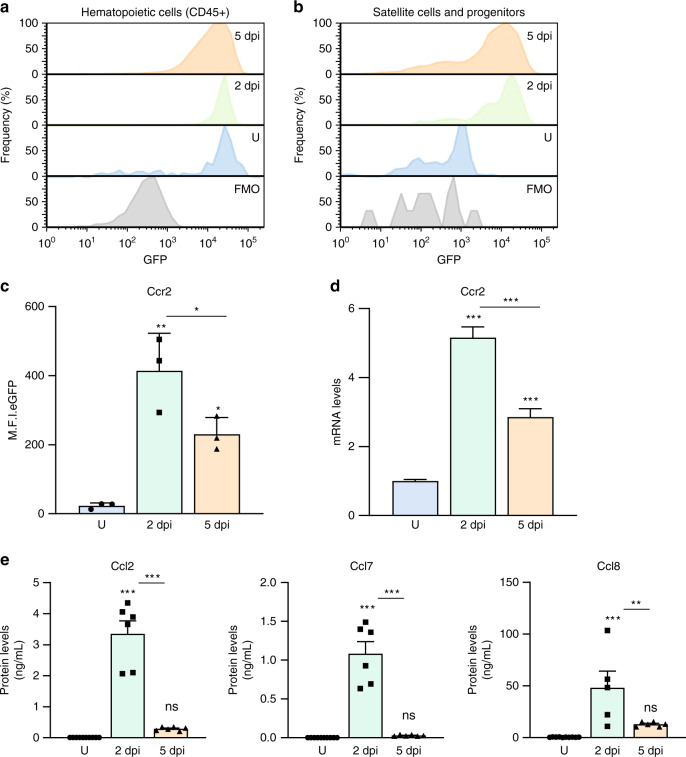
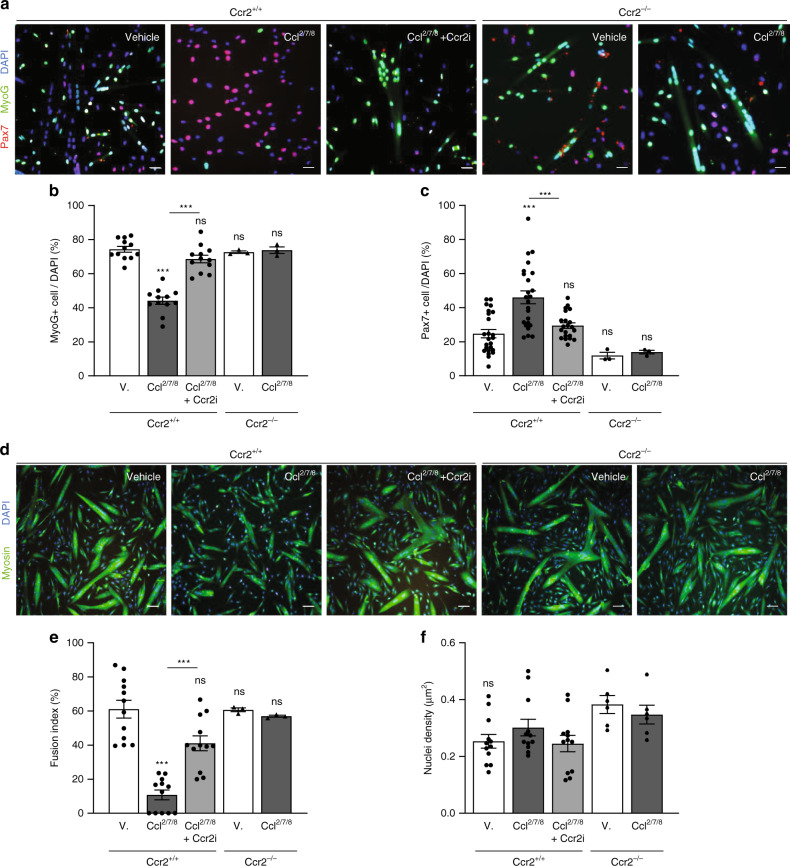
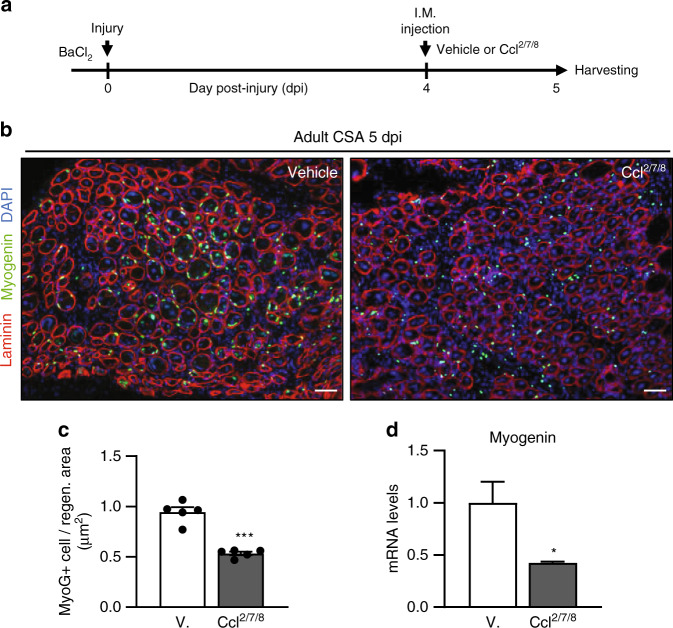
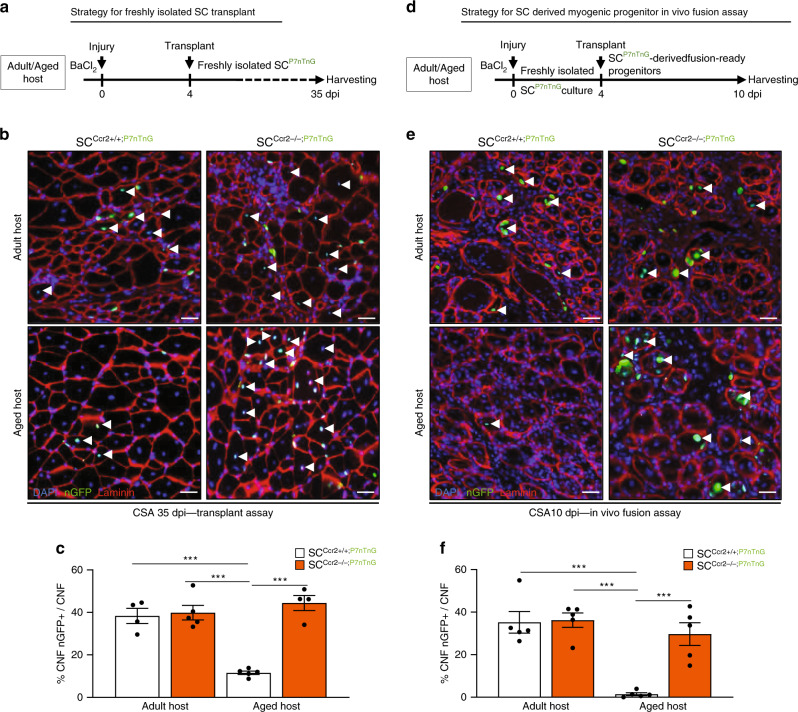
Muscle regeneration depends on a robust albeit transient inflammatory response. Persistent inflammation is a feature of age-related regenerative deficits, yet the underlying mechanisms are poorly understood. Here, we find inflammatory-related CC-chemokine-receptor 2 (Ccr2) expression in non-hematopoietic myogenic progenitors (MPs) during regeneration. After injury, the expression of Ccr2 in MPs corresponds to the levels of its ligands, the chemokines Ccl2, 7, and 8. We find stimulation of Ccr2-activity inhibits MP fusion and contribution to myofibers. This occurs in association with increases in MAPKp38δ/γ signaling, MyoD phosphorylation, and repression of the terminal myogenic commitment factor Myogenin. High levels of Ccr2-chemokines are a feature of regenerating aged muscle. Correspondingly, deletion of Ccr2 in MPs is necessary for proper fusion into regenerating aged muscle. Finally, opportune Ccr2 inhibition after injury enhances aged regeneration and functional recovery. These results demonstrate that inflammatory-induced activation of Ccr2 signaling in myogenic cells contributes to aged muscle regenerative decline.
肌肉再生依赖于强烈但短暂的炎症反应。持续性炎症是与年龄相关的再生缺陷的一个特征,但其潜在机制仍知之甚少。在此,我们发现在再生过程中,非造血性肌源性祖细胞(MPs)中存在与炎症相关的CC趋化因子受体2(Ccr2)表达。损伤后,MPs中Ccr2的表达与其配体趋化因子Ccl2、7和8的水平相对应。我们发现刺激Ccr2活性会抑制MP融合以及对肌纤维的贡献。这一过程伴随着丝裂原活化蛋白激酶p38δ/γ信号传导增加、肌分化抗原(MyoD)磷酸化以及终末肌源性决定因子肌细胞生成素(Myogenin)的抑制。高水平的Ccr2趋化因子是衰老肌肉再生的一个特征。相应地,MPs中Ccr2的缺失对于正常融合到衰老肌肉再生中是必要的。最后,损伤后适时抑制Ccr2可增强衰老肌肉的再生和功能恢复。这些结果表明,肌源性细胞中炎症诱导的Ccr2信号激活导致了衰老肌肉再生能力下降。