Chew Siang-Siang, Tan Loh Teng-Hern, Law Jodi Woan-Fei, Pusparajah Priyia, Goh Bey-Hing, Ab Mutalib Nurul Syakima, Lee Learn-Han
Novel Bacteria and Drug Discovery (NBDD) Research Group, Microbiome and Bioresource Research Strength, Jeffrey Cheah School of Medicine and Health Sciences, Monash University Malaysia, Bandar Sunway 47500, Selangor Darul Ehsan, Malaysia.
Medical Health and Translational Research Group, Jeffrey Cheah School of Medicine and Health Sciences, Monash University Malaysia, Bandar Sunway 47500, Selangor, Malaysia.
Cancers (Basel). 2020 Aug 13;12(8):2272. doi: 10.3390/cancers12082272.
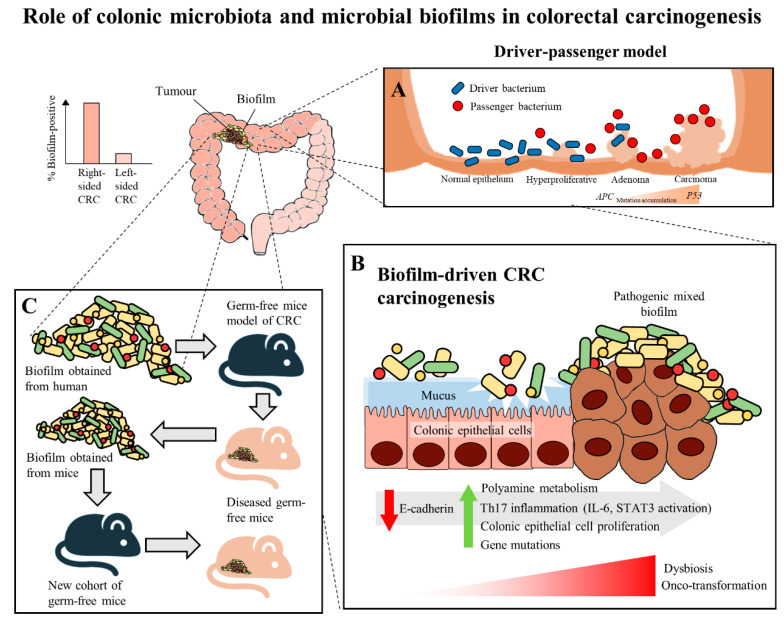
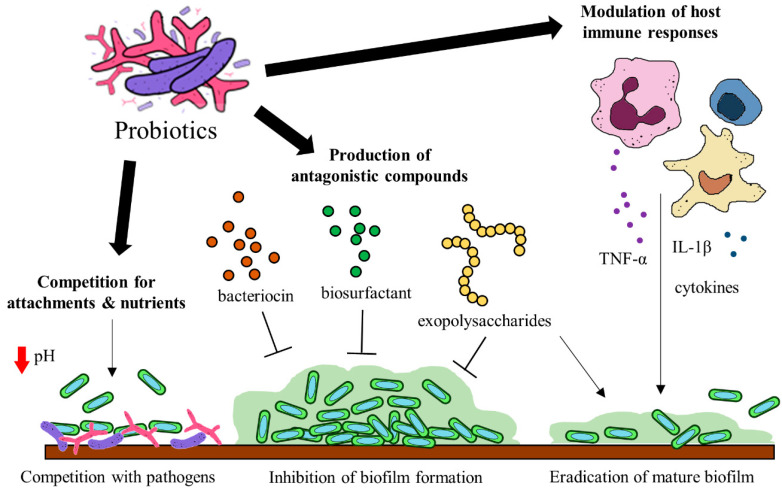
Colorectal cancer (CRC) is a global public health issue which poses a substantial humanistic and economic burden on patients, healthcare systems and society. In recent years, intestinal dysbiosis has been suggested to be involved in the pathogenesis of CRC, with specific pathogens exhibiting oncogenic potentials such as , and enterotoxigenic having been found to contribute to CRC development. More recently, it has been shown that initiation of CRC development by these microorganisms requires the formation of biofilms. Gut microbial biofilm forms in the inner colonic mucus layer and is composed of polymicrobial communities. Biofilm results in the redistribution of colonic epithelial cell E-cadherin, increases permeability of the gut and causes a loss of function of the intestinal barrier, all of which enhance intestinal dysbiosis. This literature review aims to compile the various strategies that target these pathogenic biofilms and could potentially play a role in the prevention of CRC. We explore the potential use of natural products, silver nanoparticles, upconverting nanoparticles, thiosalicylate complexes, anti-rheumatic agent (Auranofin), probiotics and quorum-sensing inhibitors as strategies to hinder colon carcinogenesis via targeting colon-associated biofilms.
结直肠癌(CRC)是一个全球性的公共卫生问题,给患者、医疗系统和社会带来了巨大的人文和经济负担。近年来,肠道微生物群失调被认为与CRC的发病机制有关,已发现特定病原体具有致癌潜力,如 、 和产肠毒素的 ,它们都对CRC的发展有促进作用。最近的研究表明,这些微生物引发CRC发展需要生物膜的形成。肠道微生物生物膜在结肠内黏液层形成,由多种微生物群落组成。生物膜导致结肠上皮细胞E-钙黏蛋白重新分布,增加肠道通透性并导致肠道屏障功能丧失,所有这些都会加剧肠道微生物群失调。这篇文献综述旨在汇总针对这些致病性生物膜的各种策略,这些策略可能在预防CRC中发挥作用。我们探讨了天然产物、银纳米颗粒、上转换纳米颗粒、硫代水杨酸酯配合物、抗风湿剂(金诺芬)、益生菌和群体感应抑制剂作为通过靶向结肠相关生物膜来阻碍结肠癌发生的策略的潜在用途。