Sangboonruang Sirikwan, Kitidee Kuntida, Chantawannakul Panuwan, Tragoolpua Khajornsak, Tragoolpua Yingmanee
Biotechnology Section, Graduate School, Chiang Mai University, Chiang Mai 50200, Thailand.
Center for Research and Innovation, Faculty of Medical Technology, Mahidol University, Salaya, Nakhon Pathom 73170, Thailand.
Antibiotics (Basel). 2020 Aug 14;9(8):517. doi: 10.3390/antibiotics9080517.
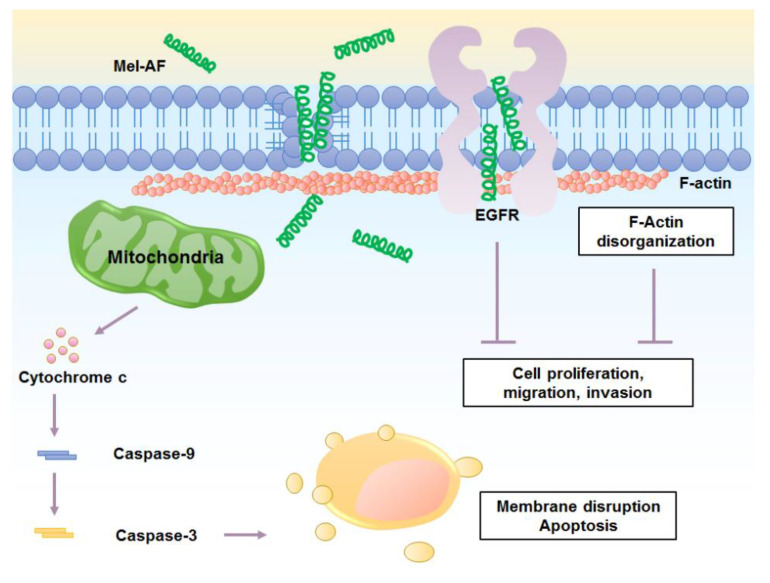
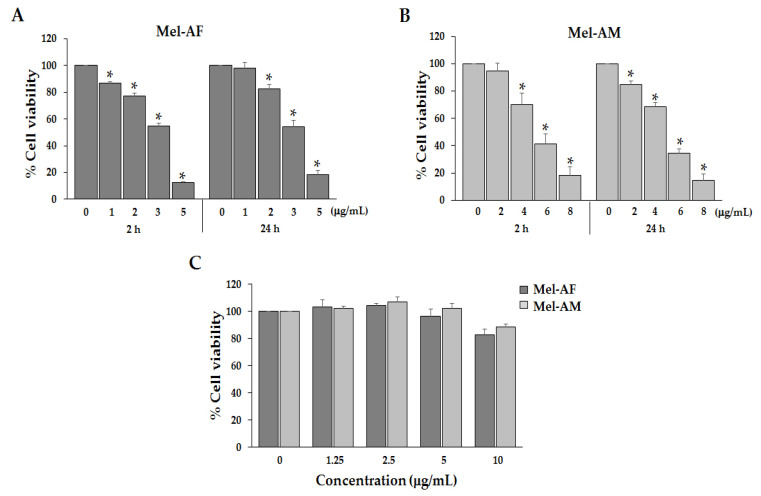
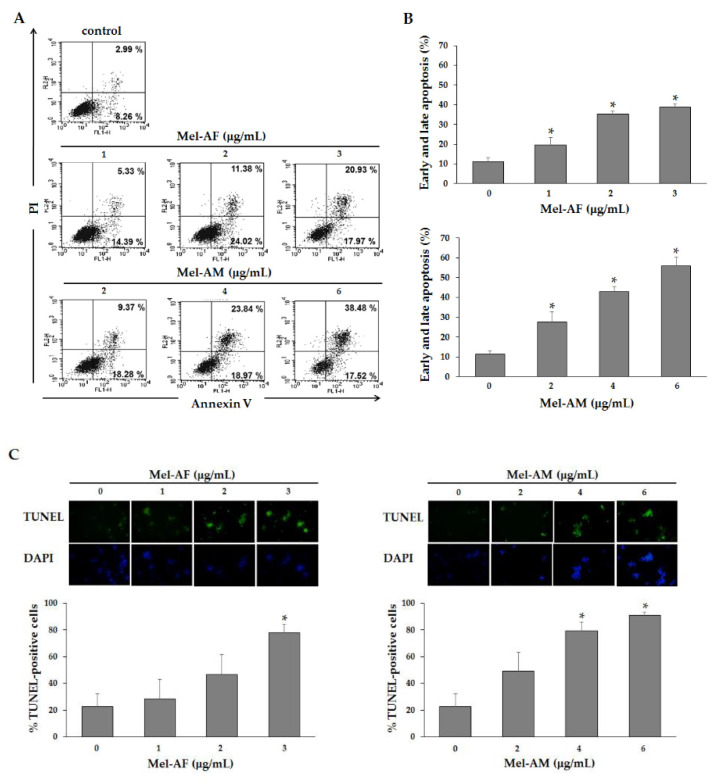
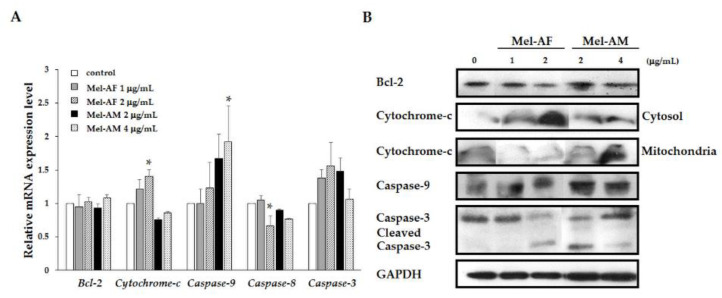
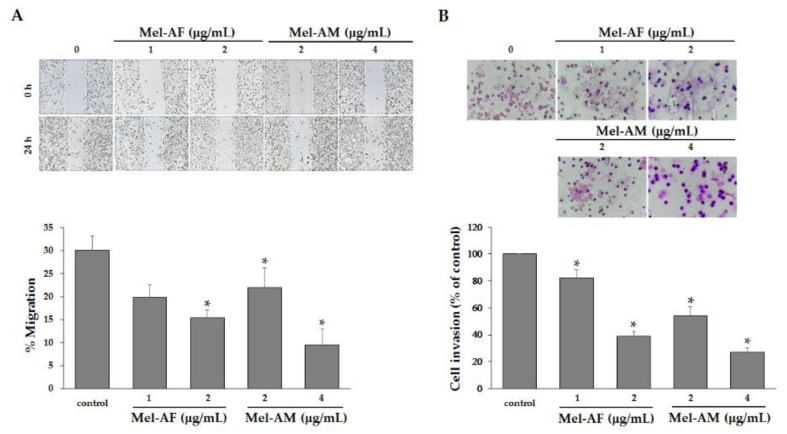
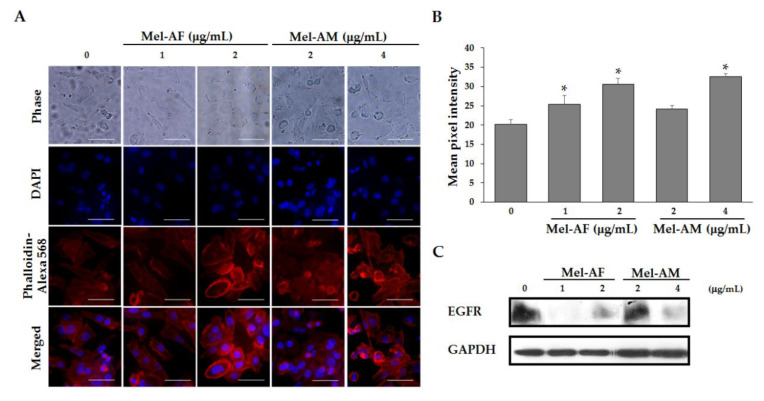
Melittin, a major component found in bee venom, is produced by the species of the honey bee. In this study, the effect of melittin derived from (Mel-AF), which is a wild honey bee species that is indigenous to Thailand, was investigated against human malignant melanoma (A375) cells. In this study, Mel-AF exhibited considerable potential in the anti-proliferative action of A375 cells. Subsequently, the cellular mechanism of Mel-AF that induced cell death was investigated in terms of apoptosis. As a result, gene and protein expression levels, which indicated the activation of cytochrome-c release and caspase-9 expression, eventually triggered the release of the caspase-3 executioner upon Mel-AF. We then determined that apoptosis-mediated cell death was carried out through the intrinsic mitochondrial pathway. Moreover, advanced abilities, including cell motility and invasion, were significantly suppressed. Mel-AF manipulated the actin arrangement via the trapping of stress fibers that were found underneath the membrane, which resulted in the defective actin cytoskeleton organization. Consequently, the expression of EGFR, a binding protein to F-actin, was also found to be suppressed. This outcome strongly supports the effects of Mel-AF in the inhibition of progressive malignant activity through the disruption of actin cytoskeleton-EGFR interaction and the EGFR signaling system. Thus, the findings of our current study indicate the potential usefulness of Mel-AF in cancer treatments as an apoptosis inducer and a potential actin-targeting agent.
蜂毒肽是蜜蜂毒液中的一种主要成分,由蜜蜂物种产生。在本研究中,对源自泰国本土野生蜜蜂物种(Mel-AF)的蜂毒肽对人恶性黑色素瘤(A375)细胞的作用进行了研究。在本研究中,Mel-AF在A375细胞的抗增殖作用中表现出相当大的潜力。随后,从细胞凋亡方面研究了Mel-AF诱导细胞死亡的细胞机制。结果,表明细胞色素c释放和半胱天冬酶-9表达激活的基因和蛋白质表达水平,最终在Mel-AF作用下触发了刽子手半胱天冬酶-3的释放。然后我们确定凋亡介导的细胞死亡是通过内在线粒体途径进行的。此外,包括细胞运动性和侵袭性在内的高级能力被显著抑制。Mel-AF通过捕获膜下发现的应力纤维来操纵肌动蛋白排列,这导致肌动蛋白细胞骨架组织缺陷。因此,还发现与F-肌动蛋白结合的蛋白质表皮生长因子受体(EGFR)的表达受到抑制。这一结果有力地支持了Mel-AF通过破坏肌动蛋白细胞骨架-EGFR相互作用和EGFR信号系统来抑制恶性进展活动的作用。因此,我们当前研究的结果表明Mel-AF作为一种凋亡诱导剂和潜在的肌动蛋白靶向剂在癌症治疗中具有潜在的用途。