Department of Cardiology, Affiliated Hospital of Jiangsu University, Zhenjiang 212001, China.
Department of Pathology, Affiliated Hospital of Jiangsu University, Zhenjiang 212001, China.
Mediators Inflamm. 2020 Aug 7;2020:6850187. doi: 10.1155/2020/6850187. eCollection 2020.
Advanced glycation end products play an important role in diabetic atherosclerosis. The effects of advanced glycation end products (AGEs) on vascular smooth muscle cell- (VSMC-) derived foam cell formation and phenotypic transformation are unknown.
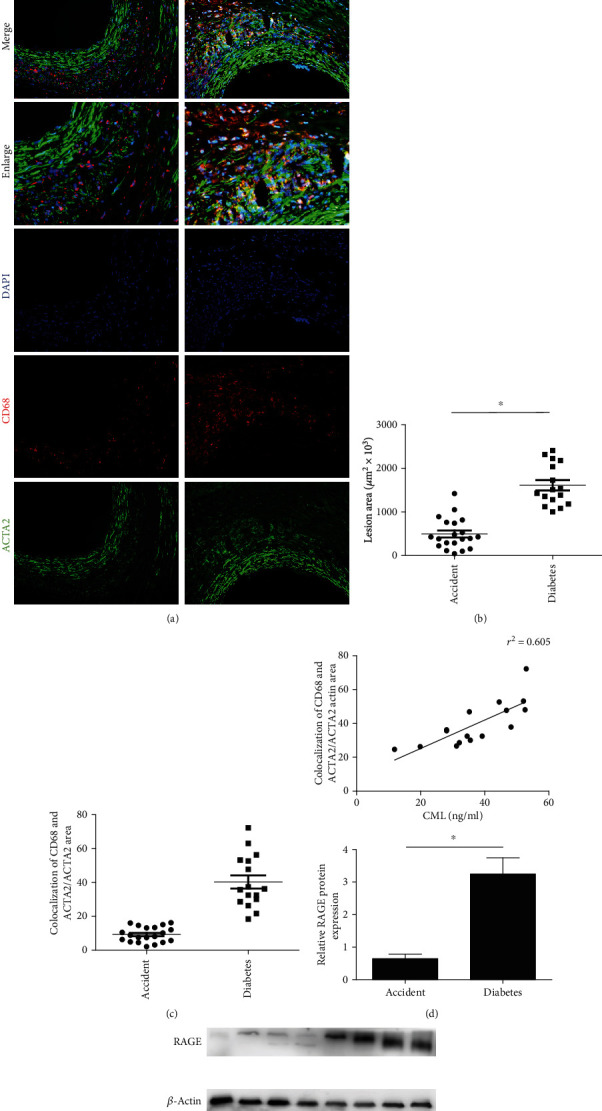
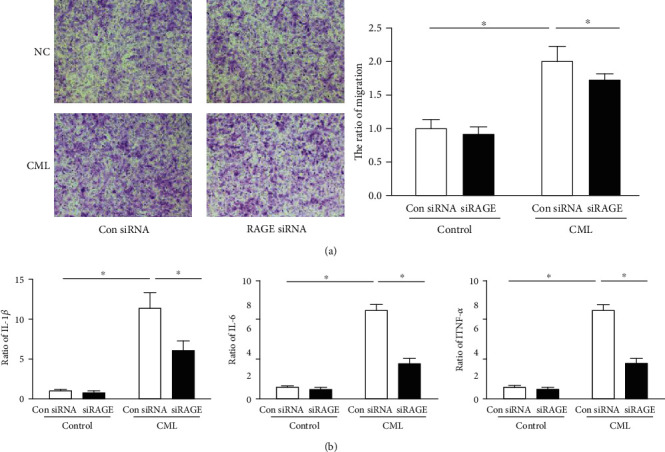
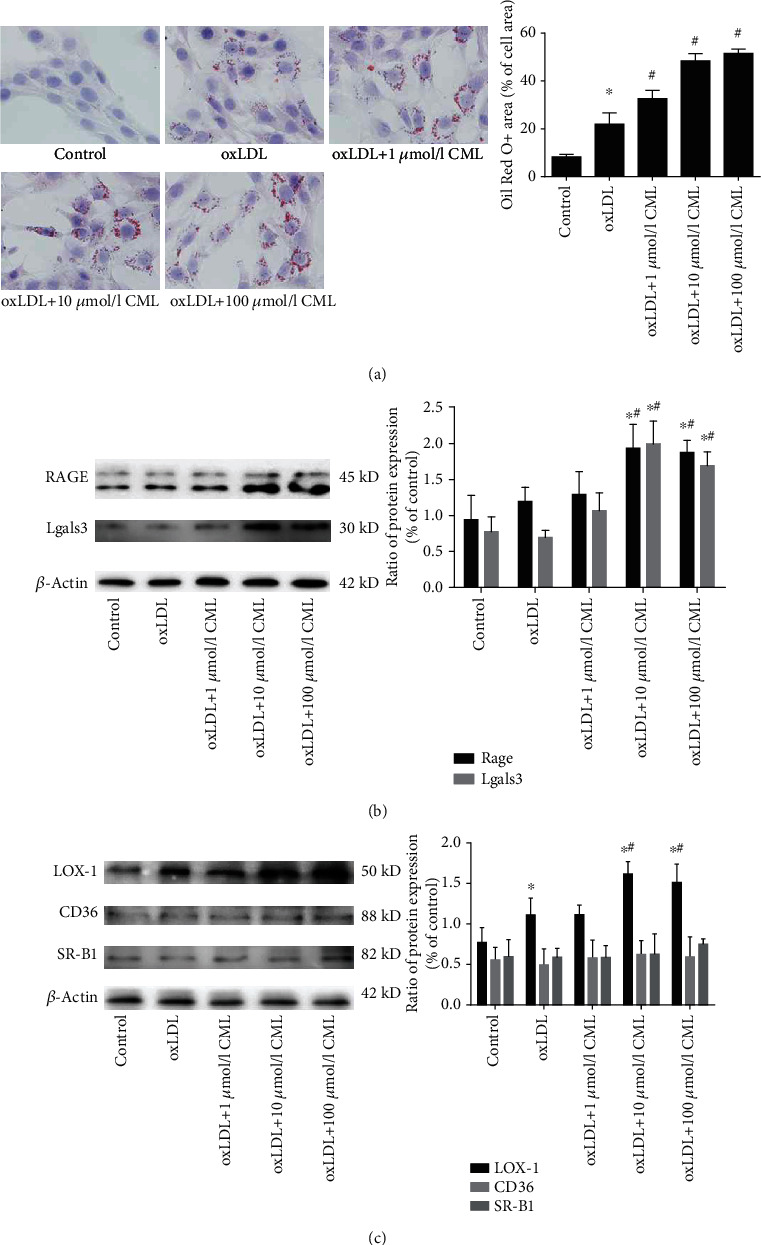
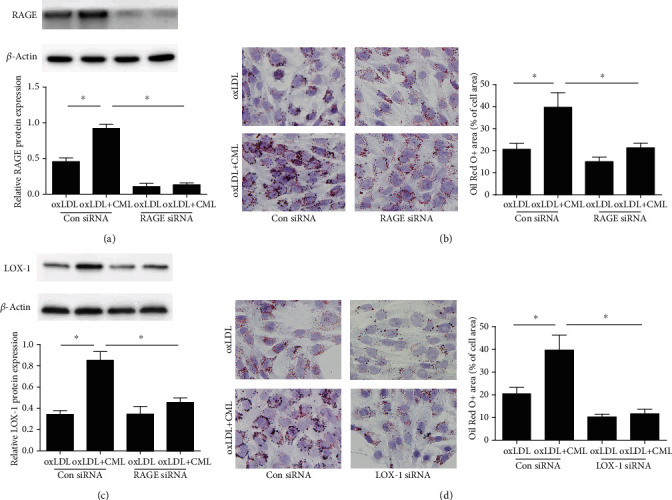
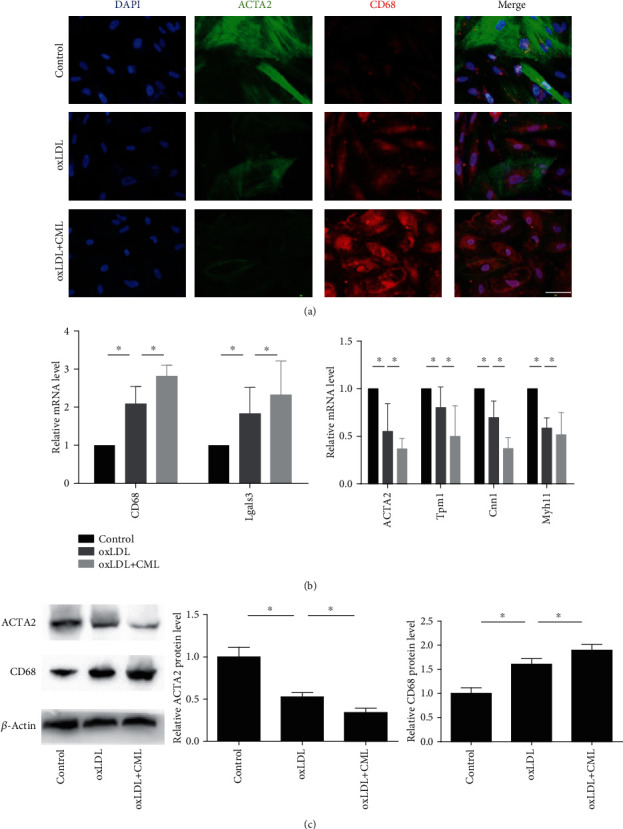
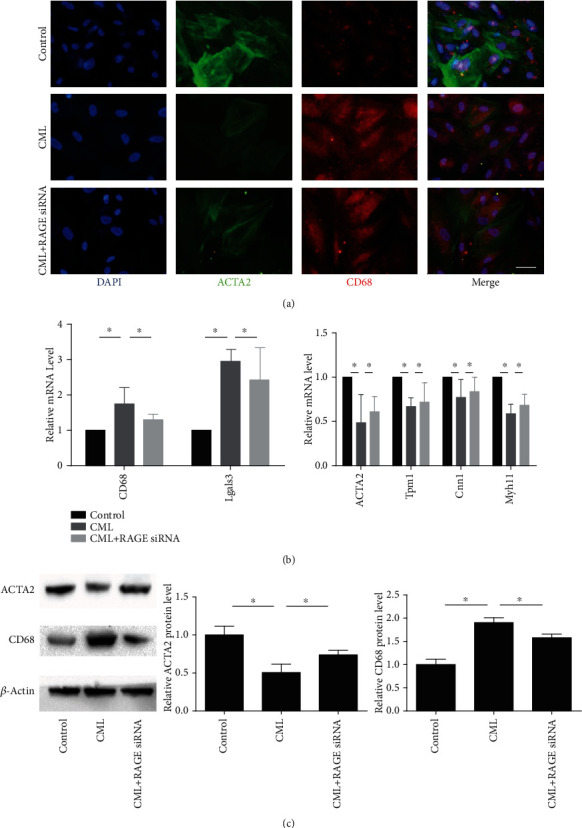
Serological and histological samples were obtained from diabetic amputation patients and accident amputation patients from the Affiliated Hospital of Jiangsu University. CD68/Actin Alpha 2 (ACTA2) coimmunofluorescence sections were used to quantify the number of VSMCs with macrophage-like phenotypes. Western blotting was used to detect the expression of the receptor of advanced glycation end products in vascular samples. Enzyme-linked immunosorbent assay (ELISA) was used to evaluate the level of serum N-carboxymethyl-lysine (CML). In vitro oil red O staining was used to examine lipid accumulation in VSMCs stimulated by CML. The expression of VSMCs and macrophage markers was measured by western blotting and quantitative real-time PCR. Furthermore, changes in VSMC migration and secretion were detected by the Transwell assay and ELISA.
In the arterial plaque sections of diabetic patients, VSMCs transformed to a macrophage-like phenotype. The serum CML and RAGE levels in the plaques were significantly higher in the diabetes group than those in the healthy control group and were significantly related to the number of macrophage-like VSMCs. CML stimulation promoted intracellular lipid accumulation. However, CML stimulation decreased the expression of VSMC markers and increased the expression of macrophage phenotype markers. Finally, CML promoted smooth muscle cell migration and the secretion of proinflammatory-related factors.
CML induces VSMC-derived foam cell formation, and VSMCs transdifferentiate to a macrophage-like state, which may be mediated by the activation of RAGE.
糖基化终产物在糖尿病动脉粥样硬化中起重要作用。糖基化终产物(AGEs)对血管平滑肌细胞(VSMC)衍生泡沫细胞形成和表型转化的影响尚不清楚。
从江苏大学附属医院的糖尿病截肢患者和意外截肢患者中获得血清和组织学样本。使用 CD68/肌动蛋白 Alpha 2(ACTA2)共免疫荧光切片来定量具有巨噬细胞样表型的 VSMC 的数量。Western blot 用于检测血管样本中糖基化终产物受体的表达。酶联免疫吸附试验(ELISA)用于评估血清 N-羧甲基赖氨酸(CML)的水平。体外油红 O 染色用于检测 CML 刺激的 VSMC 中脂质的积累。通过 Western blot 和定量实时 PCR 测量 VSMC 和巨噬细胞标志物的表达。此外,通过 Transwell 测定和 ELISA 检测 VSMC 迁移和分泌的变化。
在糖尿病患者的动脉斑块切片中,VSMC 转化为巨噬细胞样表型。斑块中糖尿病组患者的血清 CML 和 RAGE 水平明显高于健康对照组,与巨噬细胞样 VSMC 的数量明显相关。CML 刺激促进细胞内脂质积累。然而,CML 刺激降低了 VSMC 标志物的表达并增加了巨噬细胞表型标志物的表达。最后,CML 促进平滑肌细胞迁移和促炎相关因子的分泌。
CML 诱导 VSMC 衍生的泡沫细胞形成,并且 VSMC 向巨噬细胞样状态转化,这可能是通过 RAGE 的激活介导的。