Yang Shanshan, Jiang Yiwen, Ren Xiaoli, Feng Dan, Zhang Liaoyun, He Deying, Hong Shiyao, Jin Li, Zhang Fang, Lu Shun
Department of Gynecological Radiotherapy, Harbin Medical University Cancer Hospital, No. 150 Haping Road, Nangang District, Harbin, 150081 Heilongjiang China.
Department of Radiotherapy, Sichuan Cancer Hospital & Institute, Sichuan Cancer Center, School of Medicine, University of Electronic Science and Technology of China, No. 55 Renmin South Road, Chengdu, 610041 Sichuan China.
Cancer Cell Int. 2020 Aug 12;20:389. doi: 10.1186/s12935-020-01360-2. eCollection 2020.
Recently, extensive evidence has clarified the crucial role of circular RNAs (circRNAs) as a pro-tumor or anti-cancer participant in human malignancies. A new circRNA derived from oxysterol binding protein like 10 (OSBPL10) (circOSBPL10) has not been researched in cervical cancer (CC) yet.
The expression of molecules was analyzed by RT-qPCR or western blot. Several functional assays were applied to explore the biological influence of circOSBPL10 on CC. The interaction between RNAs was estimated via luciferase reporter, RNA immunoprecipitation and RNA pull-down assays.
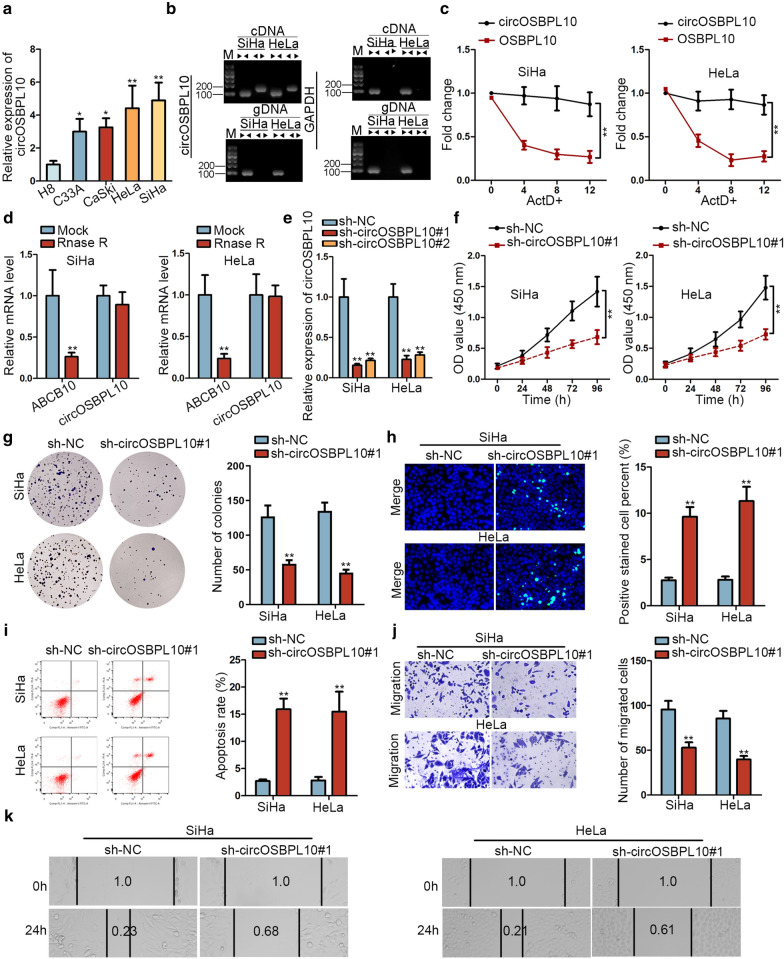
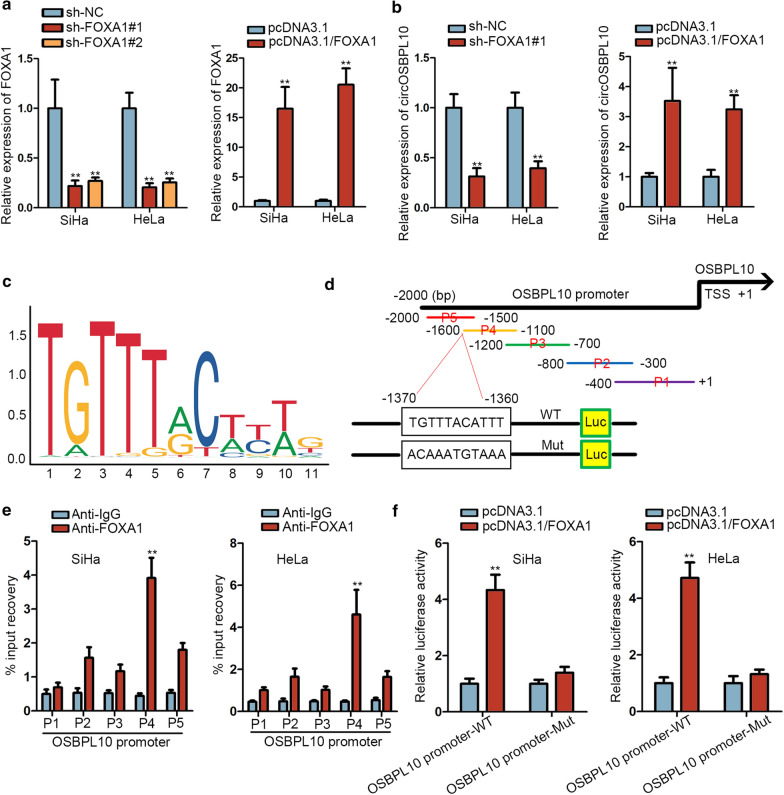
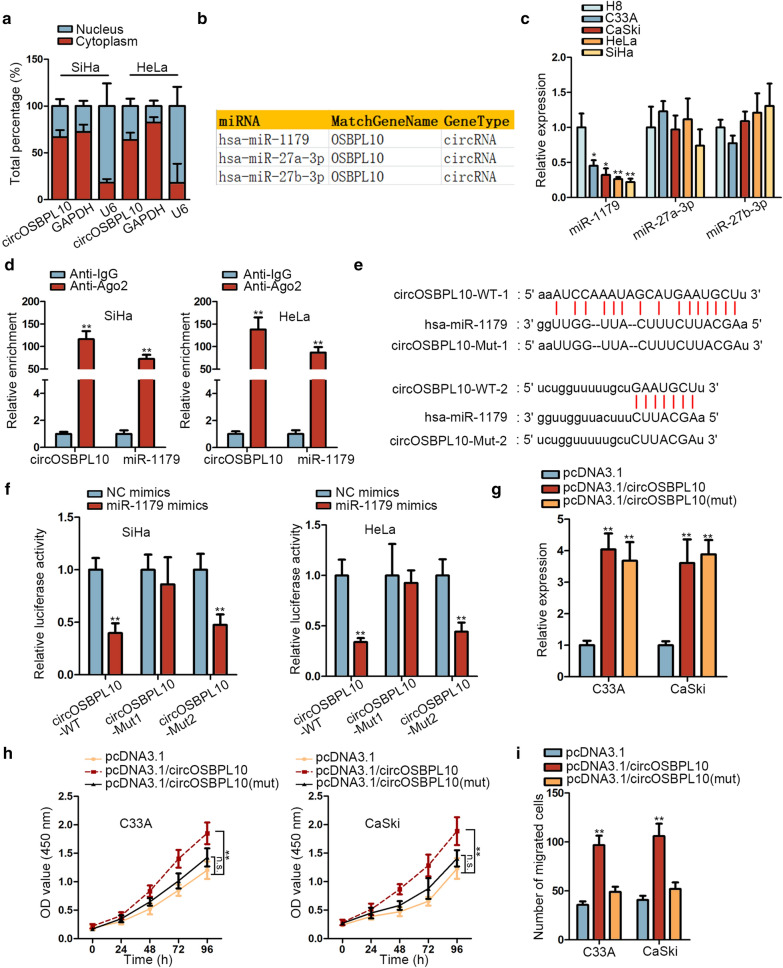
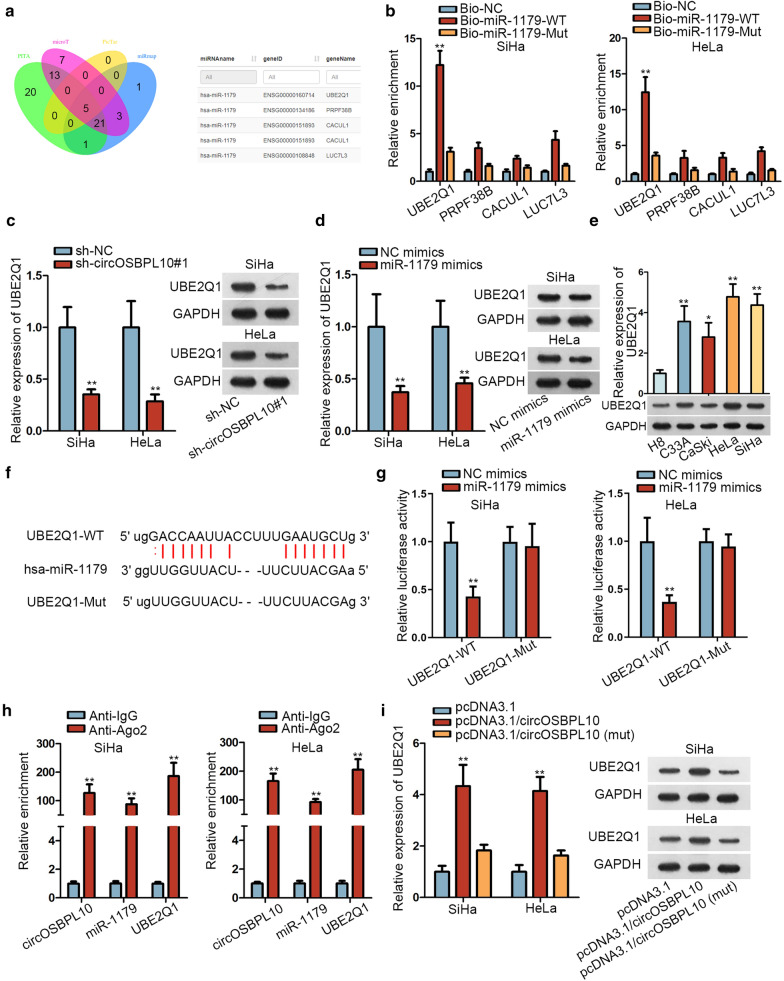
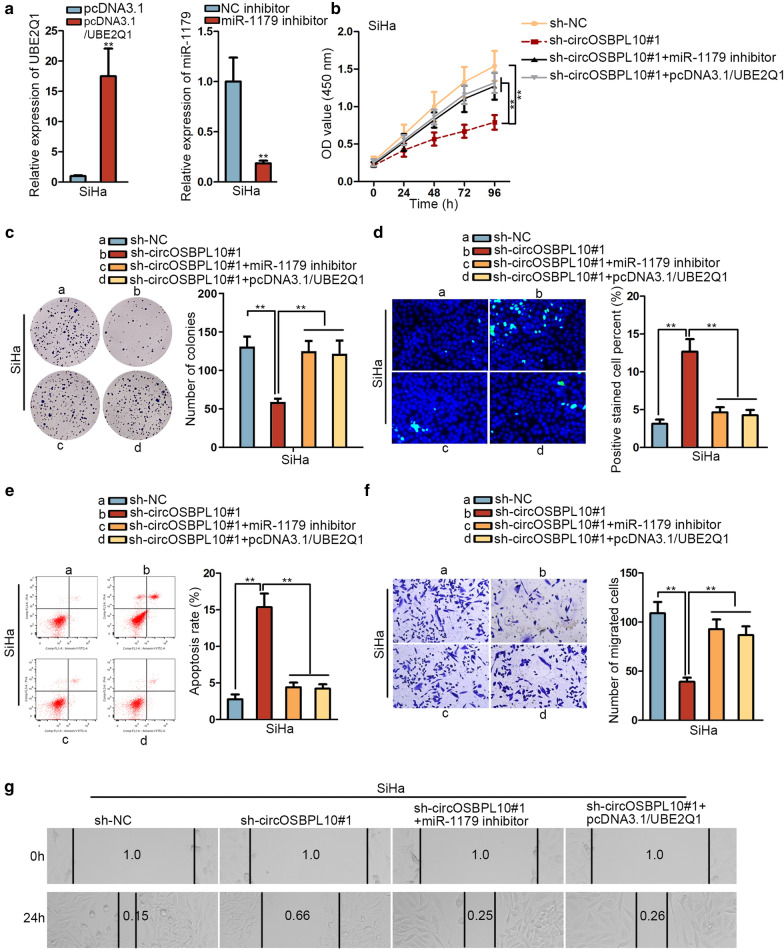
CircOSBPL10 characterized with cyclic structure was revealed to possess elevated expression in CC cells. CircOSBPL10 downregulation elicited suppressive impacts on CC cell proliferation and migration. Interestingly, circOSBPL10 regulated CC progression by interacting with microRNA-1179 (miR-1179). Moreover, ubiquitin conjugating enzyme E2 Q1 (UBE2Q1) targeted by miR-1179 was positively regulated by circOSBPL10 in CC. Furthermore, enhanced UBE2Q1 expression or suppressed miR-1179 level countervailed the repressive effect of circOSBPL10 depletion on the malignant phenotypes of CC cells. Moreover, forkhead box A1 (FOXA1) was confirmed to induce circOSBPL10 expression in CC cells.
FOXA1-induced circOSBPL10 facilitates CC progression through miR-1179/UBE2Q1 axis, highlighting a strong potential for circOSBPL10 to serve as a promising therapeutic target in CC.
最近,大量证据阐明了环状RNA(circRNA)作为人类恶性肿瘤中促肿瘤或抗癌参与者的关键作用。一种源自类氧甾醇结合蛋白10(OSBPL10)的新型circRNA(circOSBPL10)尚未在宫颈癌(CC)中得到研究。
通过RT-qPCR或蛋白质免疫印迹分析分子的表达。应用多种功能测定法探讨circOSBPL10对CC的生物学影响。通过荧光素酶报告基因、RNA免疫沉淀和RNA下拉测定法评估RNA之间的相互作用。
具有环状结构的circOSBPL10在CC细胞中表达升高。circOSBPL10下调对CC细胞增殖和迁移产生抑制作用。有趣的是,circOSBPL10通过与微小RNA-1179(miR-1179)相互作用来调节CC进展。此外,在CC中,circOSBPL10正向调节miR-1179靶向的泛素结合酶E2 Q1(UBE2Q1)。此外,增强的UBE2Q1表达或抑制的miR-1179水平抵消了circOSBPL10缺失对CC细胞恶性表型的抑制作用。此外,证实叉头框A1(FOXA1)在CC细胞中诱导circOSBPL10表达。
FOXA1诱导的circOSBPL10通过miR-1179/UBE2Q1轴促进CC进展,突出了circOSBPL10作为CC中有前景的治疗靶点的强大潜力。