Goel Saurav, Hawi Sara, Goel Gaurav, Thakur Vijay Kumar, Agrawal Anupam, Hoskins Clare, Pearce Oliver, Hussain Tanvir, Upadhyaya Hari M, Cross Graham, Barber Asa H
School of Engineering, London South Bank University, 103 Borough Road, London, SE10AA, UK.
School of Aerospace, Transport and Manufacturing, Cranfield University, Bedford, MK43 0AL, UK.
Mater Today Chem. 2020 Sep;17:100300. doi: 10.1016/j.mtchem.2020.100300. Epub 2020 May 28.
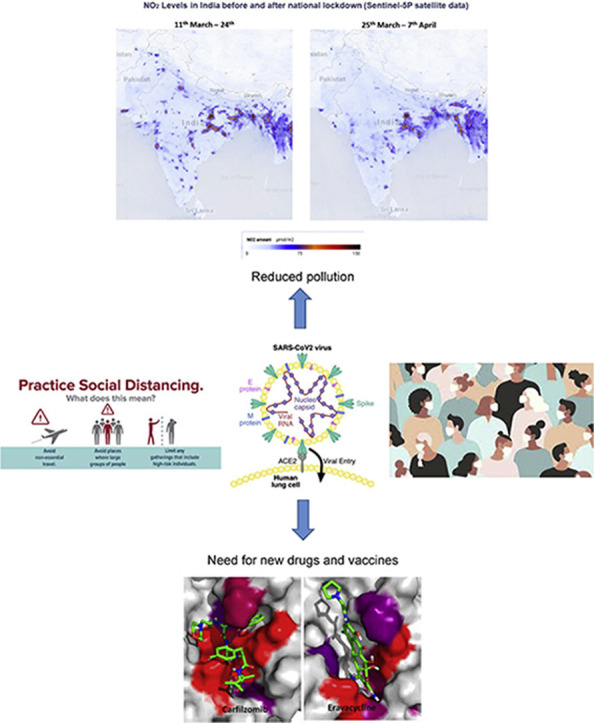
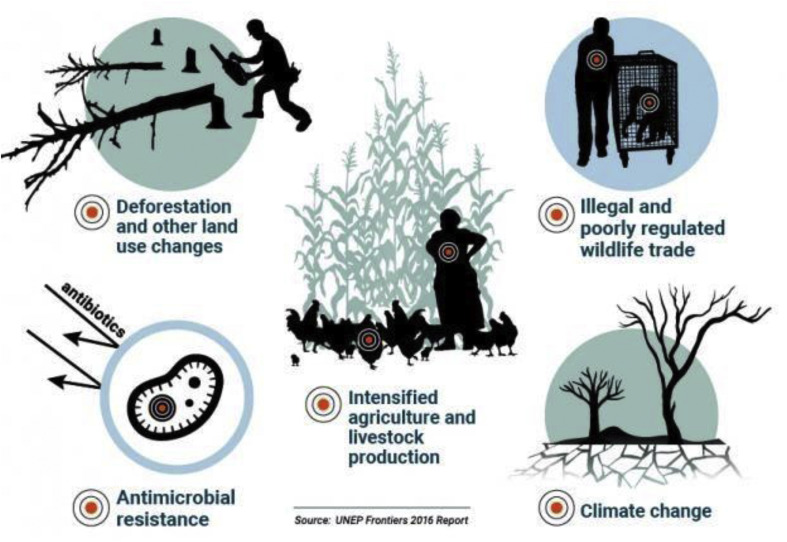
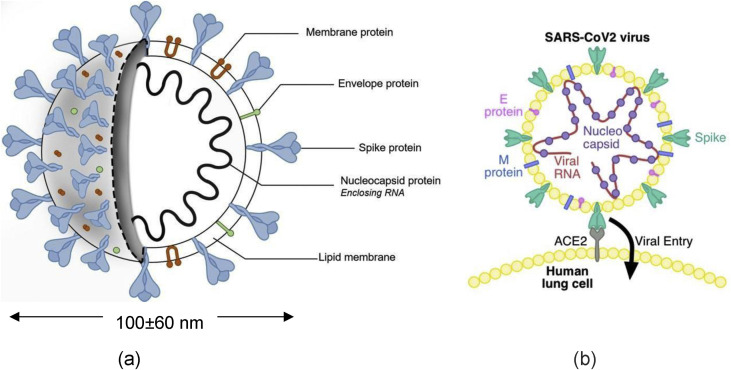
The world is witnessing tumultuous times as major economic powers including the US, UK, Russia, India, and most of Europe continue to be in a state of lockdown. The worst-hit sectors due to this lockdown are sales, production (manufacturing), transport (aerospace and automotive) and tourism. Lockdowns became necessary as a preventive measure to avoid the spread of the contagious and infectious "ronarus isease 20 (COVID-19). This newly identified disease is caused by a new strain of the virus being referred to as evere cute espiratory yndrome ronairus (SARS CoV-2; formerly called 2019-nCoV). We review the current medical and manufacturing response to COVID-19, including advances in instrumentation, sensing, use of lasers, fumigation chambers and development of novel tools such as lab-on-the-chip using combinatorial additive and subtractive manufacturing techniques and use of molecular modelling and molecular docking in drug and vaccine discovery. We also offer perspectives on future considerations on climate change, outsourced versus indigenous manufacturing, automation, and antimicrobial resistance. Overall, this paper attempts to identify key areas where manufacturing can be employed to address societal challenges such as COVID-19.
随着包括美国、英国、俄罗斯、印度以及欧洲大部分地区在内的主要经济大国持续处于封锁状态,世界正经历动荡时期。因封锁受影响最严重的行业是销售、生产(制造业)、运输(航空航天和汽车)以及旅游业。作为预防措施,封锁成为必要手段,以避免传染性疾病“罗纳鲁斯疾病20(新冠病毒病)”的传播。这种新发现的疾病由一种新型病毒引起,该病毒被称为严重急性呼吸综合征冠状病毒2(SARS-CoV-2;以前称为2019-nCoV)。我们回顾了当前针对新冠病毒病的医疗和制造应对措施,包括仪器仪表、传感技术、激光应用、熏蒸室方面的进展,以及使用组合增材和减材制造技术的芯片实验室等新型工具的开发,还有在药物和疫苗研发中分子建模和分子对接的应用。我们还就气候变化、外包与本土制造、自动化以及抗微生物耐药性等未来考量提供了观点。总体而言,本文试图确定制造业可用于应对新冠病毒病等社会挑战的关键领域。