Sansone Nathália M S, Boschiero Matheus N, Ortega Manoela M, Ribeiro Isadora A, Peixoto Andressa O, Mendes Roberto T, Marson Fernando A L
Laboratory of Cell and Molecular Tumor Biology and Bioactive Compounds, São Francisco University, Bragança Paulista, SP, Brazil.
Laboratory of Human and Medical Genetics, São Francisco University, Bragança Paulista, SP, Brazil.
Lancet Reg Health Am. 2022 Apr;8:100177. doi: 10.1016/j.lana.2021.100177. Epub 2022 Jan 7.
Indigenous peoples are vulnerable to pandemics, including to the coronavirus disease (COVID)-19, since it causes high mortality and specially, the loss of elderly Indigenous individuals.
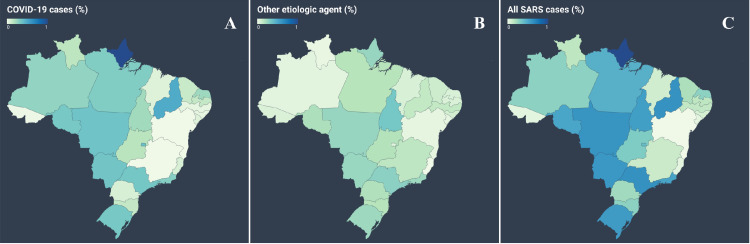
The epidemiological data of severe acute respiratory syndrome (SARS) by SARS-CoV-2 infection or other etiologic agents (OEA) among Brazilian Indigenous peoples during the first year of COVID-19 pandemic was obtained from a Brazilian Ministry of Health open-access database to perform an observational study. Considering only Indigenous individuals diagnosed with SARS by COVID-19, the epidemiology data were also evaluated as risk of death. The type of sample collection for virus screening, demographic profile, clinical symptoms, comorbidities, and clinical evolution were evaluated. The primary outcome was considered the death in the Brazilian Indigenous individuals and the secondary outcome, the characteristics of Brazilian Indigenous infected by SARS-CoV-2 or OEA, as the need for intensive care unit admission or the need for mechanical ventilation support. The statistical analysis was done using Logistic Regression Model. Alpha of 0.05.
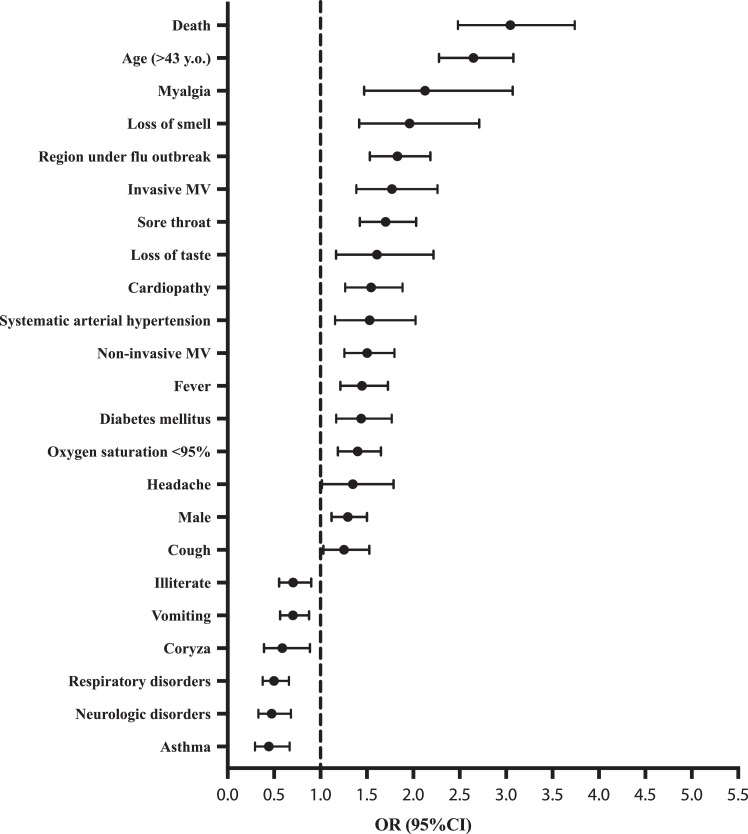
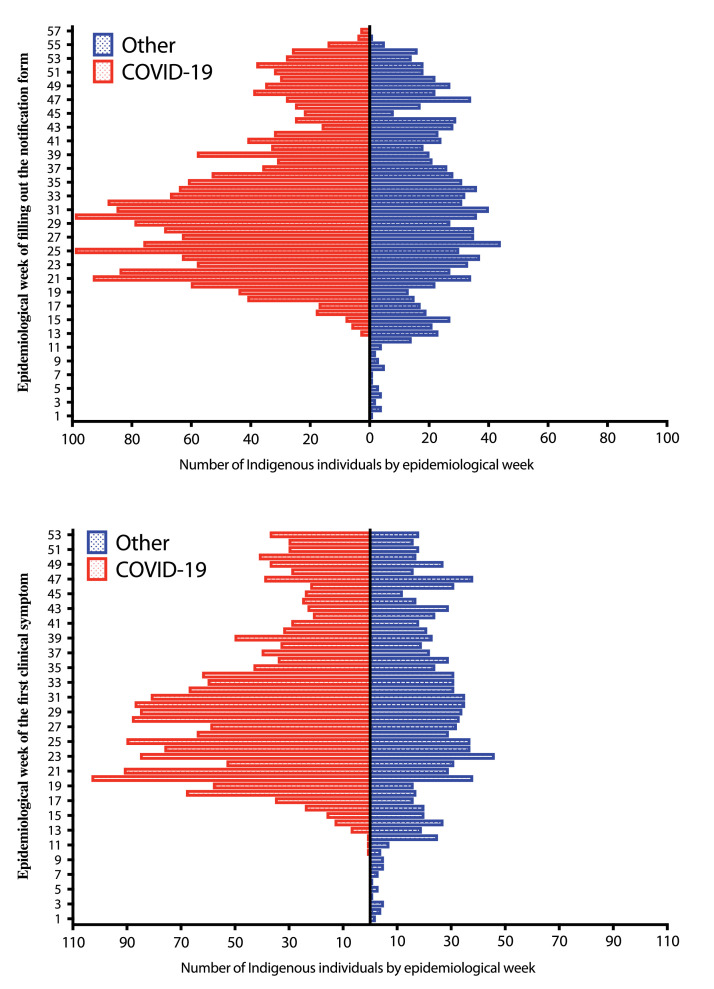
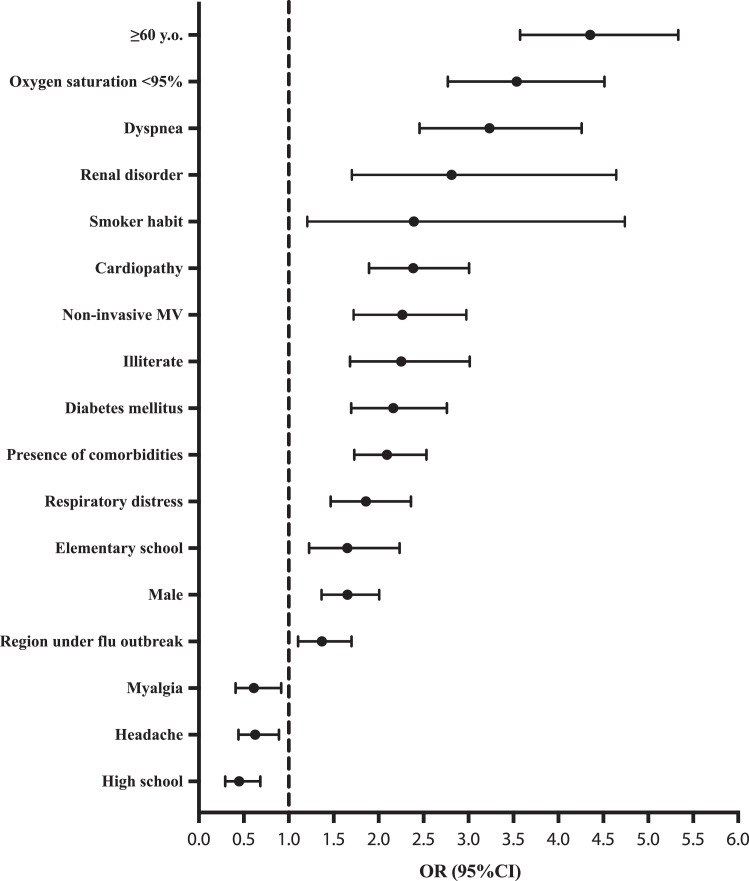
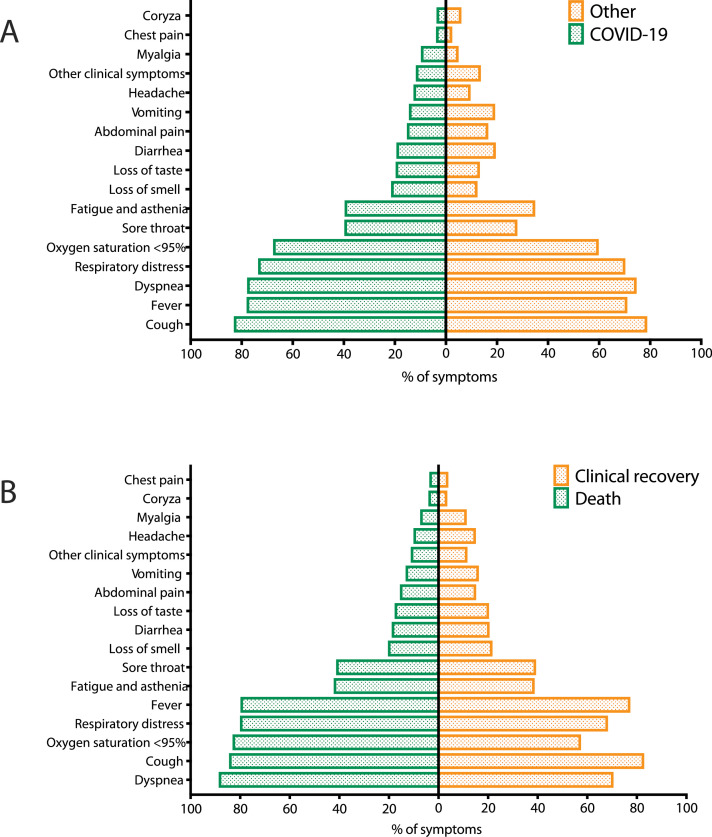
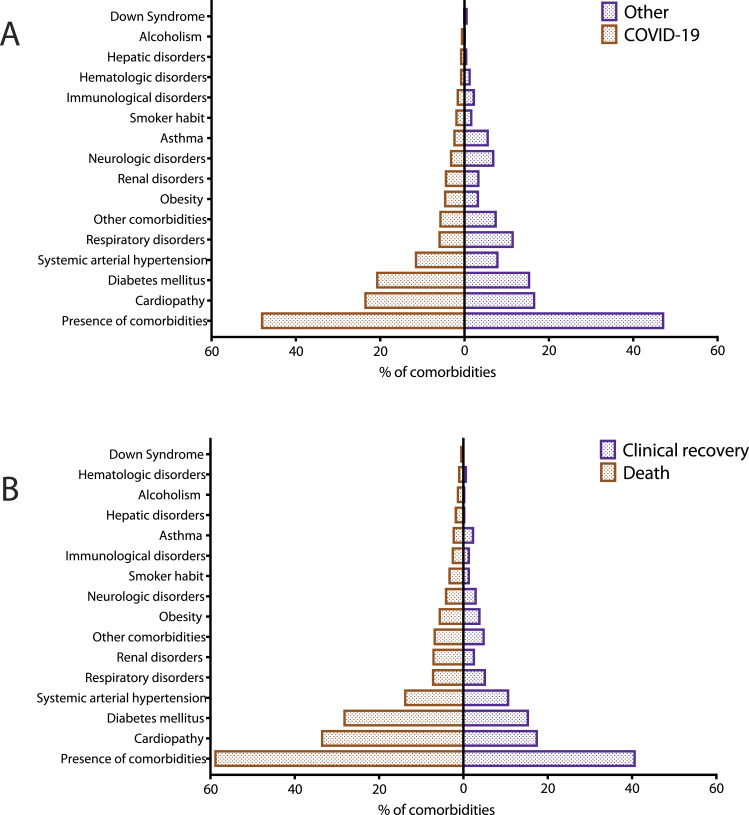
A total of 3,122 cases of Indigenous individuals with SARS in Brazil were reported during the first year of the COVID-19 pandemic. Of these, 1,994 were diagnosed with COVID-19 and 730/1,816 (40.2%) of them died. The death rate among individuals with SARS-CoV-2 was three-fold increased when compared to the group of individuals with OEA. Several symptoms (myalgia, loss of smell, and sore throat) and comorbidities (cardiopathy, systemic arterial hypertension, and diabetes mellitus) were more prevalent in the COVID-19 group when compared to Indigenous individuals with OEA. Similar profile was observed considering the risk of death among the Indigenous individuals with COVID-19 who presented several symptoms (oxygen saturation <95%, dyspnea, and respiratory distress) and comorbidities (renal disorders, cardiopathy, and diabetes mellitus). The multivariate analysis was significant in differentiating between the COVID-19-positive and non-COVID-19 patients [X =65.187; P-value<0.001]. Among the patients' features, the following contributed in relation to the diagnosis of COVID-19: age [≥43 years-old [y.o.]; OR=1.984 (95%CI=1.480-2.658)]; loss of smell [OR=2.373 (95%CI=1.461-3.854)]; presence of previous respiratory disorders [OR=0.487; 95%CI=0.287-0.824)]; and fever [OR=1.445 (95%CI=1.082-1.929)]. Also, the multivariate analysis was able to predict the risk of death [X =293.694; P-value<0.001]. Among the patients' features, the following contributed in relation to the risk of death: male gender [OR=1.507 (95%CI=1.010-2.250)]; age [≥60 y.o.; OR=3.377 (95%CI=2.292-4.974)]; the need for ventilatory support [invasive mechanical ventilation; OR=24.050 (95%CI=12.584-45.962) and non-invasive mechanical ventilation; OR=2.249 (95%CI=1.378-3.671)]; dyspnea [OR=2.053 (95%CI=1.196-3.522)]; oxygen saturation <95% [OR=1.691 (95%CI=1.050-2.723)]; myalgia [OR=0.423 (95%CI=0.191-0.937)]; and the presence of kidney disorders [OR=3.135 (95%CI=1.144-8.539)].
The Brazilian Indigenous peoples are in a vulnerable situation during the COVID-19 pandemic and presented an increased risk of death due to COVID-19. Several factors were associated with enhanced risk of death, as male sex, older age (≥60 y.o.), and need for ventilatory support; also, other factors might help to differentiate SARS by COVID-19 or by OEA, as older age (≥43 y.o.), loss of smell, and fever.
Fundação de Amparo à Pesquisa do Estado de São Paulo (Foundation for Research Support of the State of São Paulo; #2021/05810-7).
原住民易受大流行病影响,包括冠状病毒病(COVID)-19,因为它会导致高死亡率,特别是老年原住民个体的死亡。
从巴西卫生部的开放获取数据库中获取COVID-19大流行第一年期间巴西原住民中由严重急性呼吸综合征冠状病毒2(SARS-CoV-2)感染或其他病原体(OEA)引起的严重急性呼吸综合征(SARS)的流行病学数据,以进行一项观察性研究。仅考虑被COVID-19诊断为SARS的原住民个体,还将流行病学数据评估为死亡风险。评估了病毒筛查的样本采集类型、人口统计学特征、临床症状、合并症和临床病程。主要结局被认为是巴西原住民个体的死亡,次要结局是感染SARS-CoV-2或OEA的巴西原住民的特征,如入住重症监护病房的需求或机械通气支持的需求。使用逻辑回归模型进行统计分析。α为0.05。
在COVID-19大流行的第一年,巴西共报告了3122例原住民SARS病例。其中,1994例被诊断为COVID-19,其中730/1816(40.2%)死亡。与OEA组相比,SARS-CoV-2感染者的死亡率增加了两倍。与OEA感染的原住民个体相比,COVID-19组的几种症状(肌痛、嗅觉丧失和喉咙痛)和合并症(心脏病、系统性动脉高血压和糖尿病)更为普遍。在出现几种症状(血氧饱和度<95%、呼吸困难和呼吸窘迫)和合并症(肾脏疾病、心脏病和糖尿病)的COVID-19感染的原住民个体中,观察到类似的死亡风险情况。多变量分析在区分COVID-19阳性和非COVID-19患者方面具有显著性[X =65.187;P值<0.001]。在患者特征中,以下因素与COVID-19的诊断有关:年龄[≥43岁;OR=1.984(95%CI=1.480-2.658)];嗅觉丧失[OR=2.373(95%CI=1.461-3.854)];既往呼吸系统疾病史[OR=0.487;95%CI=0.287-0.824];以及发热[OR=1.445(95%CI=1.082-1.929)]。此外,多变量分析能够预测死亡风险[X =293.694;P值<0.001]。在患者特征中,以下因素与死亡风险有关:男性[OR=1.507(95%CI=1.010-2.250)];年龄[≥60岁;OR=3.377(95%CI=2.292-4.974)];通气支持需求[有创机械通气;OR=24.050(95%CI=12.584-45.962)和无创机械通气;OR=2.249(95%CI=1.378-3.671)];呼吸困难[OR=2.053(95%CI=1.196-3.522)];血氧饱和度<95%[OR=1.691(95%CI=1.050-2.723)];肌痛[OR=0.423(95%CI=0.191-0.937)];以及肾脏疾病的存在[OR=3.135(95%CI=1.144-8.539)]。
在COVID-19大流行期间,巴西原住民处于脆弱状况,因COVID-19导致死亡风险增加。几个因素与死亡风险增加相关,如男性、老年(≥60岁)和通气支持需求;此外,其他因素可能有助于区分COVID-19或OEA引起的SARS,如老年(≥43岁)、嗅觉丧失和发热。
圣保罗州研究资助基金会(Fundação de Amparo à Pesquisa do Estado de São Paulo;#2021/05810-7)。