Gupta Arun, Kunte Renuka, Goyal Neeti, Ray Sougat, Singh Kamalpreet
Assistant Professor, Department of Community Medicine, Armed Forces Medical College, Pune, India.
Dy Principal Medical Officer, Headquarters Training Command, Bengaluru, India.
Med J Armed Forces India. 2021 Jul;77(Suppl 2):S430-S436. doi: 10.1016/j.mjafi.2020.06.003. Epub 2020 Jun 30.
Management of novel viral respiratory disease outbreak on-board a ship with person-to-person transmission can be a public health challenge because of close proximity of inhabitants due to confined space and air-conditioned environment. It has a potential to be explosive, with high secondary attack rate (SAR) and cause significant morbidity and mortality. This study compares control measures instituted on-board two ships with similar outbreaks and recommends a standardized evidence-based outbreak response against them.
This is a descriptive study, showing comparative analysis of control measures instituted on-board two ships, a cruise ship in case of COVID-19 and a warship in case of H1N1 influenza, with novel viral respiratory disease outbreak, at different span of time. Data of the date of onset, clinical details, laboratory results, history of travel, history of contact with positive case and control measures initiated were collected, analysed and compared.
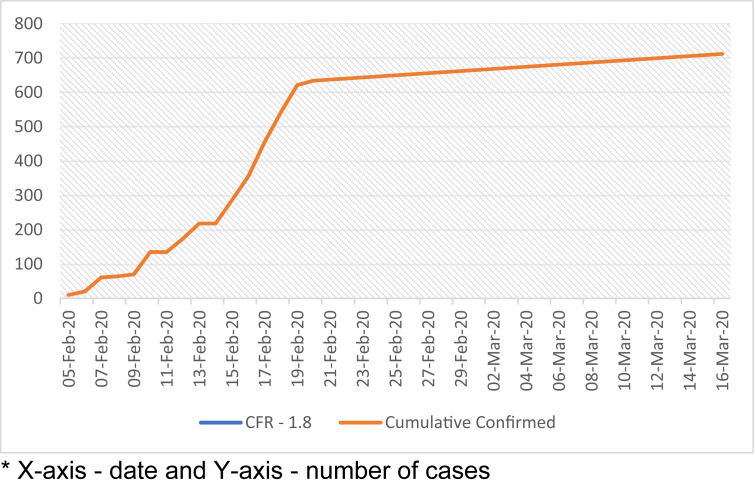
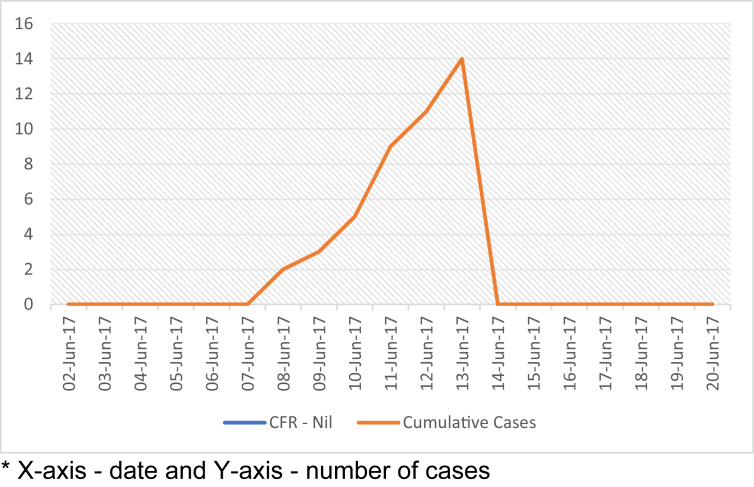
Of the two ships compared, one was a cruise ship with 712 COVID-19 cases, with an attack rate (AR) of 19.2% and 13 deaths, and other a warship with 14 cases of H1N1 influenza and an AR of 4.83%. The epidemic curve for both the outbreaks was plotted to study time distribution.
Active surveillance, early self-reporting and immediate disembarkation of the suspects, along with strict compliance of hand hygiene, cough etiquettes and disinfection enhancement, will help in early mitigation of the outbreak. Health education should be undertaken to impart evidence-based knowledge and alleviate fear of the unknown. Vaccination may not be present but if available should only be administered after strict risk-benefit, cost-benefit and effectiveness analysis.
在一艘存在人际传播的船上管理新型病毒性呼吸道疾病爆发可能是一项公共卫生挑战,因为在密闭空间和空调环境中,船上人员居住空间紧密。它有可能迅速传播,具有高继发感染率(SAR),并导致显著的发病率和死亡率。本研究比较了在两艘发生类似疫情的船上采取的控制措施,并针对这些措施推荐了基于证据的标准化疫情应对方案。
这是一项描述性研究,展示了对两艘船上采取的控制措施的比较分析,一艘是在新冠疫情期间的游轮,另一艘是在甲型H1N1流感疫情期间的军舰,两艘船在不同时间段都爆发了新型病毒性呼吸道疾病。收集、分析并比较了发病日期、临床细节、实验室结果、旅行史、与阳性病例接触史以及启动的控制措施等数据。
在被比较的两艘船中,一艘是游轮,有712例新冠病例,攻击率(AR)为19.2%,13人死亡;另一艘是军舰,有14例甲型H1N1流感病例,攻击率为4.83%。绘制了两次疫情的流行曲线以研究时间分布。
主动监测、早期自我报告以及对疑似病例立即下船,同时严格遵守手部卫生、咳嗽礼仪并加强消毒,将有助于早期缓解疫情。应开展健康教育,传授基于证据的知识并减轻对未知的恐惧。可能没有疫苗可用,但如果有,应仅在进行严格的风险效益、成本效益和有效性分析后才接种。