Tilburg University, The Netherlands.
Gratia Christian College, Hong Kong, P. R. China.
Pers Soc Psychol Bull. 2021 Feb;47(2):324-343. doi: 10.1177/0146167220946187. Epub 2020 Aug 26.
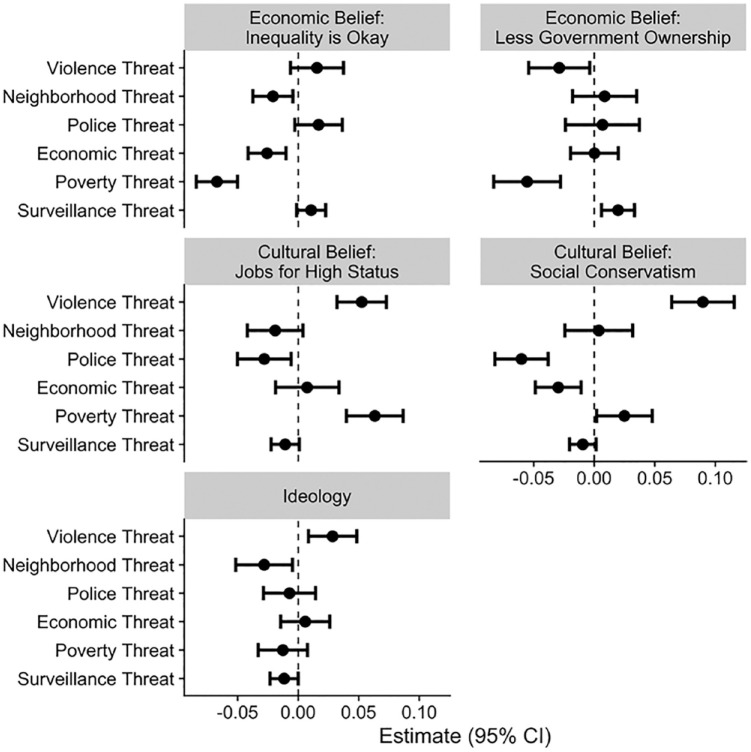
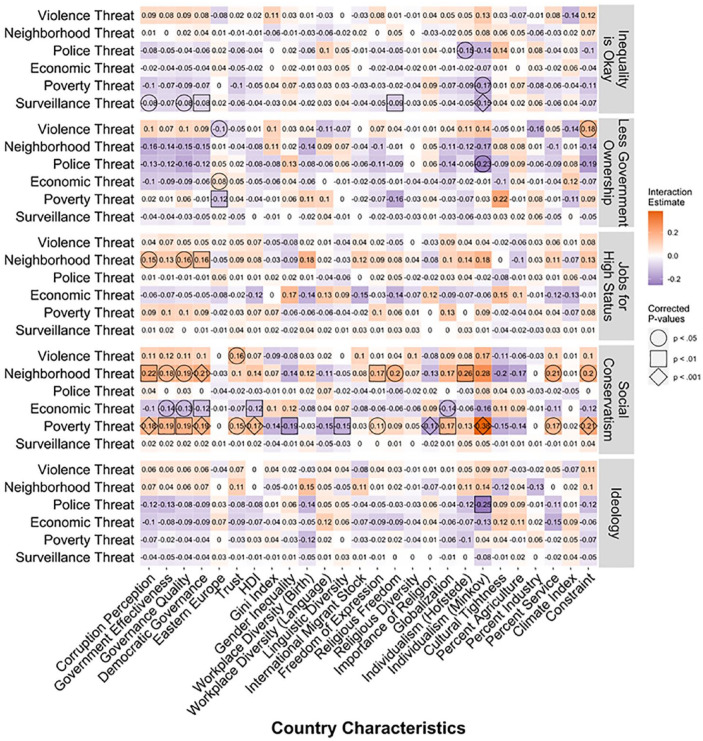
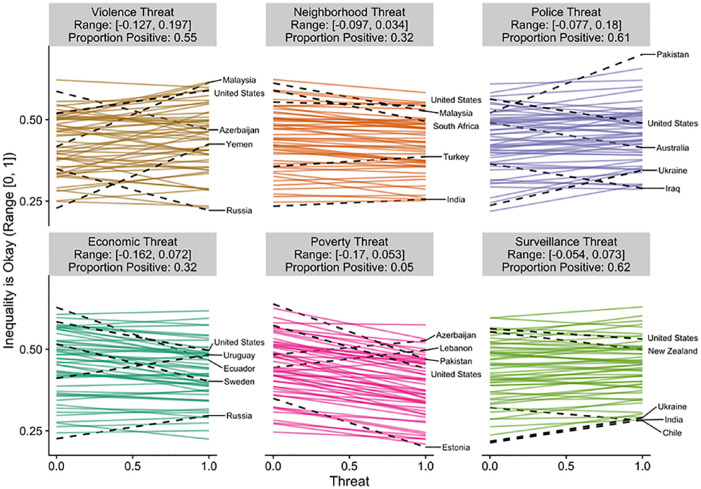
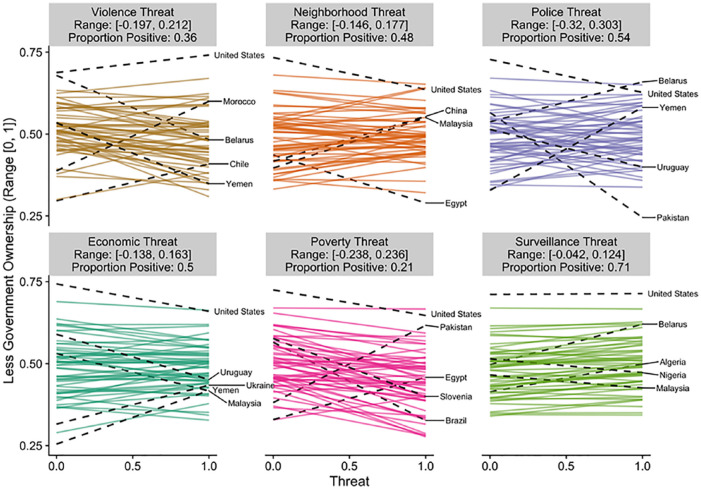
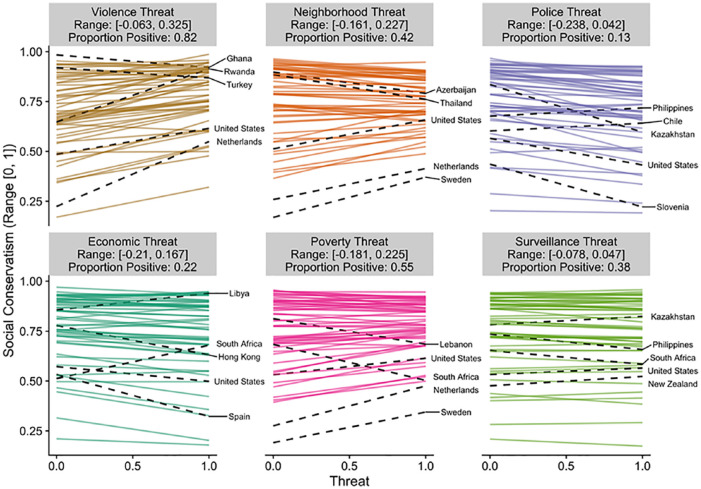
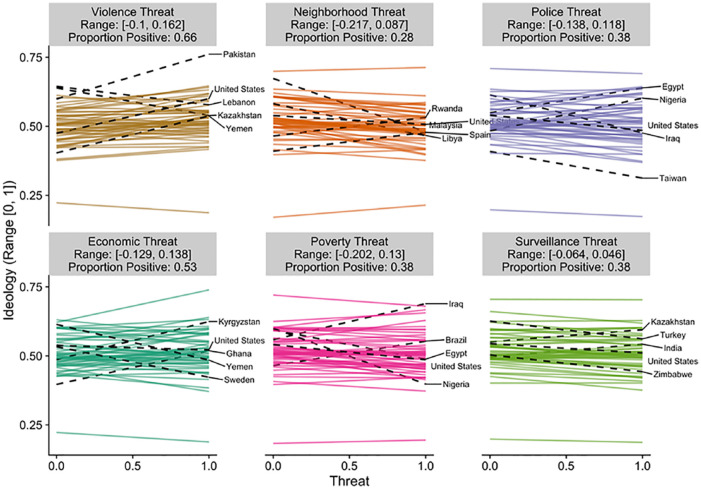
Theories link threat with right-wing political beliefs. We use the World Values Survey (60,378 participants) to explore how six types of threat (e.g., economic, violence, and surveillance) are associated with multiple political beliefs (e.g., cultural, economic, and ideological identification) in 56 countries/territories. Multilevel models with individuals nested in countries revealed that the threat-political belief association depends on the type of threat, the type of political belief, and the country. Economic-related threats tended to be associated with more left-wing economic political beliefs and violence-related threats tended to be associated with more cultural right-wing beliefs, but there were exceptions to this pattern. Additional analyses revealed that the associations between threat and political beliefs were different across countries. However, our analyses identified few country characteristics that could account for these cross-country differences. Our findings revealed that political beliefs and perceptions of threat are linked, but that the relationship is not simple.
理论将威胁与右翼政治信仰联系起来。我们使用世界价值观调查(60378 名参与者)来探索六种类型的威胁(如经济、暴力和监控)如何与 56 个国家/地区的多种政治信仰(如文化、经济和意识形态认同)相关联。个体嵌套在国家中的多层次模型表明,威胁与政治信仰的关联取决于威胁的类型、政治信仰的类型和国家。与经济相关的威胁往往与更左倾的经济政治信仰相关联,与暴力相关的威胁往往与更右倾的文化信仰相关联,但也存在例外。进一步的分析表明,威胁与政治信仰之间的关联在不同国家之间存在差异。然而,我们的分析发现,很少有国家特征可以解释这些国家间的差异。我们的研究结果表明,政治信仰和对威胁的看法是相关的,但这种关系并不简单。