Samore Theodore, Fessler Daniel M T, Sparks Adam Maxwell, Holbrook Colin
Department of Anthropology, University of California, Los Angeles, California, United States of America.
UCLA Center for Behavior, Evolution, and Culture, Los Angeles, California, United States of America.
PLoS One. 2021 Jun 29;16(6):e0253326. doi: 10.1371/journal.pone.0253326. eCollection 2021.
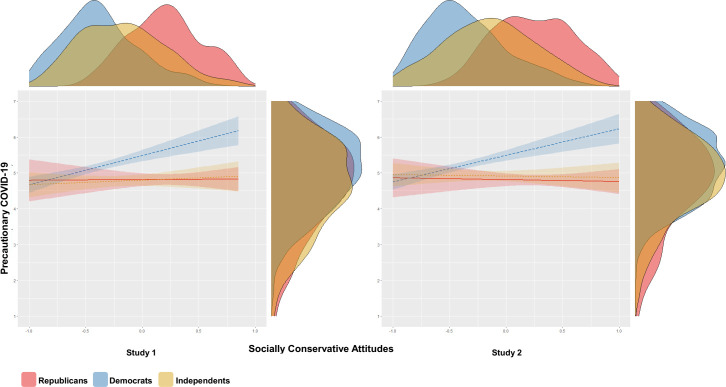
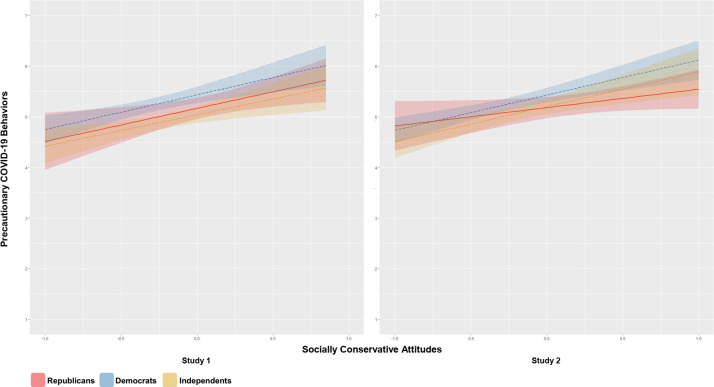
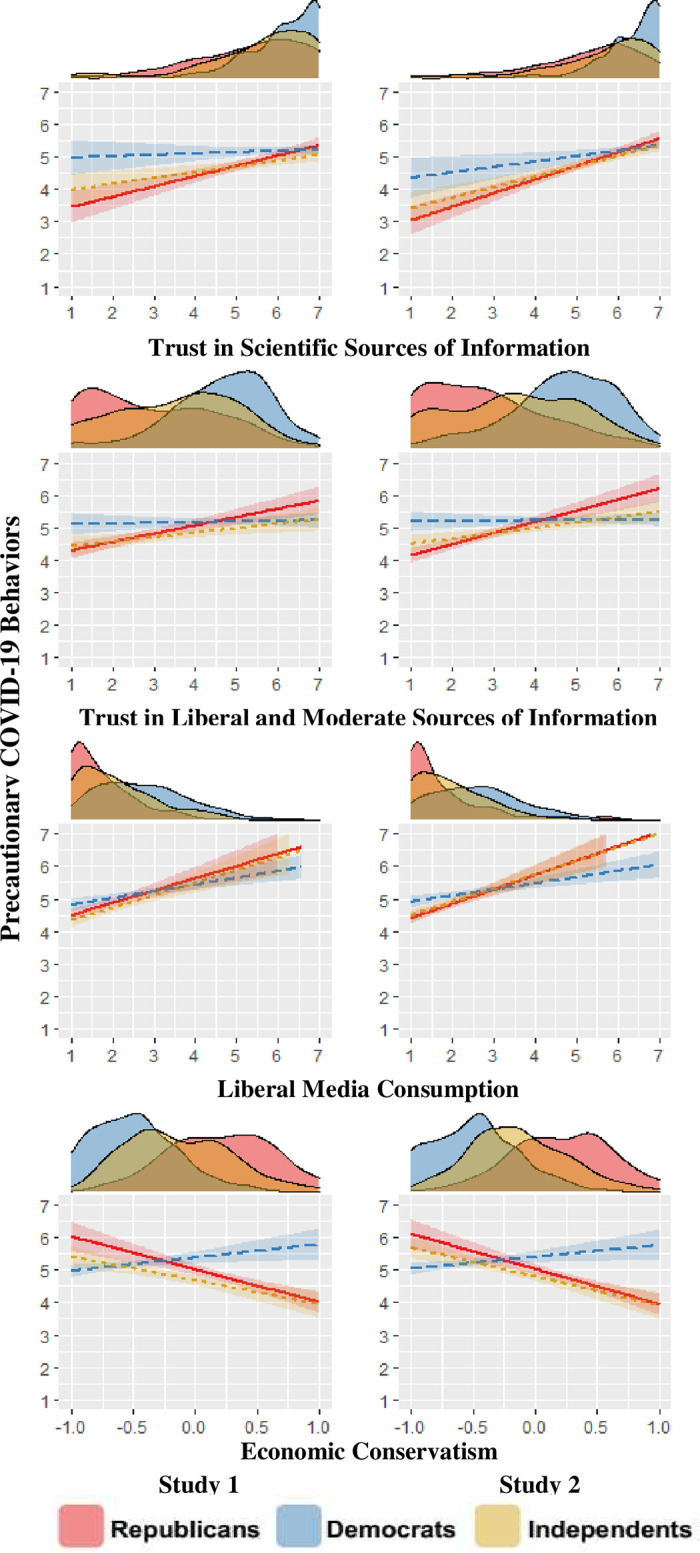
Social liberals tend to be less pathogen-avoidant than social conservatives, a pattern consistent with a model wherein ideological differences stem from differences in threat reactivity. Here we investigate if and how individual responses to a shared threat reflect those patterns of ideological difference. In seeming contradiction to the general association between social conservatism and pathogen avoidance, the more socially conservative political party in the United States has more consistently downplayed the dangers of COVID-19 during the ongoing pandemic. This puzzle offers an opportunity to examine the contributions of multiple factors to disease avoidance. We investigated the relationship between social conservatism and COVID-19 precautionary behavior in light of the partisan landscape of the United States. We explored whether consumption of, and attitudes toward, different sources of information, as well as differential evaluation of various threats caused by the pandemic-such as direct health costs versus indirect harms to the economy and individual liberties-shape partisan differences in responses to the pandemic in ways that overwhelm the contributions of social conservatism. In two pre-registered studies, socially conservative attitudes correlate with self-reported COVID-19 prophylactic behaviors, but only among Democrats. Reflecting larger societal divisions, among Republicans and Independents, the absence of a positive relationship between social conservatism and COVID-19 precautions appears driven by lower trust in scientists, lower trust in liberal and moderate sources, lesser consumption of liberal news media, and greater economic conservatism.
社会自由主义者往往比社会保守主义者更不规避病原体,这一模式与一种模型相符,即在该模型中,意识形态差异源于威胁反应性的差异。在此,我们研究个体对共同威胁的反应是否以及如何反映出那些意识形态差异模式。与社会保守主义和病原体规避之间的一般关联看似矛盾的是,在美国,更具社会保守主义色彩的政党在当前疫情期间一直更淡化新冠病毒的危险。这个谜题提供了一个机会来审视多种因素对疾病规避的作用。我们根据美国的党派格局,研究了社会保守主义与新冠病毒预防行为之间的关系。我们探讨了对不同信息来源的消费和态度,以及对疫情造成的各种威胁的不同评估——比如直接的健康成本与对经济和个人自由的间接损害——是否以压倒社会保守主义作用的方式塑造了党派在应对疫情方面的差异。在两项预先注册的研究中,社会保守主义态度与自我报告的新冠病毒预防行为相关,但仅在民主党人当中如此。反映出更大的社会分歧,在共和党人和独立人士中,社会保守主义与新冠病毒预防措施之间缺乏正相关关系,这似乎是由对科学家的信任度较低、对自由派和温和派信息源的信任度较低、对自由派新闻媒体的消费较少以及更强的经济保守主义所驱动的。