Center for Primary Care and Public Health (Unisanté), University of Lausanne, Lausanne, Switzerland.
University of Applied Sciences and Arts Northwestern Switzerland, Olten, Switzerland.
BMC Psychol. 2020 Aug 25;8(1):87. doi: 10.1186/s40359-020-00448-8.
Although many musicians perceive music performance anxiety (MPA) as a significant problem, studies about the psychobiological and performance-related concomitants of MPA are limited. Using the biopsychosocial model of challenge and threat as theoretical framework, we aim to investigate whether musicians' changes in their psychobiological responses and performance quality from a private to a public performance are moderated by their general MPA level. According to the challenge and threat framework, individuals are in a threat state when the perceived demands of a performance situation outweigh the perceived resources, whereas they are in a challenge state when the perceived resources outweigh the perceived demands. The resources-demands differential (resources minus demands) and the cardiovascular challenge-threat index (sum of cardiac output and reverse scored total peripheral resistance) are the main indices of these states. We postulate that the relationship between general MPA level and performance quality is mediated by these challenge and threat measures.
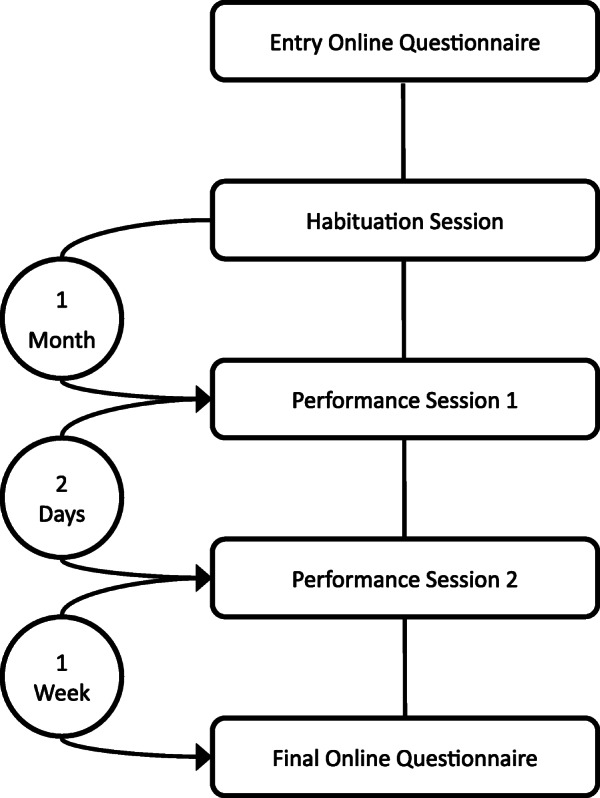
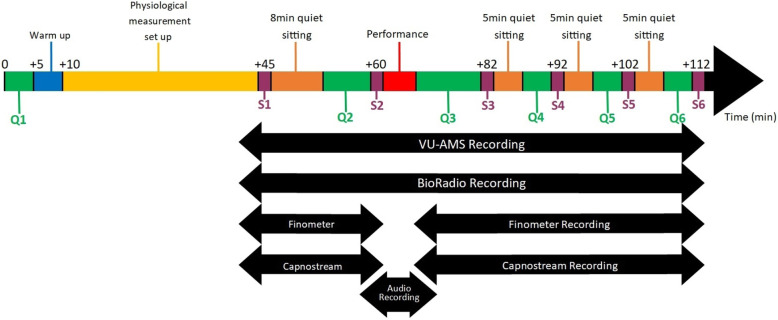
We will test 100 university music students reporting general MPA levels ranging from low to high. They will perform privately (i.e., without audience) and publicly (i.e., with an audience) on two separate days in counterbalanced order. During each performance session, we will record their cardiovascular and respiratory activity and collect saliva samples and self-reported measures. Measures of primary interest are self-reported anxiety, the resources-demands differential, the cardiovascular challenge-threat index, sigh rate, total respiratory variability, partial pressure of end-tidal carbon dioxide and the salivary biomarkers cortisol, dehydroepiandrosterone, and alpha-amylase. Both, the participants and anonymous experts will evaluate the performance quality from audio recordings.
The results of the planned project are expected to contribute to a more comprehensive understanding of the psychobiology of MPA and of the processes that influence musicians' individual reactions to performance situations. We also anticipate the findings of this project to have important implications for the development and implementation of theory-based interventions aimed at managing musicians' anxiety and improving performance quality. Thanks to the use of multimethod approaches incorporating psychobiology, it might be possible to better assess the progress and success of interventions and ultimately improve musicians' chance to have a successful professional career.
Not applicable.
尽管许多音乐家认为音乐表演焦虑(MPA)是一个严重的问题,但关于 MPA 的心理生物学和表现相关伴随因素的研究有限。本研究以挑战和威胁的心理生物学模型为理论框架,旨在调查音乐家在从私人表演到公开表演时,其心理生物学反应和表演质量的变化是否受到他们普遍的 MPA 水平的调节。根据挑战和威胁框架,当表演情境的感知需求超过感知资源时,个体处于威胁状态,而当感知资源超过感知需求时,个体处于挑战状态。资源-需求差异(资源减去需求)和心血管挑战-威胁指数(心输出量和反向总外周阻力之和)是这些状态的主要指标。我们假设,普遍的 MPA 水平与表演质量之间的关系是通过这些挑战和威胁措施来介导的。
我们将测试 100 名报告从低到高的普遍 MPA 水平的大学生音乐学生。他们将在两天内以相反的顺序在私下(即没有观众)和公开(即有观众)进行表演。在每次表演期间,我们将记录他们的心血管和呼吸活动,并收集唾液样本和自我报告的测量值。主要关注的测量值是自我报告的焦虑、资源-需求差异、心血管挑战-威胁指数、叹息率、总呼吸变异、呼气末二氧化碳分压和唾液生物标志物皮质醇、脱氢表雄酮和α-淀粉酶。参与者和匿名专家将从音频记录中评估表演质量。
预计该计划项目的结果将有助于更全面地了解 MPA 的心理生物学以及影响音乐家对表演情境的个体反应的过程。我们还预计该项目的发现对开发和实施基于理论的干预措施具有重要意义,这些干预措施旨在管理音乐家的焦虑并提高表演质量。由于使用了多方法方法,包括心理生物学,因此可能能够更好地评估干预措施的进展和成功,并最终提高音乐家成功职业生涯的机会。
不适用。