Jablonska Katarzyna, Piotrowska Magdalena, Bednarek Hanna, Szymaszek Aneta, Marchewka Artur, Wypych Marek, Szelag Elzbieta
Faculty of Psychology, SWPS University of Social Sciences and Humanities, Warsaw, Poland.
Laboratory of Neuropsychology, Nencki Institute of Experimental Biology of the Polish Academy of Sciences, Warsaw, Poland.
Front Aging Neurosci. 2020 Jul 23;12:194. doi: 10.3389/fnagi.2020.00194. eCollection 2020.
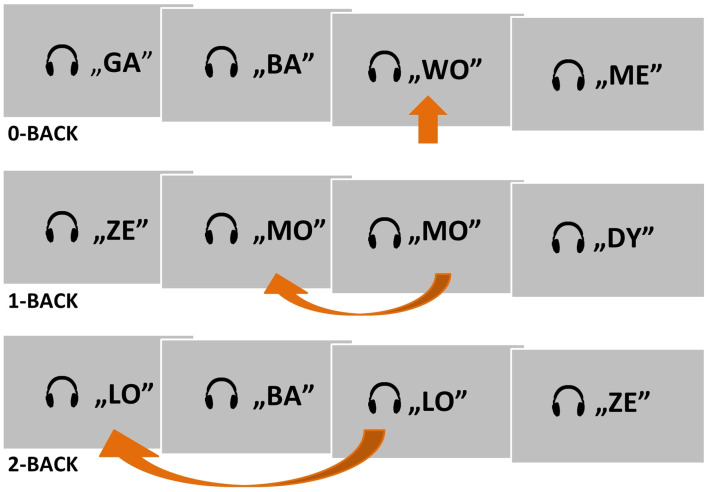
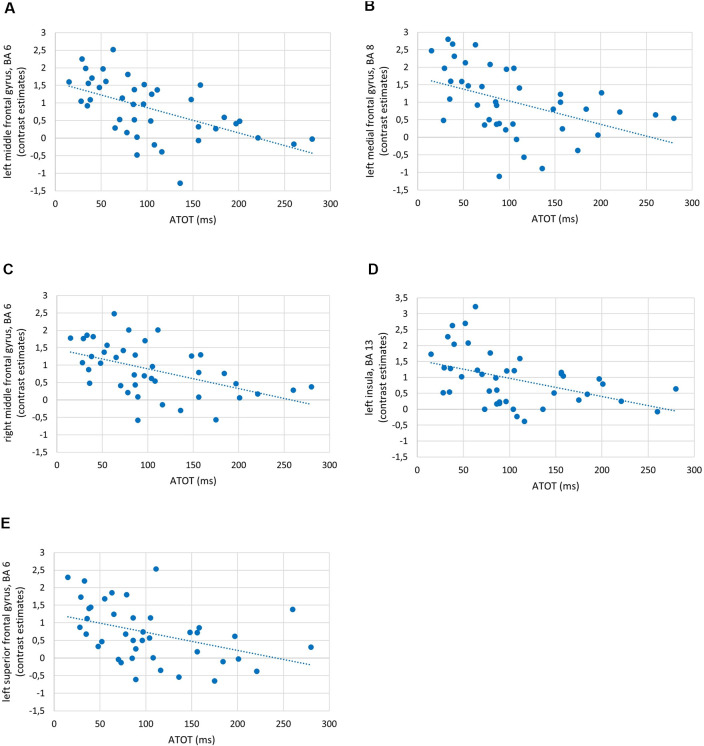
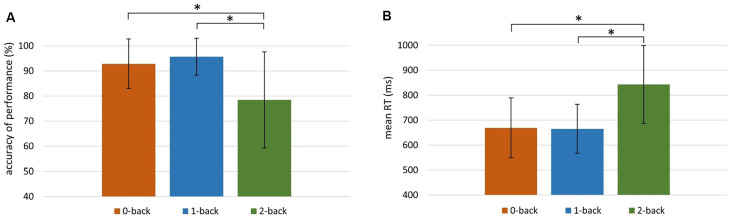
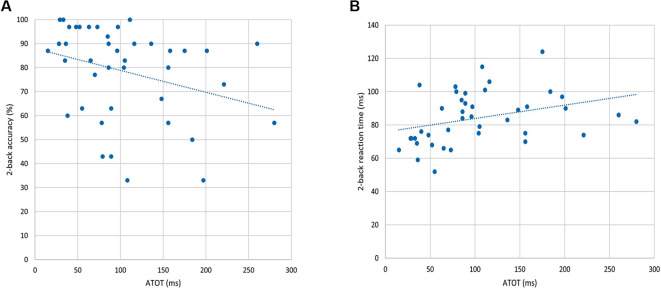
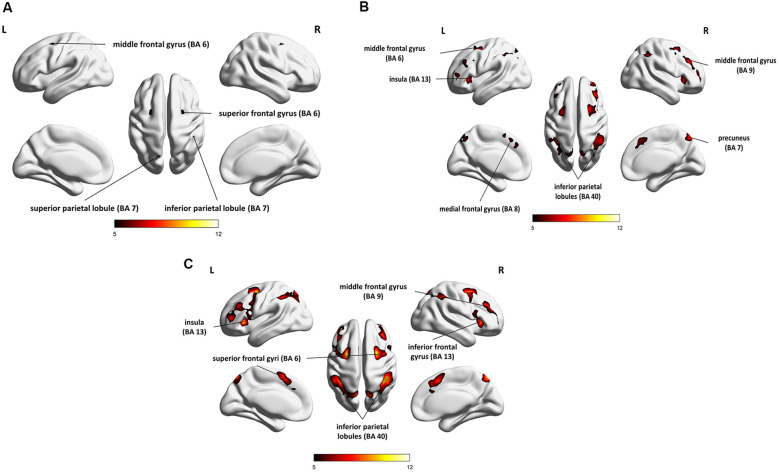
Working memory (WM) is a limited-capacity cognitive system that allows the storage and use of a limited amount of information for a short period of time. Two WM processes can be distinguished: maintenance (i.e., storing, monitoring, and matching information) and manipulation (i.e., reordering and updating information). A number of studies have reported an age-related decline in WM, but the mechanisms underlying this deterioration need to be investigated. Previous research, including studies conducted in our laboratory, revealed that age-related cognitive deficits are related to decreased millisecond timing, i.e., the ability to perceive and organize incoming events in time. The aim of the current study was: (1) to identify in the elderly the brain network involved in the maintenance and manipulation WM processes; and (2) to use an fMRI task to investigate the relation between the brain activity associated with these two processes and the efficiency of temporal information processing (TIP) on a millisecond level reflected by psychophysical indices. Subjects were 41 normal healthy elderly people aged from 62 to 78 years. They performed: (1) an auditory verbal -back task for assessing WM efficiency in an MRI scanner; and (2) a psychophysical auditory temporal-order judgment (TOJ) task for assessing temporal resolution in the millisecond domain outside the scanner. The task comprised three conditions (0-, 1-, and 2-back), which allowed maintenance (1- vs. 0-back comparisons) and manipulation (2- vs. 1-back comparisons) processes to be distinguished. Results revealed the involvement of a similar brain network in the elderly to that found in previous studies. However, during maintenance processes, we found relatively limited and focused activations, which were significantly extended during manipulation. A novel result of our study, never reported before, is an indication of significant moderate correlations between the efficiency of WM and TIP. These correlations were found only for manipulation but not for maintenance. Our results confirmed the hypothesis that manipulation in the elderly is a dynamic process requiring skilled millisecond timing with high temporal resolution. We conclude that millisecond timing contributes to WM manipulation in the elderly, but not to maintenance.
工作记忆(WM)是一种容量有限的认知系统,它允许在短时间内存储和使用有限数量的信息。可以区分两种工作记忆过程:维持(即存储、监控和匹配信息)和操作(即重新排序和更新信息)。许多研究报告了工作记忆与年龄相关的衰退,但这种衰退背后的机制仍需研究。先前的研究,包括我们实验室进行的研究,表明与年龄相关的认知缺陷与毫秒计时能力下降有关,即及时感知和组织传入事件的能力。本研究的目的是:(1)在老年人中识别参与工作记忆维持和操作过程的脑网络;(2)使用功能磁共振成像任务来研究与这两个过程相关的大脑活动与心理物理指标所反映的毫秒级时间信息处理(TIP)效率之间的关系。研究对象为41名年龄在62至78岁之间的正常健康老年人。他们进行了:(1)一项听觉言语复述任务,用于在磁共振成像扫描仪中评估工作记忆效率;(2)一项心理物理听觉时间顺序判断(TOJ)任务,用于在扫描仪外评估毫秒级的时间分辨率。该任务包括三种条件(0-back、1-back和2-back),这使得可以区分维持(1-back与0-back比较)和操作(2-back与1-back比较)过程。结果显示,老年人中涉及的脑网络与先前研究中发现的相似。然而,在维持过程中,我们发现激活相对有限且集中,而在操作过程中激活显著扩展。我们的研究有一个以前从未报道过的新结果,即工作记忆效率与时间信息处理之间存在显著的中度相关性。这些相关性仅在操作过程中发现,而在维持过程中未发现。我们的结果证实了这样一个假设,即老年人的操作是一个动态过程,需要具有高时间分辨率的熟练毫秒计时。我们得出结论,毫秒计时有助于老年人的工作记忆操作,但对维持没有帮助。