Uludağ Hasan, Parent Kylie, Aliabadi Hamidreza Montazeri, Haddadi Azita
Department of Chemical and Materials Engineering, University of Alberta, Edmonton, AB, Canada.
Faculty of Pharmacy and Pharmaceutical Sciences, University of Alberta, Edmonton, AB, Canada.
Front Bioeng Biotechnol. 2020 Jul 30;8:916. doi: 10.3389/fbioe.2020.00916. eCollection 2020.
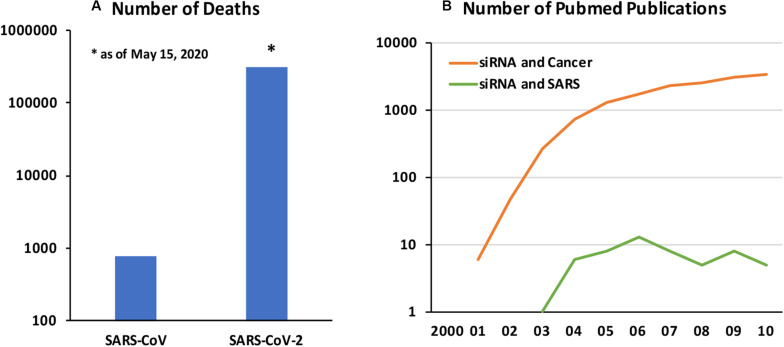
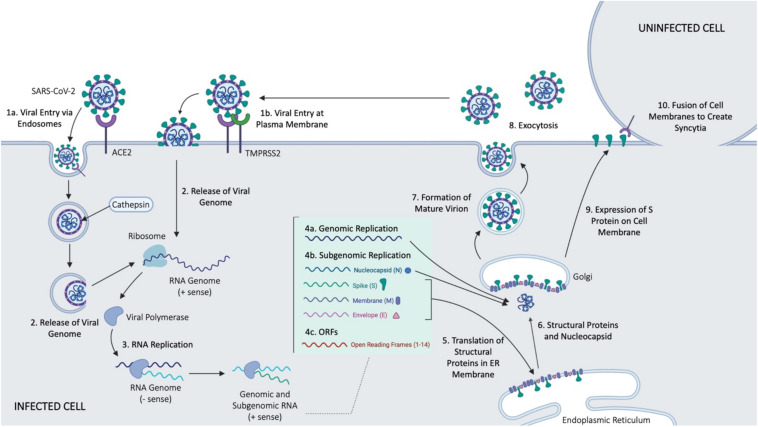
COVID-19 caused by the SARS-CoV-2 virus is a fast emerging disease with deadly consequences. The pulmonary system and lungs in particular are most prone to damage caused by the SARS-CoV-2 infection, which leaves a destructive footprint in the lung tissue, making it incapable of conducting its respiratory functions and resulting in severe acute respiratory disease and loss of life. There were no drug treatments or vaccines approved for SARS-CoV-2 at the onset of pandemic, necessitating an urgent need to develop effective therapeutics. To this end, the innate RNA interference (RNAi) mechanism can be employed to develop front line therapies against the virus. This approach allows specific binding and silencing of therapeutic targets by using short interfering RNA (siRNA) and short hairpin RNA (shRNA) molecules. In this review, we lay out the prospect of the RNAi technology for combatting the COVID-19. We first summarize current understanding of SARS-CoV-2 virology and the host response to viral entry and duplication, with the purpose of revealing effective RNAi targets. We then summarize the past experience with nucleic acid silencers for SARS-CoV, the predecessor for current SARS-CoV-2. Efforts targeting specific protein-coding regions within the viral genome and intragenomic targets are summarized. Emphasizing non-viral delivery approaches, molecular underpinnings of design of RNAi agents are summarized with comparative analysis of various systems used in the past. Promising viral targets as well as host factors are summarized, and the possibility of modulating the immune system are presented for more effective therapies. We place special emphasis on the limitations of past studies to propel the field faster by focusing on most relevant models to translate the promising agents to a clinical setting. Given the urgency to address lung failure in COVID-19, we summarize the feasibility of delivering promising therapies by the inhalational route, with the expectation that this route will provide the most effective intervention to halt viral spread. We conclude with the authors' perspectives on the future of RNAi therapeutics for combatting SARS-CoV-2. Since time is of the essence, a strong perspective for the path to most effective therapeutic approaches are clearly articulated by the authors.
由严重急性呼吸综合征冠状病毒2(SARS-CoV-2)引起的2019冠状病毒病(COVID-19)是一种迅速出现且具有致命后果的疾病。特别是肺部系统和肺部最容易受到SARS-CoV-2感染造成的损害,这种感染在肺组织中留下了破坏性的痕迹,使其无法进行呼吸功能,导致严重的急性呼吸道疾病甚至死亡。在大流行开始时,没有批准用于SARS-CoV-2的药物治疗或疫苗,因此迫切需要开发有效的治疗方法。为此,可以利用先天性RNA干扰(RNAi)机制来开发针对该病毒的一线疗法。这种方法通过使用小干扰RNA(siRNA)和短发夹RNA(shRNA)分子实现对治疗靶点的特异性结合和沉默。在这篇综述中,我们阐述了RNAi技术对抗COVID-19的前景。我们首先总结了目前对SARS-CoV-2病毒学以及宿主对病毒进入和复制的反应的理解,目的是揭示有效的RNAi靶点。然后我们总结了针对当前SARS-CoV-2的前身SARS-CoV的核酸沉默剂的过去经验。总结了针对病毒基因组内特定蛋白质编码区域和基因组内靶点的研究工作。强调非病毒递送方法,总结了RNAi药物设计的分子基础,并对过去使用的各种系统进行了比较分析。总结了有前景的病毒靶点以及宿主因子,并提出了调节免疫系统以实现更有效治疗的可能性。我们特别强调过去研究的局限性,通过关注最相关的模型,将有前景的药物转化为临床应用,以更快地推动该领域的发展。鉴于解决COVID-19中肺衰竭的紧迫性,我们总结了通过吸入途径递送有前景的治疗方法的可行性,期望该途径将提供最有效的干预措施来阻止病毒传播。我们以作者对RNAi疗法对抗SARS-CoV-2未来的观点作为结论。由于时间至关重要,作者清晰地阐明了通往最有效治疗方法路径的有力观点。