Piantedosi Diego, Palatucci Anna Teresa, Giovazzino Angela, Ruggiero Giuseppina, Rubino Valentina, Musco Nadia, Carriero Flavia, Farina Fortunata, Attia Youssef Abd El Wahab, Terrazzano Giuseppe, Lombardi Pietro, Cortese Laura
Department of Veterinary Medicine and Animal Productions, University of Naples Federico II, Naples, Italy.
Department of Science, University of Basilicata, Potenza, Italy.
Front Vet Sci. 2020 Aug 6;7:398. doi: 10.3389/fvets.2020.00398. eCollection 2020.
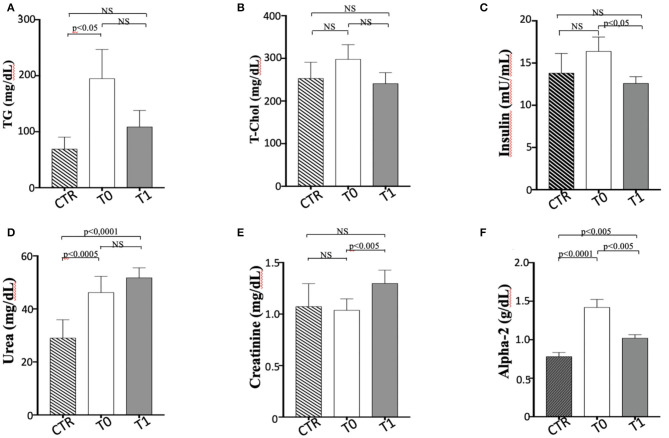
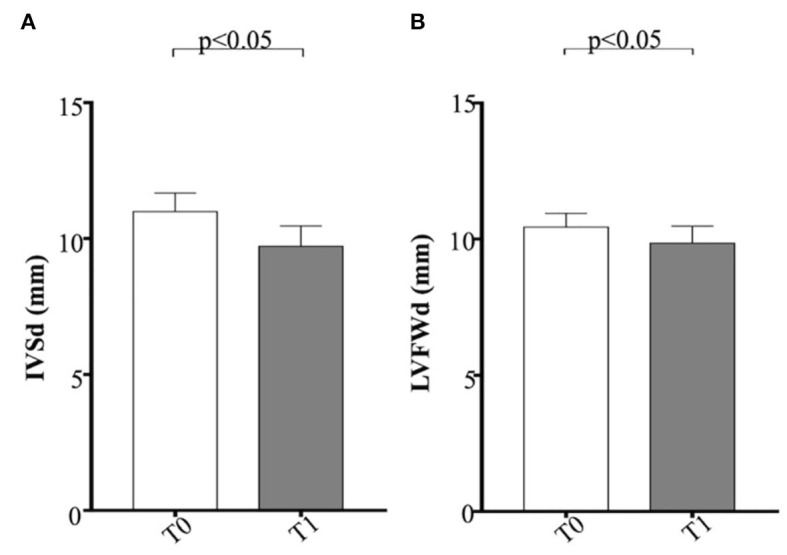
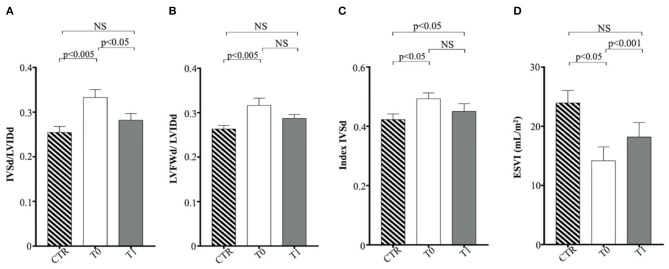
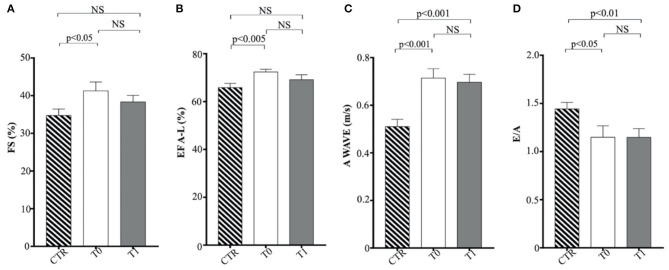
This study aimed to investigate the effects of a weight loss program (WLP) on biochemical and immunological profile, and cardiovascular parameters in a cohort of dogs with naturally occurring obesity. Eleven obese dogs [body condition scoring (BCS), ≥7/9] were enrolled into the study and underwent clinical and cardiovascular examination, and blood testing before (T0) and after 6 months (T1) of WLP. Eleven normal weight (BCS, 4/5) healthy dogs were used as a control (CTR) group. Compared to the CTR group, at T0 obese dogs expressed higher serum leptin concentrations ( < 0.0005) that significantly decreased after weight loss ( < 0.005) but remained higher than the CTR group. Furthermore, obese dogs showed considerably lower levels ( < 0.0005) of regulatory T cell (Treg) compared to the CTR group, but they did not change after weight loss at T1. In obese dogs, tumor necrosis factor (TNF)-α and interleukin (IL)-6 concentrations were substantially reduced at T1 ( < 0.0001 and < 0.005). Regarding the cardiovascular parameters, only one obese dog was hypertensive at T0, and systolic blood pressure values showed no significant differences at the end of the WLP. The ratio of interventricular septal thickness in diastole to left ventricle internal diameter in diastole (IVSd/LVIDd) was significantly greater in obese dogs at T0 than in the CTR group ( < 0.005). It decreased after weight loss ( < 0.05). In obese dogs, troponin I level significantly reduced with weight loss ( < 0.05), while endothelin-1 level did not differ statistically. The results suggest that the immune dysregulation in the presence of high leptin levels and reduced number of Treg could affect obese dogs as well as humans. Based on our findings, we may speculate that a more complete immune-regulation restore could be obtained by a greater reduction in fat mass and a longer-term WLP. Finally, left ventricular remodeling may occur in some obese dogs. However, in canine species, further studies are needed to investigate the impact of obesity and related WLP on cardiovascular system.
本研究旨在调查减肥计划(WLP)对一群自然发生肥胖的犬类的生化和免疫状况以及心血管参数的影响。11只肥胖犬[身体状况评分(BCS),≥7/9]被纳入研究,并在WLP实施前(T0)和6个月后(T1)接受临床和心血管检查以及血液检测。11只体重正常(BCS,4/5)的健康犬作为对照组(CTR)。与CTR组相比,在T0时肥胖犬的血清瘦素浓度较高(<0.0005),减肥后显著降低(<0.005),但仍高于CTR组。此外,与CTR组相比,肥胖犬的调节性T细胞(Treg)水平显著较低(<0.0005),但在T1减肥后没有变化。在肥胖犬中,肿瘤坏死因子(TNF)-α和白细胞介素(IL)-6浓度在T1时大幅降低(<0.0001和<0.005)。关于心血管参数,在T0时只有一只肥胖犬患有高血压,WLP结束时收缩压值无显著差异。肥胖犬在T0时舒张期室间隔厚度与舒张期左心室内径之比(IVSd/LVIDd)显著高于CTR组(<0.005)。减肥后该比值降低(<0.05)。在肥胖犬中,肌钙蛋白I水平随体重减轻显著降低(<0.05),而内皮素-1水平无统计学差异。结果表明,高瘦素水平和Treg数量减少情况下的免疫失调可能会影响肥胖犬以及人类。基于我们的研究结果,我们可以推测,通过更大程度地减少脂肪量和长期的WLP可能会实现更完全的免疫调节恢复。最后,一些肥胖犬可能会发生左心室重塑。然而,在犬类物种中,需要进一步研究来调查肥胖及相关WLP对心血管系统的影响。