Department of Biomedical Sciences, Chubu University Graduate School of Life and Health Sciences, Kasugai, Aichi Japan.
Center for Education in Laboratory Animal Research, Chubu University, Kasugai, Aichi Japan.
Cell Mol Biol Lett. 2020 Aug 24;25:40. doi: 10.1186/s11658-020-00232-x. eCollection 2020.
Animal model studies show that reductive stress is involved in cardiomyopathy and myopathy, but the exact physiological relevance remains unknown. In addition, the microRNAs miR-143 and miR-145 have been shown to be upregulated in cardiac diseases, but the underlying mechanisms associated with these regulators have yet to be explored.
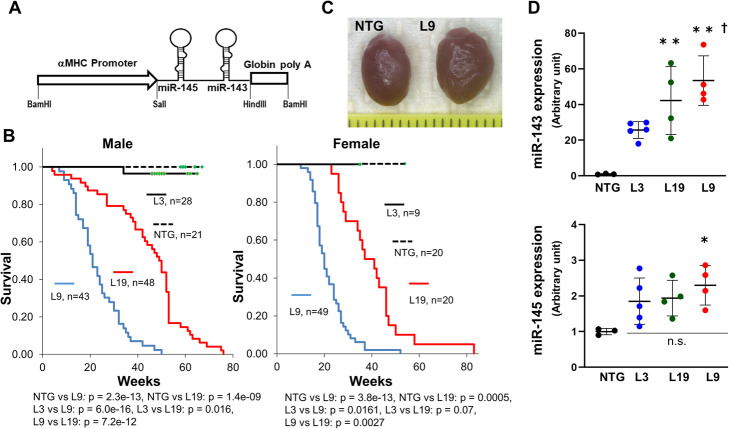
We developed transgenic mouse lines expressing exogenous miR-143 and miR-145 under the control of the alpha-myosin heavy chain (αMHC) promoter/enhancer.
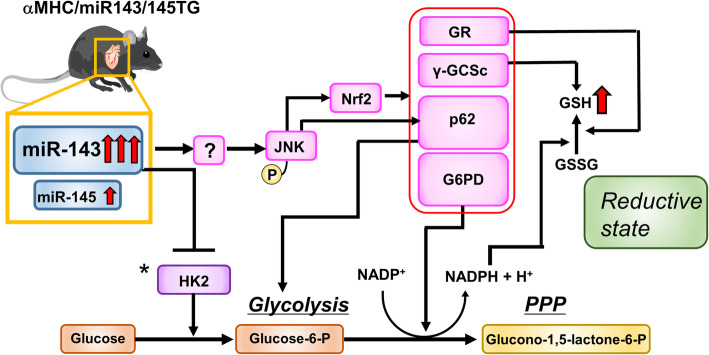
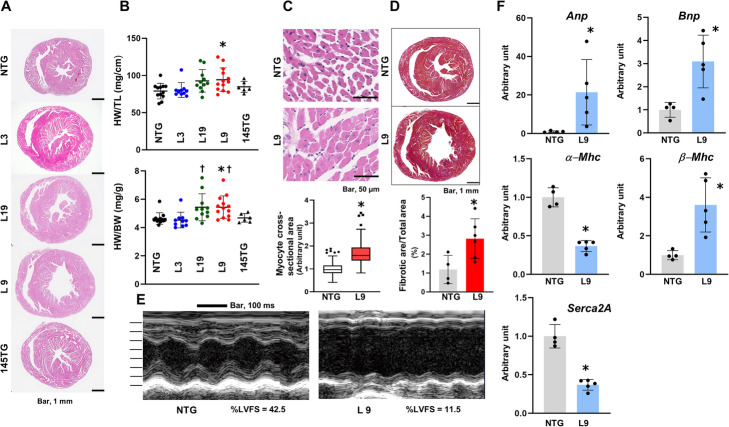
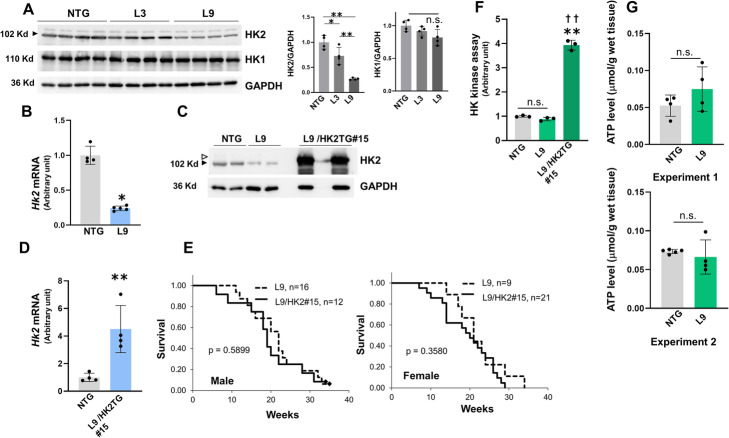
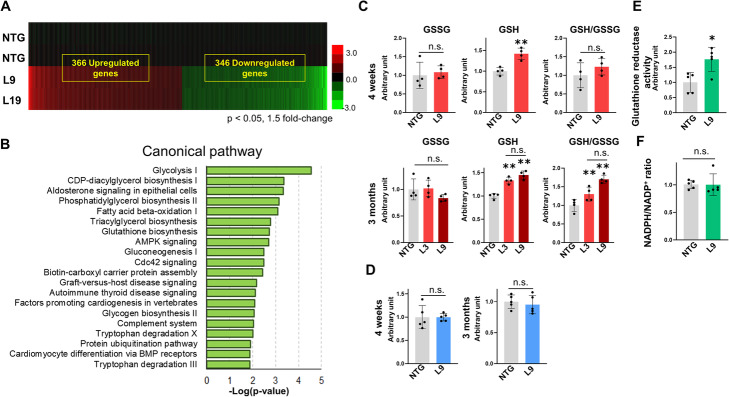
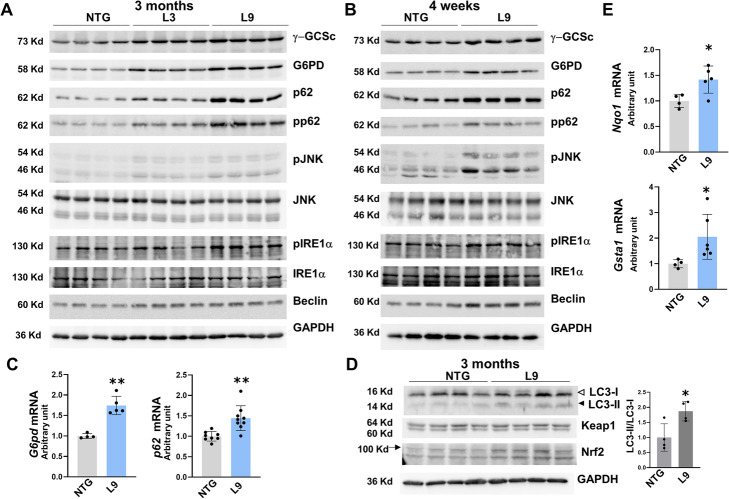
The two transgenic lines showed dilated cardiomyopathy-like characteristics and early lethality with markedly increased expression of miR-143. The expression of hexokinase 2 (HK2), a cardioprotective gene that is a target of miR-143, was strongly suppressed in the transgenic hearts, but the in vitro HK activity and adenosine triphosphate (ATP) content were comparable to those observed in wild-type mice. In addition, transgenic complementation of HK2 expression did not reduce mortality rates. Although HK2 is crucial for the pentose phosphate pathway (PPP) and glycolysis, the ratio of reduced glutathione (GSH) to oxidized glutathione (GSSG) was unexpectedly higher in the hearts of transgenic mice. The expression of gamma-glutamylcysteine synthetase heavy subunit (γ-GCSc) and the in vitro activity of glutathione reductase (GR) were also higher, suggesting that the recycling of GSH and its de novo biosynthesis were augmented in transgenic hearts. Furthermore, the expression levels of glucose-6-phosphate dehydrogenase (G6PD, a rate-limiting enzyme for the PPP) and p62/SQSTM1 (a potent inducer of glycolysis and glutathione production) were elevated, while p62/SQSTM1 was upregulated at the mRNA level rather than as a result of autophagy inhibition. Consistent with this observation, nuclear factor erythroid-2 related factor 2 (Nrf2), Jun N-terminal kinase (JNK) and inositol-requiring enzyme 1 alpha (IRE1α) were activated, all of which are known to induce p62/SQSTM1 expression.
Overexpression of miR-143 and miR-145 leads to a unique dilated cardiomyopathy phenotype with a reductive redox shift despite marked downregulation of HK2 expression. Reductive stress may be involved in a wider range of cardiomyopathies than previously thought.
动物模型研究表明,还原性应激与心肌病和肌病有关,但确切的生理相关性尚不清楚。此外,miR-143 和 miR-145 的表达已在心脏疾病中上调,但与这些调节剂相关的潜在机制尚未得到探索。
我们构建了表达外源性 miR-143 和 miR-145 的转基因小鼠品系,这些基因受α-肌球蛋白重链(αMHC)启动子/增强子的控制。
这两个转基因系表现出扩张型心肌病样特征,并伴有早期致死性,miR-143 的表达显著增加。转基因心脏中己糖激酶 2(HK2)的表达受到强烈抑制,HK2 是 miR-143 的靶基因,是一种心脏保护基因,但转基因心脏中的体外 HK 活性和三磷酸腺苷(ATP)含量与野生型小鼠相当。此外,HK2 表达的转基因互补并未降低死亡率。尽管 HK2 对戊糖磷酸途径(PPP)和糖酵解至关重要,但转基因小鼠心脏中还原型谷胱甘肽(GSH)与氧化型谷胱甘肽(GSSG)的比值出人意料地更高。γ-谷氨酰半胱氨酸合成酶重链(γ-GCSc)的表达和谷胱甘肽还原酶(GR)的体外活性也更高,表明转基因心脏中 GSH 的循环利用和从头合成得到增强。此外,葡萄糖-6-磷酸脱氢酶(G6PD,PPP 的限速酶)和 p62/SQSTM1(糖酵解和谷胱甘肽产生的有效诱导剂)的表达水平升高,而 p62/SQSTM1 的上调是由于 mRNA 水平而不是自噬抑制所致。与这一观察结果一致,核因子红细胞 2 相关因子 2(Nrf2)、Jun N 末端激酶(JNK)和肌醇需求酶 1α(IRE1α)被激活,所有这些都被认为可以诱导 p62/SQSTM1 的表达。
尽管 HK2 表达明显下调,但 miR-143 和 miR-145 的过表达导致一种独特的扩张型心肌病表型,伴有还原性氧化还原转变。还原性应激可能涉及比以前认为更广泛的心肌病。