Department of Biomedical Sciences, Institute of Tropical Medicine, Antwerpen, Belgium.
Advanced Practical Diagnostics BVBA, Turnhout, Belgium.
Clin Infect Dis. 2021 Nov 2;73(9):e2477-e2483. doi: 10.1093/cid/ciaa1264.
The World Health Organization targeted Trypanosoma brucei gambiense human African trypanosomiasis (gHAT) for elimination as a public health problem and for elimination of transmission. To measure gHAT elimination success with prevalences close to zero, highly specific diagnostics are necessary. Such a test exists in the form of an antibody-mediated complement lysis test, the trypanolysis test, but biosafety issues and technological requirements prevent its large-scale use. We developed an inhibition ELISA with high specificity and sensitivity that is applicable in regional laboratories in gHAT endemic countries.
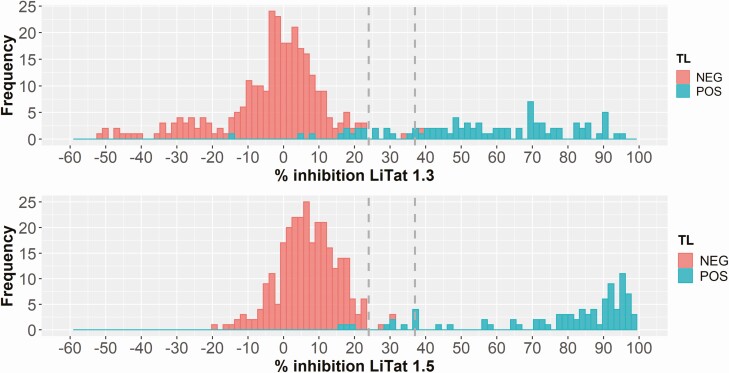
The T. b. gambiense inhibition ELISA (g-iELISA) is based on the principle that binding of monoclonal antibodies to specific epitopes of T. b. gambiense surface glycoproteins can be inhibited by circulating antibodies of gHAT patients directed against the same epitopes. Using trypanolysis as reference test, the diagnostic accuracy of the g-iELISA was evaluated on plasma samples from 739 gHAT patients and 619 endemic controls and on dried blood spots prepared with plasma of 95 gHAT and 37 endemic controls.
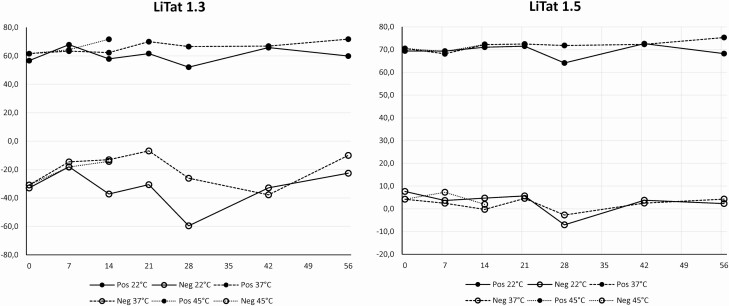
Overall sensitivity and specificity on plasma were, respectively, 98.0% (95% CI 96.7-98.9) and 99.5% (95% CI 98.6-99.9). With dried blood spots, sensitivity was 92.6% (95% CI 85.4-97.0), and specificity was 100% (95% CI 90.5-100.0). The g-iELISA is stable for at least 8 months when stored at 2-8°C.
The g-iELISA might largely replace trypanolysis for monitoring gHAT elimination and for postelimination surveillance. The g-iELISA kit is available for evaluation in reference laboratories in endemic countries.
世界卫生组织将布氏冈比亚锥虫人体非洲锥虫病(gHAT)作为消除公共卫生问题和消除传播的目标。为了用接近零的流行率衡量 gHAT 消除的成功,需要高度特异性的诊断方法。这种检测方法以抗体介导的补体溶解试验——锥虫溶解试验的形式存在,但生物安全问题和技术要求阻止了其大规模使用。我们开发了一种具有高特异性和灵敏度的抑制 ELISA,适用于 gHAT 流行国家的区域实验室。
布氏冈比亚锥虫抑制 ELISA(g-iELISA)基于这样的原理,即单克隆抗体与布氏冈比亚锥虫表面糖蛋白的特定表位结合,可以被针对同一表位的 gHAT 患者的循环抗体抑制。使用锥虫溶解试验作为参考试验,我们评估了 g-iELISA 在来自 739 例 gHAT 患者和 619 例地方性对照者的血浆样本以及用来自 95 例 gHAT 患者和 37 例地方性对照者的血浆制备的干血斑上的诊断准确性。
血浆的总体敏感性和特异性分别为 98.0%(95%置信区间 96.7-98.9)和 99.5%(95%置信区间 98.6-99.9)。使用干血斑时,敏感性为 92.6%(95%置信区间 85.4-97.0),特异性为 100%(95%置信区间 90.5-100.0)。g-iELISA 在 2-8°C 下储存时至少稳定 8 个月。
g-iELISA 可能在很大程度上取代锥虫溶解试验,用于监测 gHAT 的消除和消除后的监测。g-iELISA 试剂盒可在流行国家的参考实验室进行评估。